
The Examined Life, Revisited · Part I of V
A philosopher has done the arithmetic on a napkin: if superintelligence could stop us ageing, the average person alive today might expect to live about 1,400 years, and on that sum even very large risks look worth taking. This essay takes the wager seriously, tests it against two and a half thousand years of thinking about finite lives, separates the laboratory from the press release, and asks the question the arithmetic cannot answer: who gets to decide, on behalf of eight billion people, how much risk is acceptable? Facts are stamped as of 20 November 2026.
The Two-Minute Version
- In February 2026 Nick Bostrom published “Optimal Timing for Superintelligence”, which looks at AI only from the standpoint of people alive now. If aligned superintelligence cut everyone’s yearly risk of death to that of a healthy twenty-year-old, about 0.07%, remaining life expectancy would be 1 divided by 0.0007: roughly 1,400 years.
- Against about 40 remaining years today, his toy model says launching beats never launching unless the chance of annihilation exceeds about 97%. If AI added only 20 years, the break-even falls to about 33%. Bostrom says the 1,400 figure was chosen to make a point, and 97% is a break-even, not his estimate.
- His actual recommendation is subtler: “swift to harbor, slow to berth”. Move quickly towards capability, then pause for months, or at most a few years, before full deployment.
- The argument is strongest as a reminder that doing nothing is not neutral: about 170,000 people die every day. It is weakest on consent, on the difference between letting people die and putting them at risk of being killed, and on what it leaves out: our children, the future, and the meaning that finitude gives to care.
- Philosophy and tradition push back: Parfit and Scheffler on why humanity’s continuation matters to us; Williams on the tedium of endless life; Hägglund on finitude as the condition of care; Buddhist impermanence, Confucian ritual and Zhuangzi drumming at his wife’s funeral.
- The science is real but early. The best AI-discovered drug has one small Phase 2a result and a Phase 3 that reports in 2029. Retro’s AI-designed proteins work in cell culture. Isomorphic had yet to dose a patient as of May. Doubling or tripling lifespans is a forecast, not a finding.
- My position: Long-AND, not Short-OR. Long on humanity and long on AI, refusing the binary of “build now or everyone dies”. Longevity in a Star Trek world is shared abundance; in a Mad Max world it belongs to an enhanced elite. Which way the Fork goes is decided by governance, not arithmetic, and only governments can set that trajectory.
Prologue: A Napkin and a Drum
Start with the napkin. Take the death rate of a healthy young adult in a rich country: roughly seven in ten thousand a year. Suppose, as a thought experiment, that a benevolent superintelligence could hold everyone at that rate for ever, curing ageing and the diseases that come with it, while leaving accidents, violence and bad luck in place. If your chance of dying each year is 0.0007, your expected remaining life is one divided by that number. The answer is a little over 1,428. Round it down, for modesty, to 1,400.
Now put a second number beside it. The average person alive today has, by Bostrom’s estimate, about 40 years left. The ratio of 40 to 1,400 is just under 3%. So if you were offered a button that either gave you 1,400 years or killed you instantly, the arithmetic says you should press it as long as your chance of survival is better than about three in a hundred. That is the sum behind the headline Hacker News readers gave it in February: “accept 97% doom for 1,400 years”. It is the sum behind this week’s Business Insider headline, asking whether AI might be our best shot at living that long.
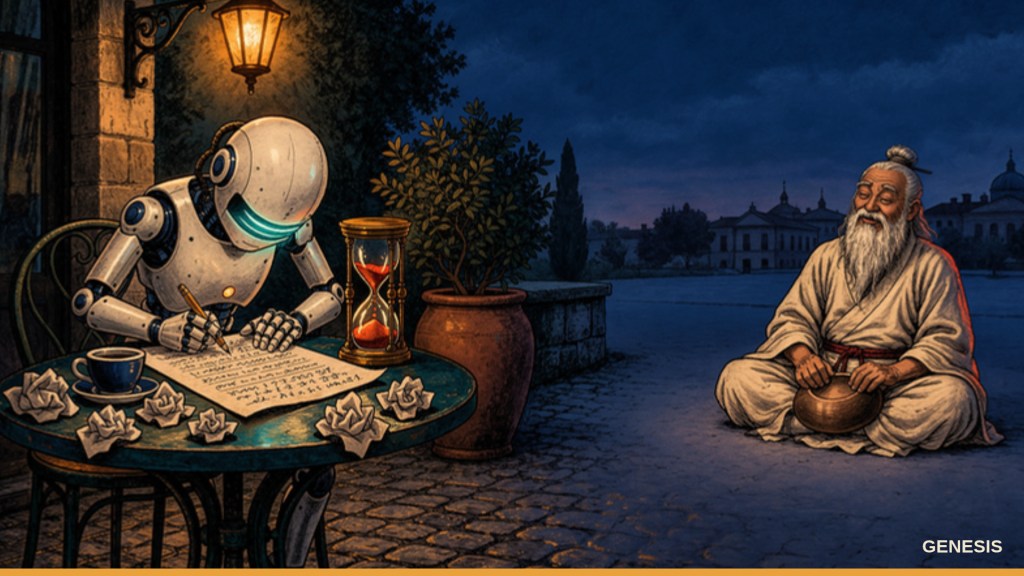
Now the drum. Some two thousand three hundred years ago, so the story goes in the book that bears his name, the Chinese philosopher Zhuangzi lost his wife. His friend Huizi came to console him and found him sitting with his legs sprawled out, beating on a basin and singing. Huizi was scandalised. She had lived with you and raised your children, he said. Not weeping is bad enough. Drumming and singing is too much.
Zhuangzi’s reply, in paraphrase, was that he had grieved like anyone at first. Then he thought back to before she had a body, before she even had breath. A change in the vast mixture of things produced breath, breath became form, form became life, and now another change had brought death. It was like the procession of the four seasons. To follow her sobbing would show he understood nothing about fate. So he stopped.
These two scenes frame the question of this essay. The napkin treats death as a cost to be minimised, and asks how much risk is worth paying to reduce it. The drum treats death as part of the shape of a life, something to be understood rather than defeated. Most of us live somewhere between them. We do not want to die, and we fight hard for the people we love. Yet we also suspect that a life without an ending would be a different kind of thing, and perhaps not a better one.
What has changed in 2026 is that the napkin is no longer idle. Lab leaders speak openly of curing most diseases within a decade, and a philosopher who spent twenty years warning that superintelligence could end us has published a careful model suggesting that, for the people alive today, waiting too long is itself a catastrophe.
The napkin and the drum are both wisdom. The trouble starts when one of them is allowed to decide for everyone.
I. The Wager, Stated Fairly
It matters to state Bostrom’s argument carefully, because it has been flattened in the retelling. The paper, “Optimal Timing for Superintelligence: Mundane Considerations for Existing People”, was posted on LessWrong on 12 February 2026 as a working paper. It is a modelling exercise, and its author repeatedly warns against reading it as a policy prescription.
The frame is deliberately narrow. Bostrom adopts what philosophers call a person-affecting view: he counts only the welfare of people who exist now. He sets aside the impersonal value of future generations, which dominated his earlier work, along with what he calls arcane considerations, from simulation arguments to the welfare of AI systems and fates worse than death. The question is simply: if you cared only about the eight billion people now living, when should you want superintelligence to arrive?
His central image appears in the abstract. Building superintelligence, he suggests, is not like Russian roulette. It is more like “risky surgery for a condition that will otherwise prove fatal”. The condition is ageing, and the status quo is not safety but universal death on a schedule. This is a direct reply to Eliezer Yudkowsky and Nate Soares, whose 2025 book argued that if anyone builds it, everyone dies. Bostrom’s rejoinder is that if nobody builds it, everyone dies too, only more slowly.
The arithmetic
The first model is a simple go or no-go choice. Under the status quo, the average person has about 40 years of remaining life. If aligned superintelligence holds mortality at the level of a healthy 20 to 25-year-old in a developed country, about 0.07% a year, the expectation rises to about 1,400 years. That derivation sits in a footnote. Launching now beats never launching if the probability of AI annihilation is less than one minus 40 over 1,400, which is about 97.1%.
He then adds a multiplier for quality of life, on the thought that post-superintelligence years might also be better years. At twice the quality, the break-even rises to 98.6%. At ten times, 99.7%. And he runs the pessimistic case. If superintelligence added only 20 years, taking life expectancy to 60, the break-even risk falls to 33.3%. With the multipliers it is 66.7% and 93.3%.
| Assumed post-AI life expectancy | Quality multiplier ×1 | ×2 | ×10 |
|---|---|---|---|
| 1,400 years | 97.1% | 98.6% | 99.7% |
| 60 years (AI adds 20) | 33.3% | 66.7% | 93.3% |
Break-even probability of AI annihilation below which launching beats never launching, in Bostrom’s toy model (Table 1 of the paper). These are thresholds, not estimates of risk.
Two things about the table are often missed. First, the second row is far less dramatic than the first, and it is the row closer to what the evidence currently supports. Second, Bostrom himself has said, in a reply on LessWrong, that the model shows only that life expectancy rises; it does not show that such a risk is acceptable. The paper itself calls the 1,400 figure conservative, because superintelligence could also reduce deaths that have nothing to do with ageing, and in interviews he has reportedly described it as a lower bound, giving a range of 1,200 to 1,400 years. Yet when a commenter pressed him on it, he conceded that the number had been picked “somewhat arbitrarily” to make a point, and that the later models in the paper are the more realistic ones.
The timing model
Those later models are where the real argument lives. Bostrom treats safety progress as a fractional reduction in risk each year, from a glacial 0.1% to 99%. With 20% initial risk and safety improving by 10% a year, the optimal wait is about eight months. With 99% risk and almost no progress, it stretches to 58 years; add a 3% annual time discount and the same case yields about 825 years.
The counter-intuitive finding is that intermediate rates of safety progress produce the longest delays. If safety improves very fast, you need not wait long; if very slowly, waiting buys little. It is the middle case, where each year of patience buys meaningful safety, that justifies patience.
The final model has two phases, and its motto has become the paper’s most quoted phrase: “swift to harbor, slow to berth”. Move quickly to the capability, then pause briefly before full deployment, because the early gains in safety are the cheapest. As Jack Clark summarised it in Import AI, the typical optimal delay is “a single-digit number of years” at most, and often only months.
What he says the paper does not say
Bostrom has spent much of 2026 correcting the headlines. To an Arizona television reporter in September he explained that 97% was a break-even in a toy model, not his estimate, and that a 30% risk would be quite high. The pause he favours should be “not centuries and probably not like days either”. In an a16z interview, summarised by StartupHub.ai on 19 November, he framed the optimal delay as “months, not decades”, noted that life expectancy now rises by two or three months a year against the full year needed to keep pace, and warned that a permanent ban would itself be an existential catastrophe.
He also catalogues the ways a pause can fail, from safety theatre and development moving underground to a prisoner’s dilemma between states, a hardware overhang and, worst of all in his telling, a calcified ban that becomes permanent. A frontrunner that burns its lead on safety is, in his analysis, relatively attractive; an international prohibition is risky precisely because it could ossify.
The wager is not “accept 97% doom”. It is “move fast, then pause briefly, because waiting also kills”. That is a harder claim to dismiss.
II. From the Dragon-Tyrant to Deep Utopia
To understand why this paper landed like a thunderclap, you have to remember who wrote it. Born in Sweden in 1973, Bostrom was, by most accounts, a co-founder of the World Transhumanist Association in 1998. In 2005 he published “The Fable of the Dragon-Tyrant”, a parable in which a kingdom pays a monstrous dragon a daily tribute of human lives, and grows so used to it that it rationalises the slaughter as natural, even ennobling. The dragon is ageing. The 2026 paper is the fable’s direct descendant.
Two years earlier, in 2003, his paper “Astronomical Waste” had made the opposite emphasis. For an impersonal utilitarian who counts all the people who could ever live, he argued, reducing existential risk matters vastly more than speeding up technological progress, because a future lost is trillions of lives lost. But even then he noted that on a person-affecting view, which counts only those already alive, speed would matter much more. The 2026 paper works out the other branch of a fork he flagged twenty-three years earlier.
Then came the book that made him famous. Superintelligence: Paths, Dangers, Strategies (2014) became a New York Times bestseller, praised by figures as different as Stephen Hawking, Bill Gates and Derek Parfit. It gave the field its vocabulary: the control problem, orthogonality, instrumental convergence, the treacherous turn. His later “Vulnerable World Hypothesis” (2019) imagined invention as drawing balls from an urn, some of them black, and contemplated ubiquitous surveillance and effective global governance as possible remedies.
The institutional story then turned. The Future of Humanity Institute, which he founded at Oxford in 2005, closed in April 2024 amid what it called administrative headwinds. He now leads a small non-profit, the Macrostrategy Research Initiative.
His work since has pivoted from the downside to the upside. Deep Utopia (2024) asks what gives life purpose once AI has solved scarcity, work and even the need for effort. A 2024 working paper, “AI Creation and the Cosmic Host”, speculates that powerful entities whose preferences form cosmic norms may already exist, and urges that we build superintelligence that would be a good citizen of that order. Its tone is modest: “An attitude of humility may be more appropriate”. Yet there too, what the host chiefly disfavours is delay that makes it likelier superintelligence is never built.
Some critics read the 2026 paper as a reversal. Olle Häggström called its upshot full speed ahead. Isaac Schick, writing in May, read it as a logical extension of his earlier work. I think Schick is closer. The shift is in emphasis, not repudiation. Bostrom still affirms serious misalignment risk and still says we lack precise techniques for loading values into machines. He still supports a short, well-timed pause near the berth. What he now foregrounds is the opportunity cost of delay measured in deaths, the risk of a permanent ban, the problem of meaning after scarcity and a kind of cosmic deference. Unlike the self-described effective accelerationists, he backs safety research and deliberate pauses. Accelerationist-adjacent is fair. Accelerationist is not.
The man who taught the world to fear the dragon of misaligned AI has turned to face the older dragon of ageing. He has not stopped fearing the first.
III. The Steelman
Before criticising the argument, it deserves its strongest form. Here is how I would put it, in my own words.
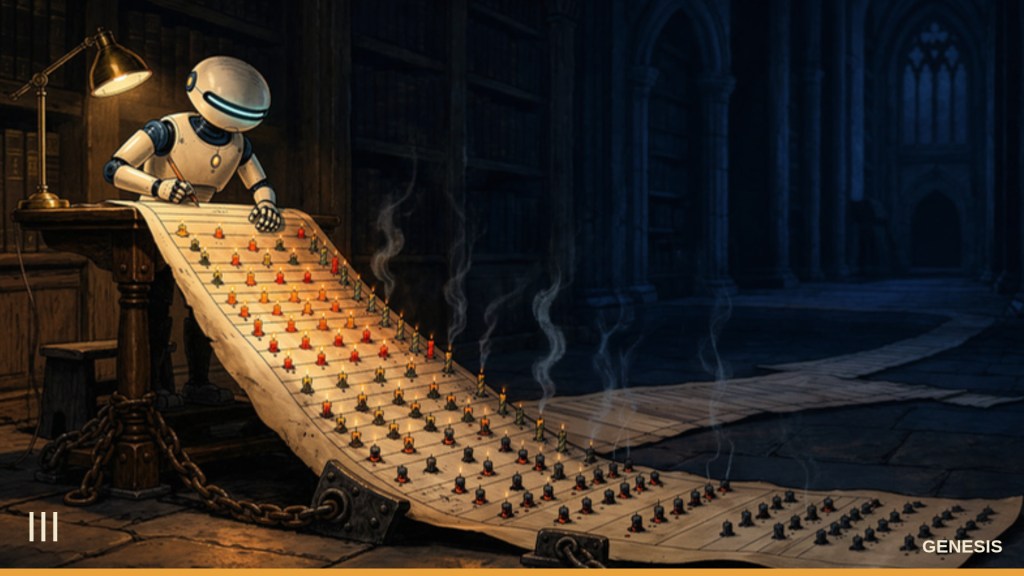
Doing nothing is a choice. Every day, about 170,000 people die of disease, ageing and other causes. Most of those deaths are the slow work of a biological process we have, so far, treated as fate. If a technology could end that, then every year of avoidable delay has a body count. People who call for long pauses rarely say how many deaths they are willing to accept in exchange for safety. Bostrom insists that they should.
The beneficiaries of speed are the vulnerable. His distributional analysis finds that the old, the sick, the poor and people with high discount rates prefer an earlier launch, and a prioritarian, who weights the worst off, should prefer a shorter timeline. The paper cites research showing that very elderly patients would trade much of their remaining time for excellent health. It is the comfortable and the young who can most afford to wait.
The person-affecting frame is how governments actually think. When critics on LessWrong objected that people also care about their children and about the world going on, Bostrom replied that governments in practice approximate a mandate to benefit their current citizens. That is not a philosopher’s fiction. It is how health budgets, pension systems and electoral cycles work.
A permanent ban is itself a risk. If fear of AI calcifies into a global prohibition, entrenched through global controls on data centres, humanity might never get the benefits, and the enforcement apparatus could itself become a totalitarian danger. Bostrom has warned of this overshoot since an UnHerd interview in November 2023, and in 2026 told Le Monde, as summarised by AI Weekly, that the anti-AI backlash had become a risk in its own right.
The pause he wants is real. This is not “move fast and break things”. It is “move fast, then stop, look and test”, and he has published the failure modes of his own recommendation. The paper is more careful than most of its critics, and far more careful than most of its admirers.
I find this steelman powerful, especially the first point, and it is one I have not always given its due. The question is whether the rest of the argument survives contact with the objections.
The best version of Bostrom’s wager is a moral demand: count the deaths on both sides of the ledger.
IV. Whose Lives Count? Person-Affecting and Impersonal Views
The whole paper turns on one choice: count only the people alive now. Change that choice and the conclusion can reverse. To see why, we need a short detour through Derek Parfit.
In Reasons and Persons (1984), Parfit posed what he called the non-identity problem. Policies that change how we live also change who gets born. A society that depletes its resources produces, a few centuries on, people who would not otherwise have existed, and those people cannot say they were made worse off, since the alternative was not existing at all. If morality is only about making particular people better or worse off, it struggles to condemn such a policy. Parfit concluded that a narrow person-affecting principle could not be the whole truth. Hilary Greaves later surveyed impossibility results showing that every theory of how to value populations has some deeply counter-intuitive implication. There is no clean answer. There is only a choice of which bullet to bite.
Bostrom’s paper bites one bullet very cleanly. If only existing people count, extinction is bad only because it kills eight billion people; the loss of the whole human future carries no extra weight. On the impersonal view of “Astronomical Waste”, even a small reduction in extinction risk is worth centuries of delay. On the person-affecting view, centuries of delay mean almost everyone now alive dies waiting.
Toby Ord, in The Precipice (2020), argued that existential risk matters even on a person-affecting view, because the people who would die include us. In a 2024 essay he added that speeding up progress helps only if the end date is fixed; if acceleration also brings the end closer, the lost final years can outweigh the gains. Better to change where we are going than merely how soon we arrive.
Scheffler and the collective afterlife
The most humane objection comes from Samuel Scheffler’s Death and the Afterlife (2013). Scheffler asks us to imagine learning that, thirty days after our own natural death, the earth will be destroyed. Nothing changes for us personally; we will be dead either way. Yet most people find the prospect devastating. Many of the projects that give our lives meaning, from medical research to raising children to planting trees, would lose their point. Scheffler concludes that what he calls the collective afterlife, the continuation of humanity after we are gone, matters to us more than we realise, and in some ways more than our own survival.
This is the hole in the person-affecting frame. It is not only that future people count for their own sake, which is the impersonal view. It is that present people care about future people, as part of what makes our own lives worth living. The LessWrong commenters Jan Kulveit and habryka made a version of this point: people care about their children and about the world going on. Bostrom’s model counts my welfare as my expected years of life multiplied by their quality. It has no term for my wish that my daughter’s daughter will exist.
A person who accepts a 30% chance of extinction for a 70% chance of living 1,400 years is not making a bet only with their own life. They are betting the collective afterlife that Scheffler argues gives their present life much of its meaning. On the person-affecting frame’s own terms, then, the arithmetic is incomplete. The welfare of existing people includes their stake in non-existing people.
We are not only the people alive now. We are people who care what comes after us. Any arithmetic that forgets that has miscounted the living.
V. Consent, and the Difference Between Dying and Being Killed
The second family of objections is about who decides. The sharpest early response came from Olle Häggström of Chalmers, who has long worked on existential risk. In a post titled “Full speed ahead” on 20 February, he described himself as shocked that the field’s leading advocate of caution had produced an accelerationist upshot. He called the person-affecting frame a “deniability clause”: a way of saying the paper only explores one perspective while knowing full well that readers will treat its numbers as a guide to action.
Häggström’s deeper objection was that the paper measures welfare in hedonic terms, as years of good experience, rather than in terms of what people actually want. Most people, he suspects, would refuse to accept a high risk of extinction in exchange for life extension. A model that overrides those preferences in their name has no place for consent and reflects, as he put it, an elitist mindset. His practical fear is that policymakers will read the thresholds as permission.
Émile P. Torres, who with Timnit Gebru has criticised what they call the TESCREAL bundle of transhumanist and longtermist ideologies, went further in a February essay calling the paper an embarrassment. Paraphrasing fairly, Torres made several arguments. The benefits of superintelligence would flow first to technology elites, and radical life extension could produce immortal dictators. The paper ignores fates worse than death. It speaks for the global poor without evidence that they share its preferences. Humanity is not terminally ill, and extinction is not simply a sum of individual deaths. It sets aside arguments, such as Roman Yampolskiy’s, that alignment may be impossible. Torres also noted that Bostrom is reported to be signed up for cryonics, suggesting he personally could afford to wait. And Torres found it inconsistent to warn of pause-induced totalitarianism after the Vulnerable World paper had entertained ubiquitous surveillance as a remedy.
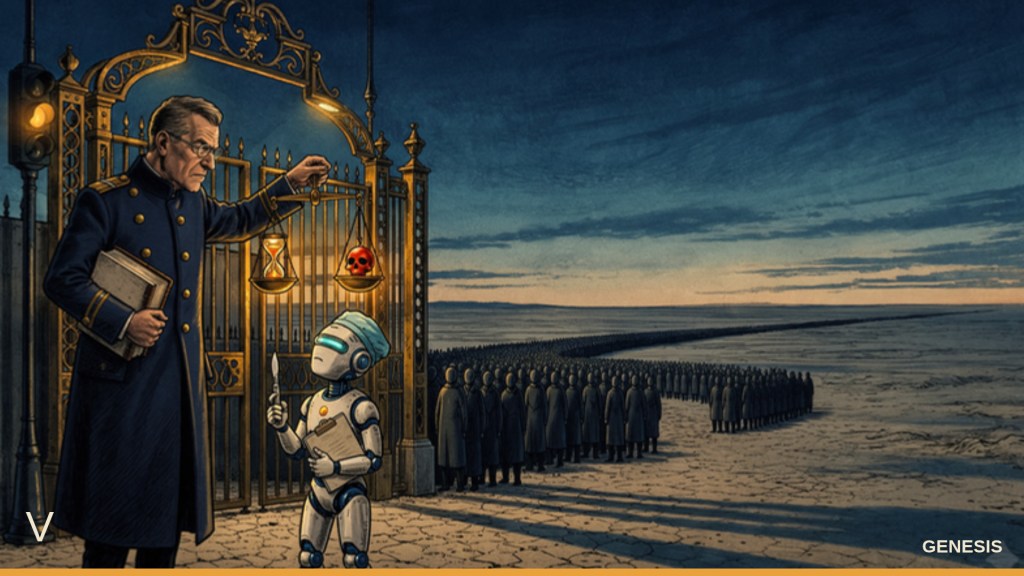
Some of these points are stronger than others; the cryonics jab is ad hominem. But one deserves to be taken very seriously: the difference between dying and being killed. Moral philosophy has long distinguished doing from allowing. A doctor who fails to cure a patient has not murdered them. A doctor who performs an experimental operation without consent, and kills them, has done something different in kind, even if the expected years of life were higher. Bostrom’s surgery metaphor quietly assumes the patient has consented. Eight billion patients have not.
Here is the strongest reply I can construct on Bostrom’s behalf. Allowing death is still a choice when the cure is within reach, and those who would pause are choosing to allow 170,000 deaths a day. Fair enough. But the asymmetry does not vanish. The ageing patient dies of a condition no one imposed. The patient killed by a misaligned system dies of a risk someone chose to run on their behalf. The first is tragedy. The second is a decision, and decisions need authority.
There is also a quieter objection, raised by several commenters: the choice is not binary. Cryonics, longevity biotechnology, narrow AI for biology and human enhancement are all routes to longer life that do not require rushing to superintelligence. Yampolskiy argues that narrow AI could cure diseases without the gamble, and Aubrey de Grey does not think his own forecast for defeating ageing depends on AI at all. If the cure does not require the surgery, the metaphor loses much of its force. In “The Machine That Loved Us Too Much” I wrote that “Care without choice is still a cage”. A cure without consent is a cage of a different kind.
The surgeon may be right about the odds. The surgeon still needs the patient’s signature, and no one has asked eight billion patients.
VI. Would We Want It? Makropulos, Hägglund and the Shape of a Life
Set aside the risk. Suppose superintelligence arrives safely and offers each of us 1,400 years. Would that be good for us? The question sounds perverse, but it has a serious history.
The tedium of immortality
In 1973 Bernard Williams published “The Makropulos Case: Reflections on the Tedium of Immortality”. His starting point was an opera by Janáček, based on a play by Karel Čapek, in which a woman named Elina Makropulos takes an elixir of life and reaches the age of 342. By then she is cold, bored and indifferent. Nothing matters to her any more. She refuses to take the elixir again and dies.
Williams drew a dilemma from the story. What keeps us going are categorical desires: wants not conditional on being alive that give us reasons to live, such as a great project, a love or a vocation. Over an endless life, either those desires are exhausted and we fall into tedium, or our character changes so completely that the person in year 900 is no longer recognisably me. Michael Papademas, in Philosophies this May, reads Williams as treating mortality as a kind of blessing in disguise.
There are good replies to Williams. Some pleasures are repeatable without tedium: music, friendship, the sea. And Bostrom’s answer, across the Dragon-Tyrant fable and Deep Utopia, is that meaning can survive the end of necessity, through play, creativity and activity done for its own sake. Fair. But notice something about the 1,400-year arithmetic that the headlines miss.
From horizon to lottery
A life expectancy of 1,400 years is not a promise of 1,400 years. It is the average outcome when your only remaining risk is accident or misfortune. That changes the character of death. Today death is a horizon: we know roughly when it will come and plan towards it. In the napkin’s world it becomes a lottery: rare, random and unscheduled. With so many centuries to lose, every risk would look enormous. Would anyone with 1,400 expected years ride a motorbike, or fly? This is my inference, not Bostrom’s, but I suspect radical life extension would make us not more adventurous but far more afraid. Finitude would not disappear. It would move from the end of life into every moment of it.
Finitude as the condition of care
The most profound recent statement of the case for finitude is Martin Hägglund’s This Life: Secular Faith and Spiritual Freedom (2019). Hägglund’s argument is not that death is good. It is that the possibility of loss is what makes anything matter. To care about something, a person, a cause, a garden, is to be committed to something fragile that could be lost and that requires our time, which is limited. If we had infinite time, there would be no urgency in any choice, and nothing would need to be done now rather than later. What he calls secular faith is the commitment to finite things precisely because they are finite.
Hägglund pairs this with a political claim, that a society’s true wealth is its socially available free time, which will return in Part II. The link to Bostrom is already clear. The paper measures the value of life in years. Hägglund measures it in what we do with them, and argues that their scarcity is what makes the doing meaningful.
Earlier thinkers made related points: Leon Kass, in the US President’s Council on Bioethics report Beyond Therapy (2003), that finitude gives life its shape; Hans Jonas, that we bear an imperative of responsibility towards future humanity. In a December 2025 debate at the Institute of Art and Ideas, Àlex Gómez-Marín went much further: “I think transhumanism is a death cult”. I do not go that far. The longing for more life is one of the most human things there is. But a vision of longevity that cannot say what the extra time is for has not yet earned the risk it asks us to run.
The case against radical longevity is not that death is good. It is that care needs a deadline, and a life without one may lose the very thing we wanted more of.
VII. The View from the East: Impermanence, Ritual and the Drum

Most of the debate over Bostrom’s paper has been conducted within the Anglo-American analytic tradition. Writing from Singapore, I want to bring in traditions that treat death differently, because they offer distinctions that debate tends to miss. Each is vast and plural; what follows is a sketch.
Buddhism: impermanence as truth
In Buddhist thought, impermanence (anicca) is not a defect awaiting repair. It is one of the three marks of existence, alongside suffering (dukkha) and non-self (anattā). Suffering arises not from impermanence but from clinging: our insistence that what is changing should stay the same. On this view, a project to abolish ageing risks being a more sophisticated form of clinging, multiplying rather than dissolving suffering.
There is a story often told in the commentaries about a young mother, Kisa Gotami, whose child has died. Mad with grief, she carries the body from house to house asking for medicine. The Buddha tells her he can help, if she brings him mustard seed from a household where no one has died. She goes from door to door. Every family has lost someone. By evening she understands, buries her child and becomes a disciple. The cure the Buddha offers is not the abolition of death but release from the belief that death has singled her out.
Honesty requires adding the other side. Buddhist ethics is centred on compassion and the relief of suffering, and few Buddhists would object to curing pulmonary fibrosis or Alzheimer’s disease. The tradition distinguishes between relieving suffering and fleeing impermanence. That is exactly the distinction this essay will propose for AI and longevity: pursue healthier lives, and be wary of the dream of an endless one.
Confucianism: a good death within relationships
Confucian thought has less to say about death in the abstract than about how the living should treat it. When a disciple, Zilu, asked the Master about death, the Analects record a reply that in paraphrase runs: you do not yet understand life, so how could you understand death? The emphasis falls on living well within one’s relationships, and on ritual (li) to mark the passage of the dead, including long mourning for parents and the continuing reverence of ancestors.
This is Scheffler’s collective afterlife, practised for more than two thousand years. A good death completes a life embedded in family and community and hands responsibility to the next generation. A model that counts each life as a stream of years to be lengthened misses what this tradition takes to be the point: that our lives are knots in a web running back to ancestors and forward to descendants.
Daoism: the drum, and the elixir
Which brings us back to Zhuangzi and his drum. His teaching is that life and death are phases of one transformation, and that to cling to one and dread the other is to misunderstand the way things are. The same book tells of a gardener who refuses a well-sweep, a simple lever for drawing water, because machines make for a machine heart (jixin), a mind that schemes for efficiency and loses its simplicity: a 2,300-year-old warning about letting mechanism reshape what we value.
Yet honesty again requires the other side. Chinese history is also full of the search for immortality. Later Daoist traditions pursued elixirs of long life, and tradition holds that the First Emperor of Qin sent expeditions across the sea to find one. Several emperors are said to have died from the very potions meant to keep them alive. The dream of radical longevity is not a Silicon Valley invention. It is ancient, and in Asia it has usually been the dream of emperors. That should make us wary of who ends up drinking the elixir first, a theme I will return to when we reach the Fork.
The Eastern traditions do not say “do not heal”. They say: heal the body, but do not mistake the wish to never end for wisdom. And watch who drinks the elixir first.
VIII. Separating the Science from the Hype
Everything so far has assumed that superintelligence could, in fact, deliver radical life extension. That is the premise doing most of the work, and it is the premise most worth checking. Here I try to separate what has actually happened from what has been forecast.
The evidence
The best AI-discovered drug. Insilico Medicine’s rentosertib, a TNIK inhibitor for idiopathic pulmonary fibrosis, is the most widely cited example of a drug whose target and molecule were both found with generative AI. Its Phase 2a trial, published in Nature Medicine in June 2025, enrolled 71 patients at 22 sites in China for twelve weeks. At 60 mg once daily, lung capacity (forced vital capacity) rose by 98.4 mL, against a fall of 20.3 mL on placebo, and the safety endpoint was met. It was a small, short trial with exploratory biomarkers. A Phase 3 trial was launched, as reported in July 2026: 320 patients, about 50 sites, 52 weeks, with results expected in December 2029 and Insilico’s own target for approval around September 2030. The best case for an AI-discovered drug is still about four years from approval, and it treats one disease, not ageing.
AI-designed rejuvenation proteins. In August 2025 OpenAI and Retro Biosciences reported that a small specialised model, GPT-4b micro, had designed variants of the Yamanaka factors, proteins used to reprogram cells towards a younger state. Some designs showed more than fifty times higher expression of reprogramming markers than the natural versions, and less DNA damage signal. This is genuinely striking. It is also entirely in cell culture, in cells from donors over 50. There are no animal or human data.
Isomorphic Labs. The DeepMind spin-out, built on the AlphaFold work that shared the 2024 Nobel Prize in Chemistry, raised a $2.1bn Series B in May 2026 and reports 17 programmes. But as of May no human had been dosed with one of its drugs; Hassabis had moved the target for a first trial to the end of 2026. Whether it has happened by now, I have not been able to confirm.
Reprogramming in the clinic. In January 2026 the FDA cleared what was reported as the first human trial of partial epigenetic reprogramming, Life Biosciences’ ER-100, injected into the eye. Altos Labs, launched in 2022 with $3bn, has no disclosed clinical candidate, and is not mainly an AI company, though it uses machine learning.
The population data. In October 2024 S. Jay Olshansky and colleagues reported in Nature Aging that, across the longest-lived countries, life expectancy at birth has risen only about six and a half years since 1990, and the gains are slowing. Olshansky’s claim concerns current medicine; he allows that slowing ageing itself could change the picture. But no intervention has yet been shown to extend maximum human lifespan.
The forecasts
Against this sit confident forecasts. In April 2025 Demis Hassabis told 60 Minutes that ending all disease could happen “maybe within the next decade or so, I don’t see why not”. His more specific claim, that drug design could shrink from about ten years to months or weeks, is about design. Trials, manufacturing and regulation still take years, as rentosertib’s 2030 timeline shows.
Dario Amodei’s October 2024 essay “Machines of Loving Grace” imagined powerful AI compressing decades of biological progress into a few years, with most diseases cured within seven to twelve years of its arrival and, as a later consequence, average lifespan doubling to about 150. Amodei framed these as plausible upside rather than prediction. Aubrey de Grey puts a 50% chance on reaching longevity escape velocity, the point at which medicine adds more than a year of life expectancy each year, within twelve to fifteen years. He says his forecast does not depend on AI at all.
| Claim | Status | What it shows |
|---|---|---|
| Rentosertib improves lung function | Phase 2a done (71 patients, 12 weeks); Phase 3 reports Dec 2029 | AI can find a drug that works in one disease |
| AI-designed Yamanaka factors | In vitro only | AI can optimise rejuvenation proteins in a dish |
| Isomorphic’s AI-designed drugs | No patient dosed as of May 2026 | Design is fast; trials are not |
| All disease ended within a decade (Hassabis) | Forecast | Ambition, not evidence |
| Lifespan doubled to about 150 (Amodei) | Framed as plausible upside | Ambition, not evidence |
| 1,400 years (Bostrom) | Modelling assumption; its author says it was picked to make a point | A thought experiment |
Put the evidence and the forecasts side by side and the gap is obvious. AI’s demonstrated wins in biology are in structure prediction, molecule design and protein optimisation in a dish. The 150-year and 1,400-year figures assume superintelligent biology that does not yet exist. That does not make them false. It makes them premises, not findings.
And here the science circles back to the philosophy. If longer life may come through narrow AI and ordinary biomedicine, the case for rushing to superintelligence weakens. Bostrom’s own model agrees: if mortality falls during the pause, the optimal pause lengthens.
The lab results are real and worth celebrating. They are also a long way from 1,400 years, and they arrive without anyone needing to roll the dice on superintelligence.
IX. The Panel, in Four Rooms
As in my other long-form essays, I want to hear the argument out loud. Imagine four rooms, each with a different crowd, each hearing the same pitch: superintelligence soon, and a life measured in centuries.
Room one: the philosophers
The philosophers divide along the fault line of Section IV. Matthew Barnett, the paper’s closest ally on LessWrong, argues that most people do care mainly about the living, so the person-affecting frame is a description, not a trick. Rob Bensinger of MIRI, replying to Bostrom’s 2023 worries, agreed that never building AGI would be a catastrophe but argued that under-reaction is far likelier than overshoot. On that view a 97% break-even is irrelevant, because the real risk on the current path is high.
Will MacAskill and colleagues at Forethought have moved from strong longtermism towards what they call better futures: the likely future captures only a small fraction of what is attainable, so the goal is to steer, not merely survive. I have found no direct reply from him, Ord or Greaves to Bostrom’s paper, but the implication is that direction matters more than speed. Susan Schneider, a former transhumanist, doubts that mind uploading would confer survival at all, which matters because uploading is a route to lives far beyond 1,400 years. Papademas reminds the room that philosophy itself presupposes mortality.
Room two: the scientists and longevity researchers
This room is the most cautious. Olshansky’s data say the long-lived countries are approaching limits with current medicine, not escaping them. De Grey is optimistic about defeating ageing but sees AI as helpful rather than essential, and treats robust rejuvenation of mice as the pivotal proof point. Roman Yampolskiy takes the hardest line: alignment may be impossible, narrow AI could cure diseases without superintelligence, and the wager is Russian roulette after all.
The researchers’ common message is that the bottlenecks are trials, manufacturing, regulation and biology itself. Faster design helps, but a drug still has to be tested in human bodies over human timescales.
Room three: the AI labs
The lab leaders are the most optimistic room, and the most conflicted. Hassabis repeated his end-of-disease line at Davos in January 2026 even as the target for Isomorphic’s first human trial has slipped. Amodei imagines lifespan doubling, while presenting it as possible upside. Sam Altman, reportedly a major investor in Retro Biosciences with around $180m, is broadly supportive of basic income and has floated universal basic compute. Each has a stake in the claim that their technology will cure ageing.
I do not doubt their sincerity. But this room is where the gap between evidence and forecast is widest, and the incentive to close it with rhetoric strongest. It deserves a seat at the table, not the gavel.
Room four: faith and public voices
On 25 May 2026 Pope Leo XIV released his first encyclical, Magnifica Humanitas, on the protection of the human person in the age of AI. It is blunt: “We cannot consider AI morally neutral”. It warns against a technocratic paradigm and new AI monopolies, notes that AI amplifies those who already hold data and capital, and answers transhumanism and posthumanism with a Christian humanism of self-transcendence through love, not escape from limits. Its contrast between the Tower of Babel and a rebuilt Jerusalem maps onto this debate: one builds upward to escape the human condition; the other builds a city in which the human condition is honoured.
Secular public voices land nearby by different roads. Matthew Gasda, in UnHerd this July, described longevity moving into the mainstream as a secular immortality cult that changes how we think about inheritance and parenthood. Audrey Tang told MIT’s SOLVE gathering in May that the answer is civic: “We, the people, are truly the superintelligence”. Legitimacy comes from deliberation, not from a model.
Four rooms, four verdicts. The philosophers argue about whom to count; the scientists about what is possible; the labs about how soon; the faithful and the public about who decides. Only the last question cannot be delegated.
X. The Fork: Longevity in Star Trek and in Mad Max
Readers of Genesis, and of my essays on the Fork, will know the frame I keep returning to: the Fork. One branch leads to a Star Trek future of shared abundance, in which powerful technology serves everyone and human beings are freed to explore, create and care. The other leads to Mad Max, a world of scarcity, capture and violence, in which the same technology entrenches the powerful. The technology is identical. The governance is what differs.
When I sketched the two branches year by year in 2025, longevity appeared on both sides. In my timeline for 2045, the Star Trek branch shows human and AI symbiosis, with neural links and extended lifespans. The Mad Max branch, in the same year, shows enhanced elites and a neo-feudal order. Same science, same decade, opposite worlds. In 2035 on the Star Trek branch, aligned AGI arrives alongside universal basic services; on the Mad Max branch, misaligned AGI is captured by an authoritarian regime.
Bostrom’s paper models the average person. Its arithmetic assumes that if superintelligence cures ageing, everyone gets the 1,400 years. That is a Star Trek assumption, and nothing in the technology guarantees it. A longevity treatment can be priced as a luxury, rationed by nationality or reserved for those who own the compute. Torres’s immortal dictators are what the Mad Max branch would look like after a century: rulers who never die, and therefore never leave.
Think back to the First Emperor of Qin and his expeditions for the elixir. The dream of radical longevity has nearly always been, in practice, the dream of the people at the top. If superintelligence makes the elixir real, the first question is not “how long will we live?” but “who will be we?”
This is where Bostrom’s distributional analysis cuts both ways. The old, the sick and the poor have the most to gain from early access. They also have the most to lose if access is unequal. A world in which the rich live for centuries and the poor for decades is not a modest improvement on today. It is a new class system: the long-lived and the short-lived. Every institution we have, from inheritance to elections, assumes that everyone dies. Break that assumption for some and not others, and you have built Mad Max with better skin.
In Star Trek, longevity is a public good. In Mad Max, it is a private one. The arithmetic is the same on both branches; only governance tells them apart.
XI. Who Decides for Eight Billion?
We arrive at the question the napkin cannot answer. Suppose the numbers were known with certainty. Suppose the risk of catastrophe were exactly 10%, and the prize exactly 1,400 years for everyone. Is a 10% risk acceptable? The arithmetic says yes, easily. But acceptable to whom, and decided by whom?
This is not a question about expected value. It is a question about authority. No individual can consent on behalf of eight billion people, and no company can either. The risk is borne by everyone, including those who would never benefit and those not yet born. Deciding how much of it to run is therefore a political decision in the oldest sense: a decision about the common life of a people, and here of the species.
Bostrom himself, interestingly, says something close to this. His defence of the person-affecting frame was that governments approximate the interests of current citizens. He says the paper does not imply specific policy prescriptions. He wants the ability to slow down to be preserved. I agree with all three statements, and I want to draw out what follows from them. If governments are the right proxy for the people whose lives are at stake, then governments, not laboratories, should set the acceptable level of risk, the length of the pause and the terms of access to the benefits. The berth must be chosen in public.
I have long argued that only the governments of the world can set the trajectory for the Fork. Not because governments are wise; often they are not. Because they alone have both the legitimacy to speak for whole populations and the power to bind those who would otherwise race. A frontier lab can publish a constitution. It cannot ratify one on behalf of humanity.
There are early signs that publics, when asked, may choose more caution than the labs would like. According to a summary of the Forecasting Research Institute’s latest expert panel, every one of the 39 US ballot measures on data centres that it tracked produced an outcome limiting their development, a clean sweep that the median expert forecast, at 75%, did not anticipate. Local votes on land and electricity are not referendums on superintelligence, but they show that consent, once sought, is not automatic. The AI Futures Project, whose authors include Daniel Kokotajlo, has proposed a verified US and China slowdown delaying superintelligence until around 2040: a very different timing from Bostrom’s months.
What would legitimate governance of this wager need? At minimum, four things. A published threshold: governments should say in advance what level of catastrophic risk is unacceptable, and how it will be measured. Independent evidence: claims about safety and benefit must be tested by people who did not build the system and do not profit from it. A guaranteed brake: the ability to pause must survive commercial and geopolitical pressure, which Bostrom fears a ban would destroy and I fear a race would. Shared access: the benefits of AI biology must be treated as public goods, part of universal basic services rather than premium subscriptions.
In “Aristotle Versus the Arithmetic” I argued that the contest over AI is one of character and constitution, not expected-value sums. The sums are useful: they show that delay has a cost and that waiting for ever is not safe. But they cannot say who holds the pen.
Who decides the acceptable risk on behalf of eight billion people is a governance question, not an arithmetic one. The arithmetic can inform the decision. It cannot make it.
XII. Long-AND, Not Short-OR
The thesis of my book Genesis was that we should be long on humanity and long on AI. Not one or the other: both. I call this Long-AND, not Short-OR. A Short-OR framing forces a binary: AI or humanity, progress or safety, now or never. Long-AND refuses the binary and asks how to have both.
Bostrom’s paper, for all its subtlety, sits inside a Short-OR frame. Its title-level message is: build superintelligence soon, or everyone alive dies of old age. The Long-AND response is to reject the “or”. We can pursue AI for biology with real urgency, funding trials, sharing data and speeding approvals, and also insist on safety at the frontier. We can work to extend healthy life and also honour the finitude that, as Hägglund argues, gives care its meaning. We can count the people alive now and also the collective afterlife that Scheffler shows they care about. Person-affecting and impersonal; the napkin and the drum.
In practice, Long-AND points to a different portfolio. Narrow, testable AI for biology, like the systems behind rentosertib and AlphaFold, should get maximum speed, because its risks are bounded and its benefits arrive through trials we know how to regulate. General systems with unbounded risks should get the slow berth, set by public authority. And longevity gains should be built into public health systems from the start, so that the Star Trek branch is designed in rather than hoped for.
We do not have to choose between longer lives and a human future. We have to refuse anyone who insists we must.
XIII. Short-term Turbulence, Interrogated
I owe readers an honest confession. My own tagline, the line at the foot of every essay I write, is “Short-term turbulence for long-term abundance”. Read uncharitably, it is Bostrom’s wager in five words: accept pain now for a great prize later. If I criticise the arithmetic of 1,400 years, I had better check that my own motto does not rest on the same sum.
Here is where I think the two differ, and where Bostrom has made me sharpen what I mean.
Turbulence is survivable; annihilation is not. Turbulence is what an aircraft passes through on the way to its destination. It is uncomfortable, sometimes frightening, but the plane lands. The tagline only works if the turbulence is bounded. It cannot be stretched to cover a 30% chance, let alone a 97% chance, that there is no long term at all. The moment a risk includes extinction, it has stopped being turbulence and become a wager, and wagers on behalf of everyone need everyone’s mandate.
Whose turbulence, whose abundance? On the Mad Max branch the turbulence is borne by the many and the abundance captured by the few. The tagline is only defensible if those who bear the turbulence share in the abundance.
A path, not a decision rule. My tagline describes the journey a well-governed transition will involve; Bostrom’s model is a rule for choosing when to launch. The first is a forecast with a moral condition attached. The second can be cited as permission.
What Bostrom gets right. The cost of delay is real, and I have sometimes written as though caution were free. In “Paid to Disappear” I wrote that “A cheque can replace income. It cannot replace a reason to get up”. The equivalent here: a pause can reduce risk, but it cannot bring back those who died waiting for a cure that was safe to release. Honest governance counts both sides of that ledger.
So the refined version of my motto is this: short-term turbulence that we can all survive, shared fairly, on the way to an abundance we all share. And to Bostrom’s own nautical image I would add only a harbour master. Swift to the harbour, yes, for the narrow tools that heal. Slow to the berth, for the systems that could sink us. And the harbour master should be someone we elected.
Turbulence is a promise that the plane will land. Do not use the word for a gamble on whether there is a runway.
XIV. What to Do on Monday Morning
For yourself. Do Bostrom’s exercise and Williams’s together. Write down what you would do with 40 more years, and then with 1,400. If the second list merely repeats the first, the extra years may matter less to you than the ones you have. Then have the conversation most of us postpone, about what a good death would look like and what you want to hand on. Scheffler’s point applies at home: much of what makes your life matter is what continues after it.
For readers of headlines. When you see “1,400 years” or “97% doom”, go to the source: the first number was chosen to make a point and the second is a break-even, not a forecast. When you see “AI will end all disease within a decade”, ask whether the claim is about design or about patients.
For citizens. Ask your representatives a simple question: who in our government decides how much catastrophic risk from AI is acceptable, and where is that threshold published? If no one can answer, that is the answer. Support public funding for open, narrow AI for biology, and insist that any resulting treatments be built into public health systems, not sold as premium extras. Ask for independent testing of frontier systems before release, and for a legal mechanism to pause that cannot be bargained away.
For policymakers. Treat the acceptable level of AI risk as a matter for public decision, like the safety standards for medicines, not a trade secret. Fund the narrow tools fast and set the berth for general systems slow. Plan now for how longevity gains would be distributed. And talk to other governments, because a berth chosen by one country alone is one a competitor will sail past.
The examined life now includes examining the bets others want to place on our behalf. Monday morning is when that examination begins.
Coda: The Drum and the Harbour
Zhuangzi did not drum because he did not love his wife. He drummed because he had grieved her fully and then seen her life as a whole, with a beginning and an end, part of something larger than either of them. Bostrom does not do arithmetic because he does not understand loss. He does it because he has looked at 170,000 deaths a day and refused to call them natural. Both men are right about something. The task of our generation is to hold both truths at once, and to build institutions that can carry them.
Superintelligence may yet give us longer and healthier lives, and I hope it does. But a longer life is only a better one if it is worth having, shared with others, in a world where the collective afterlife is still assured. The machine cannot supply that condition. We must.
Next, in Part II, “The Hollowed Achievement”, I turn from the length of a life to its meaning. Suppose the machines do arrive safely and do everything better than we can: the science, the art, the philosophy itself. Gary David O’Brien has argued that “the mere existence of AI systems would undermine its meaning and value”, speaking of intrinsically meaningful work. If he is right, the danger is not only that AI might kill us, but that it might leave us alive with nothing left to achieve. Whether the machine itself has a life worth valuing is a separate question, and it has its own series, Is Anyone Home?, beginning on 14 January 2027.
Library
Bostrom: the paper and its aftermath
- Nick Bostrom, Optimal Timing for Superintelligence: Mundane Considerations for Existing People, working paper v1.0 (2026)
- Bostrom, Optimal Timing for Superintelligence, LessWrong post and discussion (12 Feb 2026)
- Marginal Revolution, Optimal timing for superintelligence (12 Feb 2026)
- Jack Clark, Import AI 445 (16 Feb 2026)
- Derek Staahl, Even at 97% extinction risk, philosopher says AI could be worth it, AZFamily (Sep 2026)
- StartupHub.ai, Bostrom says waiting on superintelligence kills (19 Nov 2026)
- a16z Show, Nick Bostrom: How Should We Navigate Superintelligence? (listing)
- AI Weekly, Nick Bostrom flags anti-AI backlash as emerging risk (2026)
- Hacker News discussion of the paper (Feb 2026)
- Business Insider, Want to live for 1,400 years? AI might be your best shot (20 Nov 2026)
Bostrom’s arc
- Nick Bostrom, Astronomical Waste, Utilitas (2003)
- Nick Bostrom, The Fable of the Dragon-Tyrant, Journal of Medical Ethics (2005)
- Nick Bostrom, Superintelligence: Paths, Dangers, Strategies (Oxford University Press, 2014)
- Nick Bostrom, The Vulnerable World Hypothesis, Global Policy (2019)
- Nick Bostrom, Deep Utopia: Life and Meaning in a Solved World (Ideapress, 2024)
- Nick Bostrom, AI Creation and the Cosmic Host, working paper v0.5 (2024)
- Zvi Mowshowitz, Bostrom Goes Unheard, LessWrong (13 Nov 2023)
- The Decoder, Nick Bostrom sparked a global AI debate, but his institute couldn’t survive academia (Apr 2024)
- Isaac Schick, Nick Bostrom: to accelerate or not (10 May 2026)
Critiques and the ethics of risk
- Olle Häggström, Full speed ahead (20 Feb 2026)
- Émile P. Torres, Nick Bostrom’s Pro-Superintelligence Paper Is an Embarrassment, Realtime Techpocalypse (15 Feb 2026)
- Timnit Gebru and Émile P. Torres, The TESCREAL bundle, First Monday 29(4) (Apr 2024)
- Toby Ord, On the Value of Advancing Progress (Jun 2024)
- Toby Ord, The Precipice (2020)
- Forethought, Introducing Better Futures (Aug 2025)
- Eliezer Yudkowsky and Nate Soares, If Anyone Builds It, Everyone Dies (Little, Brown, 2025)
- Axios, AI report urges slower race to superintelligence (9 Jul 2026)
Philosophy of death and finitude
- Derek Parfit, Reasons and Persons (Oxford University Press, 1984)
- Hilary Greaves, Population Axiology, Philosophy Compass (2017)
- Samuel Scheffler, Death and the Afterlife (Oxford University Press, 2013)
- Bernard Williams, The Makropulos Case: Reflections on the Tedium of Immortality (1973)
- Martin Hägglund, This Life: Secular Faith and Spiritual Freedom (2019)
- Michael Papademas, Mortality, Meaning, and the End of Philosophy, Philosophies 11(3):80 (May 2026)
- Leon Kass and the President’s Council on Bioethics, Beyond Therapy (2003)
- Decrypt, Transhumanism branded a death cult as thinkers clash on humanity’s future (Dec 2025)
- Gary David O’Brien, All Play and No Work? AI and Existential Unemployment, Journal of Ethics (2025)
- Zhuangzi, chapter 18 (on the death of his wife) and chapter 12 (the gardener and the well-sweep)
- The Analects of Confucius, 11.12
Science and longevity
- BiopharmaTrend, AI-designed TNIK inhibitor shows lung function gains in IPF (Jun 2025)
- Clinical Research News, Insilico Medicine launches Phase III trial for AI-developed drug (8 Jul 2026)
- OpenAI, Accelerating life sciences research with Retro Biosciences (Aug 2025)
- R&D World, Isomorphic Labs raises $2.1 billion (May 2026)
- Fortune, FDA clears first human trial of partial epigenetic reprogramming (30 Jan 2026)
- Longevity.Technology, Is Altos Labs gearing up for clinical trials? (2025)
- News-Medical, Study suggests humans are approaching a biological limit to life (Oct 2024)
- Aubrey de Grey interview, Join Longevity (2026)
The labs and their forecasts
- Business Today, Hassabis: AI could eradicate all disease in ten years (Apr 2025)
- Marketing AI Institute, on Dario Amodei’s Machines of Loving Grace (Oct 2024)
Faith and public voices
- USCCB, In first encyclical, Pope Leo urges world to disarm AI (May 2026)
- Catholic World Report, Magnifica Humanitas: Pope invokes justice to combat anti-human vision in AI (25 May 2026)
- Matthew Gasda, We are all Bryan Johnson now, UnHerd (30 Jul 2026)
- Audrey Tang, keynote at MIT SOLVE (14 May 2026)
Companion pieces on Genesis
- The Fork Ahead: Star Trek or Mad Max? (Aug 2025)
- Aristotle Versus the Arithmetic (Oct 2026)
- The Machine That Loved Us Too Much (Oct 2026)
- Paid to Disappear: The Five Wages AI Cannot Pay (Oct 2026)
Dr Luke Soon has spent three decades in AI and now focuses on AI governance and safety. He is the author of Genesis: Human Experience in the Age of Artificial Intelligence and Synthesis: SuperIntelligence Protocol, and believes that only the governments of the world can set the trajectory for the Fork.
Short-term turbulence for long-term abundance.


Leave a Reply