

Updated: 22 November 2026
On 16 November Washington released a rule that follows American AI chips into data centres abroad and names Singapore among five countries that now need a licence to import them. Here is what it says, who it touches, the dates that matter and what it means for a hub that sells trust.
Quick answer
The new US rule does not ban data centres in Singapore. From 19 November 2026, exporting the most advanced US AI chips and servers to Singapore needs a US licence, unless the buyer is headquartered in the United States and the exporter files monthly reports. Separately, any data centre anywhere that provides more than 12 million TPP of computing power to companies headquartered in China, Macau or other US-embargoed countries needs a licence, and facilities already doing so have 90 days, to about 17 February 2027, to obtain one.
This explainer is updated as the rule evolves. Subscribe free to Genesis to get the update when the licence deadline lands.
This is a plain-language guide, not legal advice. Anyone with exposure should read the rule itself and take specialist advice.
I. What the Rule Does
The rule is an interim final rule from the US Commerce Department’s Bureau of Industry and Security (BIS), titled “Addressing Remote Access to Advanced Semiconductors”. BIS released it on 16 November 2026 and filed it for public inspection at the Federal Register as document 2026-23529. It took effect on publication, scheduled for 19 November. “Interim final” means it is already law while BIS takes comments, which are due 60 days after publication.
Its purpose is in the press release: BIS wants to ensure that existing controls “cannot be circumvented through remote computing arrangements”. Until now, a company barred from buying advanced chips could, in principle, rent the same chips in a third country’s data centre. This rule closes that gap. The release says the rule was written by and at the direction of the US Treasury and the National Security Council, and it uses the phrase “super intelligence (SI)” in place of AI, following a September 2026 executive order.
Four terms help. The EAR (Export Administration Regulations) are the US rules on exporting dual-use goods, and they follow US-origin items abroad, so they also cover re-exports and transfers inside another country. An ECCN (Export Control Classification Number) is an item’s code under the EAR; 3A090 covers advanced AI chips and 4A090 the computers and servers that contain them. TPP (total processing performance) is the EAR’s yardstick of a chip’s raw computing power. Country Group D:5 is the US list of arms-embargoed countries, which includes China.
The rule has five main moving parts.
- A worldwide data-centre control (EAR §744.24). A licence is needed to supply advanced computing items to any data centre that provides more than 12 million aggregate TPP to or for companies headquartered, or ultimately parented, in Macau or a D:5 country. Linked data centres are counted together. Gibson Dunn estimates the threshold at as few as 200 of the most advanced GPUs from one leading maker. No licence exceptions apply, and a facility already serving such customers must obtain, not just apply for, a licence within 90 days.
- A new licence requirement for five countries. Brazil, Indonesia, Malaysia, Singapore and Thailand now need a licence for 3A090 and 4A090 items, whatever the customer’s size. The exception is a buyer that is headquartered in the US, or has a US ultimate parent, provided the exporter files monthly reports under a new §743.10.
- Tighter rules for chip manufacturing. Foundries and packaging firms can no longer use transistor-count attestations to rebut the presumption that an advanced chip is a controlled 3A090.a data-centre chip, where the designer sits in D:1, D:4, D:5 or one of the five named countries, unless the designer is approved or authorised.
- The 2025 AI Diffusion Rule is formally rescinded. Its country tiers go, and so does ECCN 4E091, the control on closed AI model weights.
- Some things stay. Licence Exception ACM (Advanced Compute Manufacturing) and the worldwide advanced-computing foreign direct product rule, which keeps a foreign-made server subject to the EAR if it contains a controlled US chip, are both retained.
II. Why Singapore Is Named
BIS did not explain each country choice in its release. The law-firm readings agree on the logic: the five are places where advanced chips have been bought, installed or re-exported in volumes that worry Washington. Steptoe notes BIS says it is “actively monitoring” countries that tolerate evasion, and that the list of five is not closed.
Singapore has form here, and so does its enforcement. In February 2025 Singapore charged three men with fraud over servers supplied by Dell and Super Micro, alleging false statements about where the servers would go; prosecutors said the case involved about US$390 million of transactions, and the servers were declared for Malaysia. A Singapore-based firm, Megaspeed, is now the subject of parallel Singapore and US investigations into alleged diversion of Nvidia chips to China. Neither case has been decided in court; both rest on allegations.
Scale matters too. Singapore is a dense data-centre market with tight power limits. The 2024 Green Data Centre Roadmap set out at least 300MW of extra capacity, and the second data-centre call for application, launched in December 2025, offered at least 200MW to best-in-class green projects. Frontier labs are also building local presence: Minister Josephine Teo noted that OpenAI, Anthropic and Google DeepMind continue to expand here. A small country with a lot of compute and a lot of trade is exactly where a remote-access loophole would show up.
Singapore’s government responded within a day. A joint statement from the Ministry of Digital Development and Information and the Ministry of Energy, Trade and Industry said “Singapore is a trusted international business hub, underpinned by a strong rule of law”. The ministries are studying the rule, consulting affected firms, engaging US authorities and exploring “trusted access” for Singapore companies, and said they will act against those who break the law. Malaysia’s trade minister, Johari Abdul Ghani, went further, saying operators unwilling to comply with US rules “should not operate in Malaysia”.
III. Who Is Affected and Who Is Not

The rule bites hardest on whoever supplies or runs the hardware. The table summarises the position as of 22 November 2026.
| Type of operator | What changes | Exposure |
|---|---|---|
| US hyperscaler running data centres in Singapore | New chip shipments need no country licence if the exporter files monthly §743.10 reports. The worldwide §744.24 control still applies if the facility serves more than 12 million TPP to China, Macau or other D:5-parented customers. | Low to moderate: reporting, plus customer checks |
| Non-US operator in Singapore serving Chinese-parented clients | Needs a licence for new advanced chips under the five-country rule. If it serves more than 12 million TPP to D:5 or Macau-parented companies, it needs a §744.24 licence too, within 90 days if already operating. No licence exceptions; case-by-case review. | High |
| Singapore enterprise or AI start-up using cloud | No new direct licence obligation for renting cloud compute. Expect tighter know-your-customer questions from providers and possible pricing or capacity effects. Buying your own advanced servers now needs a licence on the exporter’s side unless you have a US parent. | Low, but indirect |
| Chip designers | Designers based or parented in D:1, D:4, D:5 or the five countries, including Singapore, lose the transistor-count route at foundries unless they are approved or authorised designers. | High for China-based designers; moderate for others |
| Foundries and packaging firms | Must apply the 3A090.a presumption without attestations for those designers, and need a licence for advanced chips made for unapproved designers. More due diligence on classification. | High compliance load |
The foundry effect is already visible, though not on the record. Reuters, as carried by the Taipei Times, reported that TSMC is suspending some Chinese designers’ orders at 16nm and below, which must “be halted unless customers obtain US export licences”. The Financial Times reported that TSMC and Samsung suspended some shipments to Chinese customers. Both reports rest on unnamed sources, and neither company had confirmed them on the record at the time of writing.
IV. The Key Dates
| Date | What happens |
|---|---|
| 16 November 2026 | BIS releases the interim final rule; Singapore’s ministries respond |
| 19 November 2026 | Scheduled Federal Register publication; the rule takes effect |
| About 18 January 2027 | Public comments due (60 days after publication; check the final Federal Register date) |
| About 17 February 2027 | Data centres already serving covered customers must have obtained a §744.24 licence (90 days after the effective date) |
The two “about” dates are my own count from 19 November. Law firms differ by a day on the comment deadline, so confirm both against the published rule. Shipments already under way when the rule landed have a separate 30-day window to complete, according to Steptoe.
V. What It Means for Trust

In A Tale of Two Cities, published two days ago, I argued that Singapore cannot win the race for superintelligence, so it sells something the racers cannot make for themselves: trust that someone else can check. This rule is that thesis under pressure from the hardware side.
Three things follow. First, neutrality now has a price tag. The carve-out favours US-headquartered buyers, who get chips with paperwork rather than a licence queue. A neutral hub that serves both American and Chinese clients will find the cost of doing so rising, and the market will tilt towards operators with American parents. That is a commercial shift, not a ban, but it changes what “neutral” can mean.
Second, trust is becoming a question of evidence, not reputation. The rule treats a data centre that will not share know-your-customer information as presumptively knowing it is serving a restricted customer. That is the enforceability test applied to compute: a hub is trusted only if it can show, case by case, where its computing power goes. Singapore has spent a decade building testable AI governance. The next layer is testable compute: who rents it, who ultimately owns them, and what it is used for.
Third, “trusted access” is the right ask, and it is not yet defined. The ministries have not said what it would involve. My own reading, which is speculation, is that it would look like a verified-operator arrangement under which audited Singapore facilities receive chips on lighter terms. If Singapore can turn its enforcement record and its assurance tools into that kind of standing, it stays a hub that both sides can use. If it cannot, it risks being seen in Washington as a route rather than a referee.
VI. What to Do on Monday Morning
Data-centre operators
- Map every customer to its ultimate parent and headquarters. Flag any parented in China, Hong Kong, Macau or another D:5 country.
- Calculate the aggregate TPP you provide to those customers, across all linked facilities. If it exceeds 12 million, start the §744.24 licence process now; 17 February is close.
- Check your supply pipeline. Non-US-parented operators should expect licence lead times on new chips; US-parented operators should confirm their exporters are filing §743.10 reports.
Enterprises and AI start-ups
- Ask your cloud and GPU providers how the rule affects your capacity, pricing and contracts, and be ready to answer their ownership questions.
- If you plan to buy your own advanced servers, build licence time into the plan.
- If your group has a Chinese parent or major shareholder, take advice before your next compute contract.
Policymakers
- Define “trusted access” publicly: who qualifies, what is audited and by whom.
- Use the comment window to the middle of January. Evidence from Singapore operators on compliance cost and verification is exactly what an interim rule invites.
- Coordinate with Malaysia, Thailand and Indonesia, so compute does not simply move to the least-checked neighbour.
VII. FAQ
Does the US chip rule ban data centres in Singapore?
No. It adds licence requirements. Exports of the most advanced US chips and servers to Singapore now need a licence unless the buyer has a US headquarters or parent and the exporter reports monthly. Data centres serving large amounts of compute to China, Macau or other D:5-parented companies need a separate licence wherever they are.
What is TPP?
Total processing performance is the measure of a chip’s computing power defined in the US export rules. Aggregate TPP is the sum across all covered chips in a group. The 12 million aggregate TPP threshold is roughly as few as 200 top-end GPUs, by one law firm’s estimate.
Is Singapore on the US Entity List?
No. The Entity List names companies and individuals, not countries, and this rule does not add Singapore to it. Singapore is one of five countries given a new country-level licence requirement. BIS has warned that countries tolerating evasion could face further steps, including Entity List designations for those involved.
When is the licence deadline?
Data centres already serving covered customers above the threshold must obtain a §744.24 licence within 90 days of the effective date, which is about 17 February 2027. For new exports to Singapore, the licence requirement applied from 19 November 2026.
Does it affect Singapore companies using AWS or Azure?
Not directly. Renting cloud compute does not need a licence under the new country requirement, and US-headquartered cloud providers can keep receiving chips with monthly reporting. You may see more ownership questions from your provider, and if your company is Chinese-parented and uses large amounts of compute, the provider may need a licence to serve you.
What happened to the AI Diffusion Rule?
It is formally rescinded, including its country tiers and the ECCN 4E091 control on AI model weights. The Semiconductor Industry Association (SIA) welcomed that, saying its focus is ensuring that “lawful customers around the world can continue to rely on American technology”.
This explainer is updated as the rule evolves. The next update comes when the comment window closes and when the 17 February licence deadline lands. Subscribe free to Genesis to get it in your inbox.
VIII. Sources
The rule
- BIS, BIS Issues Rule Addressing Remote Access to American Super Intelligence Technology (16 Nov 2026)
- Federal Register, public inspection document 2026-23529, Addressing Remote Access to Advanced Semiconductors (Nov 2026)
Legal analysis
- Morgan Lewis, Commerce Targets Remote Access to Advanced Semiconductors in New Interim Final Rule (18 Nov 2026)
- Steptoe, BIS Targets Data Center Remote Access and Imposes Steeper Requirements on Foundries and OSATs (Nov 2026)
- K&L Gates, BIS Targets Remote Access to Advanced Computing (18 Nov 2026)
- Gibson Dunn, BIS Expands Advanced Computing Controls to Address Data Center Remote Access and Third Country Diversion (Nov 2026)
Responses and reporting
- SIA, Statement on New Export Control Rule to Address Remote Access to Advanced Semiconductors (16 Nov 2026)
- Mothership, on the MDDI and METI joint media statement (17 Nov 2026)
- The Star / Asia News Network, Singapore studying new US rules on AI chip exports that may hit data centres (17 Nov 2026)
- Asia News Network, Singapore studying US chip export curbs, seeking ‘trusted access’ for legitimate firms: minister (Nov 2026)
- The Star, Malaysia seeks US clarification on AI chip restrictions, investigates alleged re-exports (18 Nov 2026)
- W.Media, Singapore, Thailand, Indonesia respond to new US chip export rule (Nov 2026)
- Taipei Times (Reuters), on TSMC tightening Chinese AI chip orders (20 Nov 2026)
- South China Morning Post, US tightens AI chip export curbs to close China’s overseas data centre loophole (Nov 2026)
Singapore context
- The Star (Reuters), Singapore prosecutors say US server fraud case involves $390 million of transactions (13 Mar 2025)
- DCD, Singapore to unlock 300MW of data center capacity (May 2024)
- EDB, Launch of second data centre call for application (1 Dec 2025)
- Morgan Lewis, Singapore Announces Data Center Capacity Allocation Call (3 Mar 2026)
- Genesis, A Tale of Two Cities: How Singapore Became the Trust Haven of the Superintelligence Arms Race (20 Nov 2026)
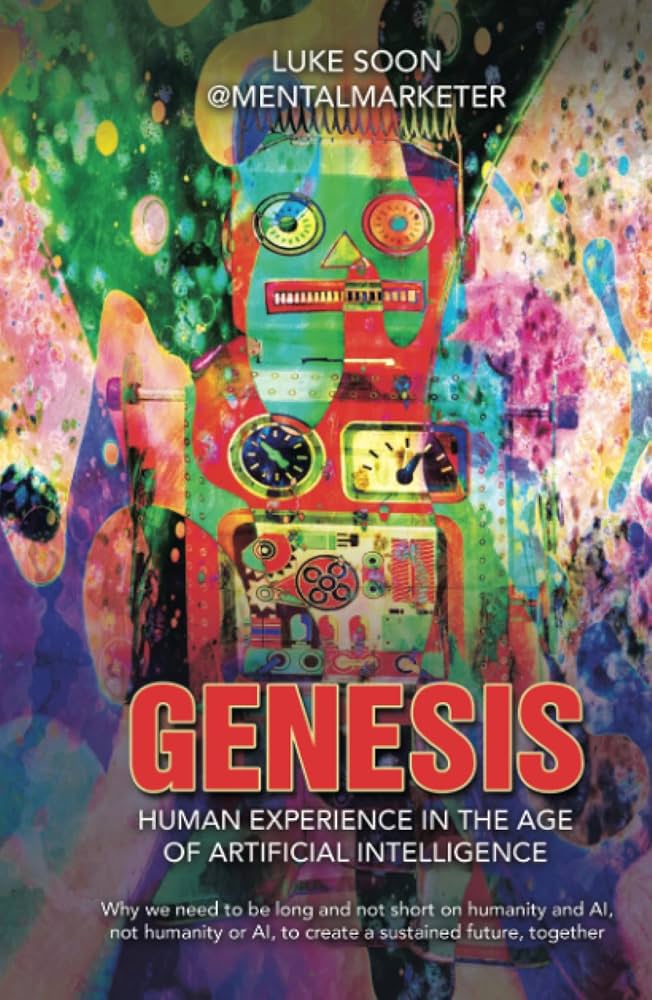
Dr Luke Soon has spent three decades in AI and now focuses on AI governance and safety. He is the author of Genesis: Human Experience in the Age of Artificial Intelligence and Synthesis: SuperIntelligence Protocol, and believes that only the governments of the world can set the trajectory for the Fork.
Continue the conversation on Substack, on X at @mentalmarketer, or on LinkedIn.
Short-term turbulence for long-term abundance.


Leave a Reply