

I. Abstract – Agents Are Running. Controls Are Not.
The single most important number in this year’s research on applied AI is not the headline. It is not “almost half of companies now generate value from AI”. It is a quieter pairing: 42% of companies expect their AI agents to act autonomously by 2030, and only 5% have the full set of agent controls in place today.
Forty-two percent of companies expect their AI agents to act on their own by 2030. Five percent have the controls to stop them. That 37-point gap is not a roadmap. It is a delegation of authority without the audit trail, the kill switch, or a named owner. Autonomy is not a feature a vendor ships. It is a privilege an agent earns, and almost nobody has earned it – “Earn the Right to Act” – Luke Soon.
That is a 37-point delegation gap. It is the distance between the authority enterprises intend to hand to machines and the accountability they have actually engineered. I call it the Five Per Cent Problem.

In this research note I examine the 2026 evidence through a Responsible AI lens. I triangulate a large global applied AI index against five further enterprise surveys and studies on adoption, governance maturity and AI-related security incidents. I then widen the lens to research published by the frontier AI laboratories and by the international institutions tracking AI and work, because an applied AI index is ultimately a statement about the future of work. Finally, I put the synthesis in front of my usual panel of AI voices and let them argue with it.
My conclusion is simple, and I suspect uncomfortable for some boards. The industry has quietly settled the value question. The live question is now the control question. And control, unlike value, cannot be self-reported into existence. It has to pass the enforceability test.
II. The State of Applied AI in 2026
The anchor dataset for this note is a global applied AI index published at the end of September 2026, based on a survey of 1,330 CxOs and senior leaders across more than 20 sectors. It sorts companies into four maturity tiers: 7.5% leaders, 41% scaling, 47% emerging and 4.5% stagnating.
Its thesis is that strategic clarity plus applied capability produces outsized returns: companies strong on both report five times the AI value of those that are not. The supporting numbers are striking:
| Measure | 2026 finding |
|---|---|
| AI spend as share of revenue | 3.3%, up from about 1% in early 2025 |
| AI spend sitting outside enterprise IT | 80% |
| Agentic share of total AI value | 22% today (17% a year earlier), 39% projected by 2030 |
| Companies expecting autonomous agents by 2030 | 42% |
| Companies with the full set of agent controls today | 5% |
| Agentic value uplift, six controls vs one | 3x |
| Value uplift, P&L tracking vs no formal measurement | 3.6% vs 1.2% of revenue |
| Expected workforce reduction from AI | 10% to 15% |
| Respondents expecting AI to create new work | 89% |
| Leaders doing strategic workforce planning | 55% (laggards 17%) |
The six agentic controls
This is where the Responsible AI story lives. The research identifies six controls required for safe agent autonomy:
- Memory and data access
- Human in the loop
- Testing and shut-off
- Interface control
- Clear ownership
- Security and audit
Together they run from oversight and rollback gates through to security, audit and cost guardrails. The authors argue that effective risk controls act as an enabler rather than a brake. I agree, and I have been saying so for years. But the evidence for that claim deserves more scrutiny than the headline invites.
III. Reading the Headline Critically
The widely reported “from 5% to almost 50%” story compares two different things. It sets last year’s leader tier alone against this year’s leader and scaling tiers combined.
Like for like, the shift is real but modest. Last year’s edition put 5% of firms in the leader tier and 35% scaling, a combined 40%. In 2026 the same two tiers sum to 48.5%. That is an 8.5-point improvement in a year, which is good news. It is not a tenfold leap.
| Maturity tier | 2025 | 2026 |
|---|---|---|
| Stagnating | 14% | 4.5% |
| Emerging | 46% | 47% |
| Scaling | 35% | 41% |
| Leaders | 5% | 7.5% |
| Creating value (scaling plus leaders) | 40% | 48.5% |
The emerging tier barely moved; the shift came from stagnating firms climbing and the scaling tier growing six points.
Three further cautions belong in any responsible reading.
The leader premium narrowed. Last year’s edition reported leaders earning 3.6 times the three-year shareholder return of laggards. This year’s reports 2.3 times. The gap between leaders and the field may be closing, not widening. That is arguably the more interesting finding, and it went unremarked.
The control claim is correlational. Firms with all six controls realise three times the agentic value of firms with one. But mature firms tend to do everything well. Controls may cause value, or value may fund controls. The data cannot yet tell us which.
It is self-reported. Value is declared by the executives who sponsored the programmes. This is the measurement gap I wrote about in The Measurement Gap: we count what is easy to declare, not what is hard to verify. A survey of intent cannot certify a control. Only an audit can.
IV. The Comparative Corpus
Read side by side, six 2026 sources disagree on how much value AI creates but agree almost exactly on how little of it is controlled. The table sets their governance signal next to their value signal.
| Source type | Sample | Value signal | Governance signal |
|---|---|---|---|
| Global applied AI index | 1,330 CxOs, 20+ sectors | 48.5% leaders or scaling | 5% have full agent controls; 42% expect autonomy by 2030 |
| Global executive survey on AI adoption | 1,719 respondents, 97 countries | 37% report any EBIT impact; high performers flat at about 6% | Security and risk the top barrier to scaling |
| Responsible AI maturity survey | About 500 organisations | Not measured | Average maturity 2.3 of 4; about 30% at level 3+ on strategy, governance and agentic controls |
| Enterprise AI adoption survey | 3,235 leaders, 24 countries | 66% report productivity gains | 21% have a mature agentic governance model |
| Annual academic AI index | Incident databases plus survey | Not its focus | 362 documented AI incidents in 2025, up from 233; firms with no responsible AI policy fell from 24% to 11% |
| Annual data breach cost study | Breached organisations | Not measured | Shadow AI in 43% of incidents, up from 20%; AI policies in place fell from 37% to 32% |
A widely cited analyst forecast completes the picture: more than 40% of agentic AI projects cancelled by the end of 2027, with inadequate risk controls named alongside cost and unclear value.
The convergence on the governance column is the story. Four independent methodologies land between 5% and 32% on genuine control maturity. No survey I can find puts it above a third.
V. The Frontier Lab Lens
Executive surveys measure what leaders say. The frontier AI laboratories measure what models and users actually do. Their evidence is more granular, and in places it quietly contradicts the enterprise surveys.
Usage telemetry: an economic index built on behaviour
One frontier lab now publishes a recurring economic index built on privacy-preserving analysis of how people actually use its models, increasingly in long-running agentic sessions as well as chat. Its mid-2026 edition added a linked survey of about 9,700 users. Four findings matter for this note:
- Autonomy is a product choice, not just a model property. For the same outputs, sessions in agentic coding tools show more AI autonomy than chat. The gap persists when the model is held constant, which suggests the surface people use matters more than the model behind it. Governance, in other words, must attach to the deployment, not only the model card.
- Delegation is accelerating. Over a third of respondents expect AI to do most or nearly all of their work tasks within a year, and close to six in ten put next year’s share in a higher band than today’s.
- The junior cliff. Respondents were most worried about their junior colleagues, with over a third putting the chance of a junior peer losing their job in the next year above 60%. Early-career workers report AI can already do the largest share of their work.
- Augmentation still leads, narrowly. An earlier 2026 edition found augmentation in 52% of conversations against 45% automation, though the longer trend shows automation slowly rising. Human involvement is most visible in the highest-wage tasks, where users and the model both do more work together.
The same research notes that as agents increasingly interact with each other, possibly in ways humans cannot easily follow, classifying AI’s work becomes harder. That is precisely the agent-to-agent gap I flag in the six-control list below.
Capability benchmarks: expert-level work
A second frontier lab has built a benchmark of 1,320 real work tasks across 44 occupations in the nine sectors contributing most to US GDP, authored by professionals averaging 14 years’ experience. Updated results presented in 2026 show frontier models matching or exceeding expert deliverable quality in blinded pairwise comparisons, with the top model at roughly 74%. The same work finds that pairing models with expert review improves practical performance. Human oversight is not only a safety control; it is a quality control.
The caveat matters: the benchmark measures one-shot tasks, not jobs. A job is a bundle of tasks plus judgement, relationships and accountability.
Policy architecture: from tasks to institutions
A third frontier lab’s contribution is less an index than a policy architecture. Its new policy institute, launched in September 2026, opened with an essay evaluating 11 economic policy options for a transition to advanced AI. It proposes responses that scale with evidence: expanded unemployment insurance and retraining for mild disruption, a negative income tax if wages fall persistently, and universal basic capital if gains shift structurally from labour to capital.
Earlier research from the same lab on virtual agent economies warned that agents may transact at speeds beyond human oversight, and called for identity, reputation and real-time audit infrastructure. That is the macro version of the six controls: an economy of agents also needs memory limits, interface control and audit.
The frontier labs, in short, are further ahead than the executive surveys on two questions those surveys barely touch: who bears the transition, and how agents govern each other.
VI. The Institutional Lens
The multilateral institutions and university research centres share one discipline the executive surveys lack: they separate exposure from impact. Their collective verdict is that aggregate displacement has not yet arrived, but the entry ramp into work is already narrowing.
The employer forecast
The largest global employer survey on the future of jobs, drawn from more than 1,000 employers covering over 14 million workers, projects 170 million roles created and 92 million displaced by 2030, a net gain of 78 million. Employers expect 39% of core skills to change over the same period. These are intentions, like the executive surveys, but they frame the headline that this is churn, not collapse.
The payroll evidence
The sharpest labour evidence anywhere comes from university research using high-frequency payroll records. It finds early-career workers aged 22 to 25 in the most AI-exposed occupations falling behind their less exposed peers. The August 2026 revision puts that shortfall at about 19% as of June 2026, up from 15% a year earlier. Experienced workers show no comparable gap, the adjustment runs through reduced hiring rather than layoffs, and the declines concentrate where AI automates rather than complements.
A companion dashboard tracking 4.6 million workers shows exposed entry-level employment shrinking 3.8% a year as of April 2026, against 2% growth in the least exposed roles. This is the most important labour statistic in the whole corpus.
The international scientific consensus
The 2026 international scientific report on AI safety, written by more than 100 experts with an advisory panel drawn from over 30 countries and international bodies, reaches the same split verdict. It finds no significant effect on overall employment to date, but flags junior workers in exposed occupations and warns that more autonomous agents make it harder for humans to intervene before failures cause harm. That second line is the safety-science version of the control gap.
The multilateral view
- Macroeconomic outlooks. The leading intergovernmental economic outlook found no signs of widespread labour displacement from business AI adoption at industry level in mid-2026, while noting entry-level professionals are absorbing a disproportionate share of the adjustment, and that young people face particularly difficult entry conditions.
- Task exposure. A refined global exposure index built from nearly 30,000 occupational tasks finds one in four jobs globally exposed to generative AI, rising to one in three in high-income economies. In high-income countries, 9.6% of women’s jobs sit in the highest exposure band against 3.5% of men’s. Transformation, not replacement, is the central expectation.
- Global exposure. International monetary estimates put around 40% of global employment exposed to AI, higher in advanced economies, while warning that lower-income workers have less access to the complementary skills that turn exposure into augmentation.
Europe’s distinctive contribution is the regulatory frame. The EU AI Act is now shaping responsible AI practice well beyond Europe’s borders, and the multilateral bodies all insist the outcome depends on policy choices, not technology alone.
VII. The Future of Work: What the Evidence Says Together
The labour evidence splits cleanly by method. Forecasts expect churn and net growth; behavioural and payroll data show the burden landing almost entirely on the young.
| Source type | Type of evidence | Headline labour finding |
|---|---|---|
| Global applied AI index | Executive survey (forecast) | 10% to 15% workforce reduction by 2030; 89% expect new work |
| Global executive adoption survey | Executive survey (reported) | Only 14% saw AI contribute to overall workforce decline in the past year |
| Global employer jobs survey | Employer survey (forecast) | 170m roles created, 92m displaced by 2030; 39% of skills change |
| Frontier lab economic index | Usage telemetry plus linked survey | Over a third expect AI to do most of their tasks within a year; strongest fear for junior colleagues |
| Frontier lab capability benchmark | Real-task benchmark | Top models match or beat experts on about 74% of one-shot tasks |
| University payroll research | Payroll records (observed) | Ages 22 to 25 in exposed roles 19% behind peers; experienced workers unaffected |
| International AI safety report | Scientific synthesis | No significant aggregate effect yet; junior workers flagged |
| Intergovernmental outlooks | Macro and labour statistics | No widespread displacement; entry-level bearing the adjustment |
| Global task exposure index | Task exposure analysis | One in four jobs exposed globally; women and clerical work most exposed |
| Frontier lab policy institute | Policy modelling | Trigger-based safety net, scaling to universal basic capital |
Three conclusions follow.
First, the Frozen Workforce is now measured, not hypothesised. Firms are not firing their way to AI productivity. They are not hiring. The payroll data shows adjustment through hiring, executives report little workforce decline, and aggregate employment remains at record highs. All three are consistent with a freeze at the front door.
Second, we are dismantling the apprenticeship. Experienced users say AI cannot yet replicate judgement, context and relationships, which they built by doing exactly the codified, junior work AI now absorbs. If the entry rungs vanish, the tacit expertise that protects mid-career workers is never formed. This is a governance question as much as an HR one, and none of the six controls touches it.
Third, capability is running ahead of both value and control. Benchmarks say models can do the work; the index says half of firms extract value; four surveys say barely a fifth to a third can govern agents. Where measured output rises without matching labour income or verified value, we drift toward what I have called Ghost GDP: activity that registers in productivity statistics but not in household lives. Trigger-based safety nets are the first serious attempt to say what society should do when that gap opens.
VIII. Convergence: Five Things the Evidence Agrees On
When consultancies, academia and the security industry reach the same conclusion by different routes, it is worth treating as signal rather than marketing.
- Governance lags deployment everywhere. Three separate executive surveys each find agentic controls the weakest link. The responsible AI maturity data adds that governance and agentic controls trail data and technology in every region, with Asia Pacific leading overall but showing the same gap.
- Policies are not controls. The academic index shows policy adoption rising sharply. The breach data shows working controls falling, with 92% of organisations hit by AI-related breaches lacking proper AI access controls. Organisations are writing principles faster than they are engineering enforcement.
- Ownership is the cheapest lever. Organisations with an explicitly accountable responsible AI function average a maturity score of 2.6 against 1.8 for those without. Clear ownership is also one of the six agentic controls. A named human owner costs nothing and moves every other score.
- Value follows redesign, not tools. The index’s own effort rule (10% algorithms, 20% technology and data, 70% people, organisation and process), the finding that high performers redesign workflows, and analyst warnings against bolting agents onto legacy processes all say the same thing. The work is organisational.
- Security is the binding constraint on scale. 62% of organisations cite security and risk as the primary blocker to agentic scale, and executive surveys rank it top too. This is exactly the space the six controls are meant to fill.
IX. Divergence: Where the Evidence Fractures
The reports disagree most where it matters most for capital allocation: how much value is real.
The value census. One index says nearly half of firms generate value. Another global survey, fielded in the same season, says only 37% see any EBIT impact, with its high-performer cohort stuck at about 6%. These are not contradictory so much as differently defined. One counts firms creating some value; the other sets the bar at enterprise profit. Readers should stop quoting either as “the” adoption rate.
The direction of governance. Academic and maturity surveys see responsible AI improving, from an average score of 2.0 to 2.3. Breach data, looking only at organisations that were breached, sees governance going backwards. Both can be true. The firms that skipped governance are the ones getting breached, which is the most persuasive evidence yet that controls pay.
The jobs story. Executives forecast a 10% to 15% workforce reduction by 2030 while 89% expect new work. Yet only 14% say AI contributed to an overall workforce decline in the past year. This is my Frozen Workforce thesis in data form: hiring freezes and attrition absorb the shock before redundancies show up in surveys.
Controls as enabler or tax. The index presents controls as a value multiplier. Analyst forecasts name inadequate risk controls and escalating costs side by side as reasons agentic projects get cancelled, and many practitioners read that as mitigation cost eating the return. The resolution, I think, is architectural. Controls bolted on after deployment are a tax. Controls designed into the agent platform from day one are infrastructure.
X. The Six Controls Through the TrustOS Lens
The six controls are the right list. What the research does not say is how a board would know any of them is real. That is the job of the enforceability test: a control exists only if it can be evidenced at runtime, by someone other than the team that built it.
TrustOS, my seven-layer agentic governance architecture, is mapped to the EU AI Act, NIST AI RMF, ISO/IEC 42001, Singapore’s Model AI Governance Framework for Agentic AI, MAS guidance and the OWASP Agentic Top 10. Here is how the list reads through it.
| Control | Failure it prevents | Regulatory anchor | Enforceability test: what an auditor should pull |
|---|---|---|---|
| Memory and data access | Data leakage, memory poisoning, privilege creep | EU AI Act data governance and cybersecurity duties; OWASP Agentic Top 10 | Per-agent identity, scoped credentials and an access log that ties every read to a purpose |
| Human in the loop | Unreviewed consequential decisions | EU AI Act human oversight (Article 14); Singapore’s emphasis on meaningful human accountability | Decision thresholds in code, with override and approval rates reported monthly |
| Testing and shut-off | Drift, runaway loops, cascading failure | NIST AI RMF Measure and Manage; ISO/IEC 42001 lifecycle controls | Pre-deployment evals, a tested kill switch and time-to-halt measured in drills |
| Interface control | Tool misuse, unsanctioned actions | OWASP Agentic Top 10; Singapore guidance on bounding agent actions | An allow-list of tools and APIs per agent, with blocked-call telemetry |
| Clear ownership | Diffused accountability | NIST AI RMF Govern; MAS supervisory expectations on accountability | A named executive owner per agent in a live registry, not a committee |
| Security and audit | Untraceable harm, unprovable compliance | EU AI Act record-keeping (Article 12); ISO/IEC 42001 | Immutable action logs replayable end to end, plus cost guardrails |
Two gaps stand out. First, the list governs agents individually but says little about agent-to-agent interaction, where the hardest failures will emerge as multi-agent systems scale. Second, it has no explicit control for affected people outside the firm: the customer denied a claim, the supplier dropped by a procurement agent. In my HX = CX + EX framing, governance that only protects the enterprise is half a system.
XI. The Panel Weighs In
As always, I put the argument in front of my panel. What follows are my readings of how each would respond, drawn from their long-standing public positions. They are paraphrases, not new quotations.
Yoshua Bengio would challenge the premise. His work on non-agentic “Scientist AI” questions whether autonomy should be the goal at all. He would read 42% expecting autonomous agents as the risk itself, not the prize, and ask why so few firms are choosing narrower agency by design.
Geoffrey Hinton would push on durability. Controls calibrated for today’s agents assume today’s capability. His recurring warning is that more capable systems may find ways around the controls we set. A shut-off switch is only a control if the system cannot route around it.
Erik Brynjolfsson would welcome the data and caution against impatience. His productivity J-curve predicts exactly this: heavy intangible investment, lagging measured returns, then acceleration. He would also flag that 89% expecting new work is the augmentation path he has long argued beats the “Turing Trap” of pure automation.
Andrew Ng would defend the builders. He has argued for years that we should regulate harmful applications, not the underlying technology. He would warn that six controls applied uniformly could become governance theatre that slows low-risk agents. Proportionality matters.
Fei-Fei Li would ask who is missing from the table. Human-centred AI starts with the people affected, not only the people deploying. She would land on the same gap I flagged in section X: no control on the list speaks for the customer, patient or citizen on the receiving end.
Max Tegmark would call the 5% figure what it is: an industry asking for trust before earning it. He has long argued AI should face safety standards like aviation or medicine, where you prove control before you ship.
Dario Amodei would likely find a 10% to 15% workforce figure conservative, given his warnings about entry-level white-collar work. He would also note that responsible scaling only works when capability thresholds trigger controls automatically, not when they wait for a quarterly committee.
Eric Schmidt would go straight to agent-to-agent interaction. He has said that when agents start coordinating in ways humans cannot follow, that is the moment to pull the plug. The six controls are per agent; his concern is the network.
Mo Gawdat would recognise the shape of the moment. His view of a hard near term before a better long term is the same arc as my own tagline: short-term turbulence for long-term abundance. The 37-point delegation gap is where the turbulence lives.
My response to the panel
The panel splits roughly into builders (Ng, Brynjolfsson) and guardians (Bengio, Hinton, Tegmark). I think both are right, which is why this is a Long-AND, not a Short-OR. Ng is right that uniform controls would strangle low-risk agents. Bengio is right that autonomy should be earned, not assumed. The answer is tiered autonomy: agents earn decision rights as their controls prove out in production, exactly as a junior employee earns sign-off authority.
XII. Synthesis: From Controls to Loop Governance
Read together, the 2026 evidence describes an industry at the hinge of my Prompts to Loops to Loop Governance progression.
Prompts were the 2023 to 2024 era: humans asked, models answered, and governance meant acceptable-use policies. Loops are where we are now: agents plan, call tools, read memory and act, with humans increasingly outside the cycle. A 22% agentic share of AI value says the loops are already running. Loop Governance is what the 5% have built: controls that sit inside the loop and operate at machine speed, rather than reviewing outputs after the fact.
The central insight is that a policy governs people while a control governs loops. A falling share of firms with no responsible AI policy and a falling share with working controls are not a contradiction. They are the same organisations writing for humans while their agents run unsupervised.
This is also where The Fork becomes concrete. The Star Trek path is tiered autonomy, earned through evidenced controls, with value compounding because trust compounds. The Mad Max path is the firms inside that 37-point gap, which grant autonomy first and discover their control gaps through incidents, breaches and regulators. Project cancellation forecasts and rising breach costs are early dispatches from that second road.
One line summarises my reading of every report in this note: autonomy is a privilege an agent earns, not a feature a vendor ships.
XIII. Implications for Boards and Asia Pacific Leaders
Boards should stop asking whether AI creates value and start asking whether their agents could pass an independent control audit within 90 days. One 2026 audit-readiness survey found that 78% of executives lack strong confidence they could.
Seven questions I would put to any board this quarter:
- Inventory. Can we list every agent in production, including those built outside IT? With 80% of AI spend now sitting outside enterprise IT, most agents may be invisible to the CIO.
- Ownership. Does each agent have one named executive owner, not a committee?
- Decision rights. Which decisions can each agent take without approval, and who signed that off?
- Shut-off. When did we last test a kill switch, and how long did the halt take?
- Evidence. Could an auditor replay any agent action end to end from immutable logs?
- Shadow AI. What is our measured shadow AI exposure, now that it features in 43% of breaches?
- Affected people. Who outside the firm can contest an agent’s decision, and how?
For Asia Pacific specifically, there is a quiet advantage. The region leads on overall responsible AI maturity, and Singapore published one of the world’s first agentic AI governance frameworks in January 2026. Regional leaders have a reference architecture that most of their Western peers are still waiting for. The opportunity is to convert that policy lead into an engineering lead before the agentic wave crests.
XIV. Limitations
This note synthesises publicly available 2025 and 2026 research from global consultancies, university research centres, frontier AI laboratories, security researchers and multilateral institutions. Every survey cited is self-reported, sampled differently and defined differently; the comparison tables align signals, not identical measures. Breach data covers breached organisations only. Laboratory-published indices draw on their own users, who skew technical, and capability benchmarks measure tasks rather than jobs. The panel section paraphrases public positions and should not be read as quotation.
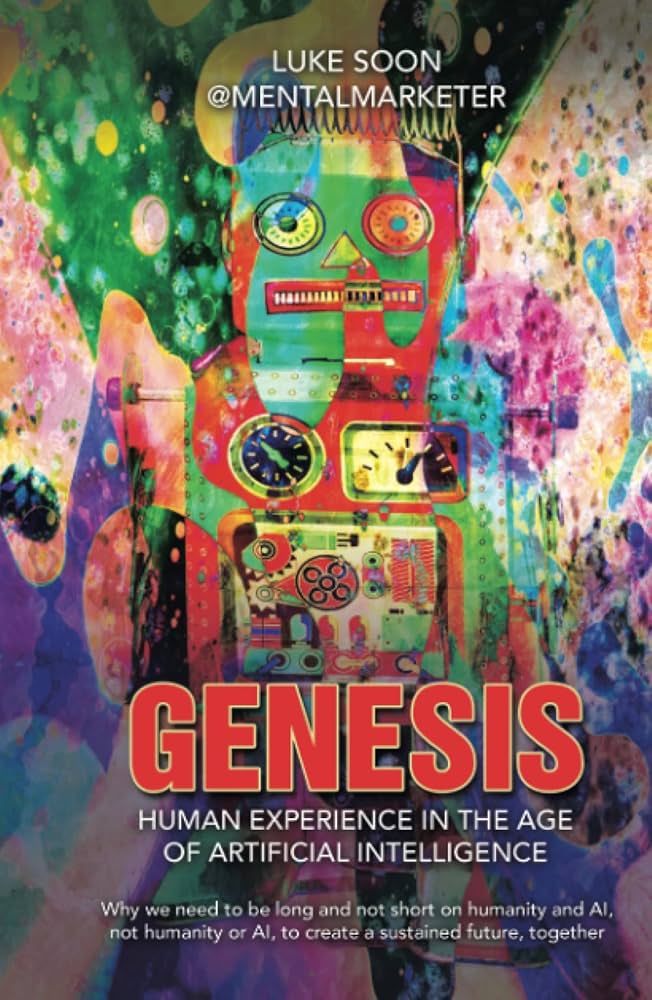
Luke Soon is an AI futurist, ethicist and author of Genesis: Human Experience in the Age of Artificial Intelligence. Short-term Turbulence for Long-term Abundance.


Leave a comment