

In the frenzied global contest to build ever-larger models and amass compute, one small nation has quietly claimed a different, arguably more enduring prize. As highlighted in a recent Asia Times article, Singapore is excelling in the AI race that truly matters for enterprise deployment: the race to establish trust, governance, and safe assurance at scale. asiatimes.com
While headlines fixate on frontier capabilities dominated by the US and China, Singapore is positioning itself as the world’s “trust anchor” – the neutral, credible arbiter that enables powerful AI to be responsibly deployed in regulated sectors such as finance, healthcare, and government. This is not a strategy of brute force but of institutional sophistication, and it aligns perfectly with the principles I have long championed in my work on safe, responsible agentic AI transformations.
The Two Races: Capability vs. Governance
The article astutely distinguishes between two parallel competitions. The first is the capability race – who builds the most powerful models, clusters the most GPUs, and attracts the brightest technical talent. Singapore, with its compact size and population, cannot and should not aim to dominate here. asiatimes.com
The second race concerns who defines what is safe, auditable, and deployable in the real economy. This is where economic value concentrates in the coming decade. Boards, regulators, and counterparties demand not raw intelligence but provable alignment with human values, risk controls, and cross-border credibility. Here, Singapore leads decisively.
Its layered approach – from the foundational Model AI Governance Framework (2019), through generative AI updates (2024), to the world-first framework for autonomous/agentic AI launched at Davos in January 2026 – demonstrates foresight. Tools like AI Verify, an open-source testing toolkit mapped to NIST, the EU AI Act, and ISO 42001, allow organisations to achieve multi-regime compliance through a single, credible process. Singapore’s AI Safety Institute further anchors ASEAN efforts, with influences extending to standards adoption in markets like India. asiatimes.com
Why This Matters: My Longstanding Thesis on Trust and Human Experience
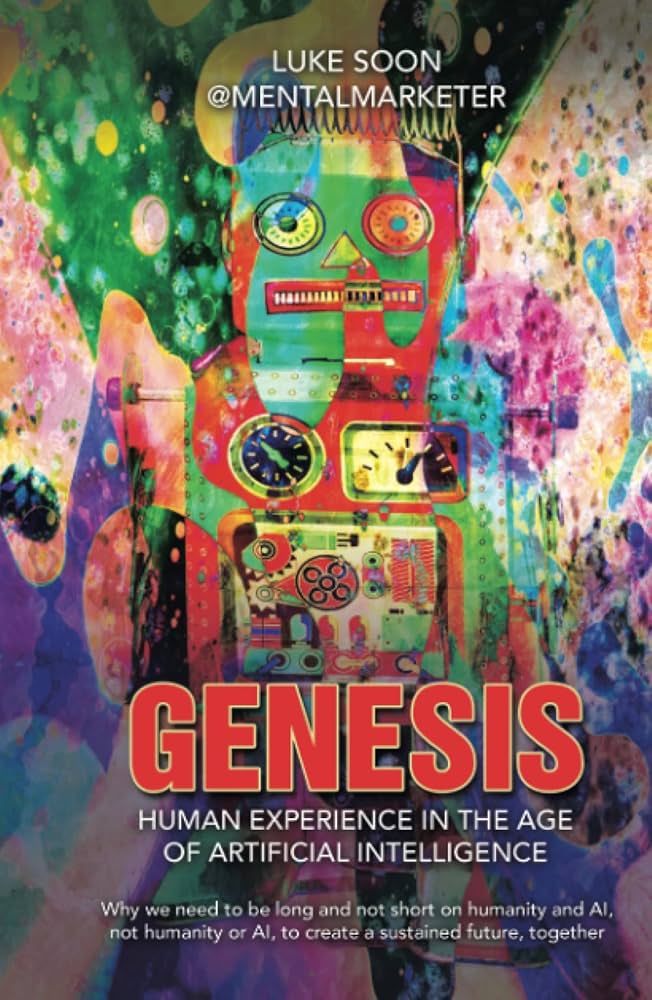
This governance-first approach resonates deeply with the philosophy I have articulated across my LinkedIn posts, articles, and book Genesis: Human Experience in the Age of Artificial Intelligence. Trust is the only currency in the experience economy and the age of intelligence. We are not merely building tools; we are orchestrating a new relationship between humanity and autonomous systems. sg.linkedin.com
In pieces such as “Governing the Agent” and discussions around the Agentic Organisation, I have emphasised that scaling agentic AI in production requires rigorous runtime governance, orchestration, and human accountability. Autonomous agents promise radical efficiency and transformation – in marketing, workforce redesign, and beyond – but without embedded safety, they risk the “rogue agent” problem or outrunning our guardrails. Singapore’s frameworks address precisely this: clear limits on autonomy, sandboxing, auditability, and maintained human oversight in decision loops. @mentalmarketer
My work consistently stresses a balanced, humanist stance: we must be “long on both humanity and AI.” Short-term turbulence – job displacement, ethical dilemmas, overtrust risks – is inevitable as we transition toward abundance. Yet, with responsible design, agentic AI can elevate human purpose rather than erode it. Singapore’s pragmatic, pro-innovation model exemplifies this. It avoids heavy-handed regulation that stifles progress while building the institutional scaffolding needed for confident adoption. sg.linkedin.com
The Underwriters Laboratories Analogy – and Singapore’s Structural Moat
The Asia Times comparison to Underwriters Laboratories (UL) is apt. UL never manufactured the products; it certified them, creating a durable, high-margin global moat. Singapore is doing the same for AI: purchasing capability where needed (e.g., partnerships like Mistral + HTX) while exporting legitimacy and assurance. asiatimes.com
This mirrors Switzerland’s role in global finance – neutrality, predictability, and deep institutional credibility trump raw scale. Singapore’s advantages are profound: decades of clean governance, bilingual talent bridging East and West, English-language proficiency, rule of law, and geopolitical pragmatism. As an AI leader at PwC in Singapore, I see daily how multinationals value this trusted environment for piloting and scaling responsible AI initiatives.
Challenges and the Path Forward
Success is not guaranteed. Governance leadership depends on underlying models remaining valuable and on frameworks evolving with capability leaps. Regulatory fragmentation (e.g., between prescriptive EU rules and more fragmented approaches elsewhere) could create arbitrage. Talent retention and ecosystem depth remain ongoing needs. Geopolitical headwinds may test neutrality.
Nevertheless, Singapore’s strategy plays to its comparative strengths, much as it has in finance, logistics, and arbitration. It bridges ASEAN and the Global South, offering an alternative to pure US or China-centric stacks.
In my view, this “race nobody is watching” will define the winners of the AI economy. Raw power without trust leads to stalled adoption and societal friction. Trust without sufficient capability is hollow. Singapore is synthesising both – capability sourced wisely, trust architected rigorously.
As I have written before, AI may be humanity’s last invention if we get the stewardship right. Singapore’s model offers a pragmatic blueprint: govern the ungovernable through thoughtful architecture, keep humans in the loop as orchestrators of purpose, and build toward long-term abundance.
The future belongs not just to those who build the strongest AI, but to those who make it safely usable by the world. In that race, Singapore is already ahead. The rest of us would do well to take note – and to build responsibly alongside it.


Leave a Reply