

By Dr Luke Soon — Human Experience Architect, Futurist, AI Ethicist
The most damning sentence in Stanford HAI’s 2026 AI Index Report is not in the report itself. It is the silence around it. Across more than four hundred pages of meticulously sourced data, the conclusion writes itself: we have built systems that perform at doctoral level in mathematics and physics, and we have built almost nothing — institutionally, culturally, philosophically — to absorb what we have made.
The co-chairs, Yolanda Gil and Raymond Perrault, put it more politely. They observe a field scaling faster than the systems around it can adapt. I would put it less politely. The mirrors are cracking.
The capability story most readers will skim
Begin with the numbers, because they matter. SWE-bench Verified — the benchmark that asks AI to repair real software bugs — vaulted from 60% to near-perfect performance in a single year. Humanity’s Last Exam, engineered by domain experts to be unbeatable, has seen frontier models climb from under 9% to comfortably over 50% in twelve months. Claude Opus 4.6 and Gemini 3.1 Pro now sit atop that leaderboard. Google’s Gemini Deep Think collected a gold medal at the International Mathematical Olympiad.
And yet. The same systems that crack PhD-level science questions read analogue clocks correctly only half the time. Robots succeed at 12% of household tasks. The frontier is jagged, and the jaggedness is the point. We do not have machines that are merely ‘less capable than humans’ or ‘more capable than humans’. We have machines whose competence map bears no relation to our own. The public is being asked to trust an intelligence whose strengths and blind spots no one can intuitively predict — not even the engineers who built it.
A substrate, not a tool
Adoption has moved at a velocity no prior consumer technology has matched. Generative AI reached 53% of the global population in three years. The personal computer needed a decade to manage less. The internet took longer still. Eighty-eight per cent of organisations now use AI in some form. Four in five university students use it for coursework.
We are not adopting a tool. We are absorbing a substrate. And substrates rewrite the organisms that grow on them.
The transparency collapse
Here is where the report ought to set off alarms in every parliament and boardroom on Earth. The Foundation Model Transparency Index — which measures how openly frontier labs disclose training data, compute, capabilities and risks — has fallen from an average of 58 to 40. Of the 95 most notable models released last year, 80 shipped without training code. The most powerful systems in 2026 are also the least transparent in the field’s history.
This is not a market failure. It is a governance failure dressed as competitive strategy. We have allowed the firms with the greatest concentration of compute, capital and talent to disclose less, precisely as their products begin to mediate education, healthcare, work and intimate life. We would not accept this from a pharmaceutical company. We would not accept it from a nuclear utility. We accept it from AI laboratories because regulators, frankly, do not yet understand what they are looking at — and a great many legislators are not sure they want to.
The fifty-point chasm
If transparency is the first crisis, perception is the second — and it is more politically combustible. Stanford documents a fifty-point gulf between expert and public attitudes toward AI’s labour-market impact in the United States: 73% of experts are positive, only 23% of the general public agrees. The same shape recurs across healthcare, the economy and education.
Experts and citizens are no longer reading the same book.
Public trust in the US government’s capacity to regulate AI sits at 31% — last among surveyed nations. Globally, the European Union is the most trusted regulator at a 53% median; the United States trails at 37%; China at 27%. The geopolitical implications are obvious. The human-experience implications are deeper. We are building a technology whose societal licence is being granted by populations who do not believe in the integrity of the process granting it.
The China inversion
For most of the past decade, the conversation has been framed as American leadership versus Chinese ambition. The 2026 Index quietly buries that framing. As of March 2026, the leading American model — Anthropic’s — holds a 2.7% edge over China’s best. American private investment hit $285.9 billion in 2025; China’s official figure is $12.4 billion, a ratio of 23 to 1. Yet performance has converged.
The reason is concealed in another statistic. AI researchers relocating to the United States have fallen 89% since 2017. America is outspending the world and losing the talent that converts spend into capability.
For those of us tracking the new architecture of AI governance — Singapore’s IMDA and AI Verify, the UK AI Security Institute, France’s INESIA, Germany’s BSI, Korea’s AI Basic Act, Japan’s Basic Plan, India’s AI Safety Institute — the implication is sobering. The ‘Western lead’ has been a useful fiction for far too long. The lead is gone, and with it the implicit assumption that AI’s values, defaults and aesthetics would be primarily Anglophone.
The price tag the press will not print
Stanford has done something brave in this edition: it has put real numbers on the environmental cost. Training a single frontier model now generates emissions equivalent to seventeen thousand cars driven for a year. AI data-centre capacity has reached 29.6 gigawatts, roughly the peak electricity demand of the state of New York. Cumulative AI energy use is now comparable to the consumption of an entire mid-sized European nation.
When we ask why public trust is eroding, we might pause to ask whether the public has noticed something the experts have not: that the bargain on offer — accelerated convenience traded for unaccounted ecological cost — looks remarkably like the bargain that gave us the climate crisis in the first place. We are running the same experiment again, in compressed time, with fewer guardrails and more powerful machinery.
The labour question, honestly told
Productivity gains are real, but the report refuses the convenient narrative. AI delivers 14–26% improvements in customer support and software development, and as much as 72% in marketing functions. For tasks that demand genuine judgement, the effects are weak, ambiguous, or sometimes negative. AI-agent adoption — the supposed coming wave — remains in single-digit percentages across most business departments.
The implication for the World Economic Forum’s projection of 1.1 billion jobs transforming by 2030 is not that the forecast is wrong. It is that the transformation will be uneven, contested, and felt asymmetrically across class, geography and skill level. Those of us advising leaders cannot honestly recommend an AI strategy. There is no AI strategy. There are AI strategies — plural, sectoral, granular — and the organisations that grasp this distinction will outpace those still chasing the press-release vision.
The governance scoreboard
The Index does what most reports flinch from. It scores us. The frameworks meant to absorb AI’s impact — national AISIs, supranational bodies, voluntary codes — have not kept pace. The Future of Life Institute’s Safety Index has already graded every major frontier laboratory D or below on existential safety planning. McKinsey’s AI Trust Maturity score sits at 2.3 out of 4. Grant Thornton finds that 78% of organisations cannot pass a basic governance audit. Gartner forecasts more than two thousand ‘death by AI’ legal claims by the end of this year.
Stanford’s 2026 data layers the macro picture on top. Capability has compounded. Transparency has receded. Trust has eroded. Investment has concentrated. Talent has migrated. None of these arrows are bending the right way.
Singapore’s Agentic AI Framework, the UK AISI’s Frontier AI Trends, the International AI Safety Report 2026 led by Yoshua Bengio with more than a hundred experts — these are not the slow background music. They are the only adults at the table. And the adults are massively outnumbered.
What the report is really about
I must now speak as a Human Experience Architect rather than as an analyst. The deepest finding in the 2026 Index is not technological. It is anthropological. Stanford projects that 10% of American adults will use an AI companion daily by 2027, rising to 30% by 2040. In Singapore, 81% are already excited about AI companionship. In Indonesia, 76%. The frontier of intimate adoption is not in the West.
We are entering a redefinition of intimacy, of consultation, of inner life — and that redefinition is being designed, almost entirely, by firms whose disclosure scores have just fallen by a third. Whatever else artificial intelligence is doing, it is becoming a partner in human meaning-making. And we have given essentially no thought to whether the partner is fit for the role.
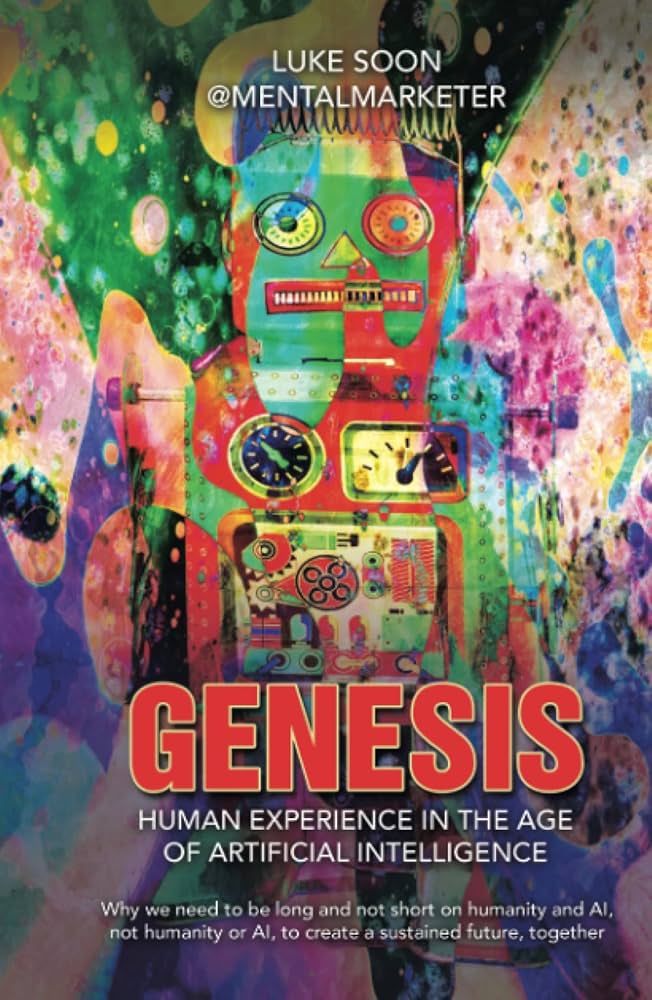
This is the Genesis question my work returns to. Not what will AI do? but who will we become alongside it? The 2026 Index, read carefully, tells us we are becoming faster, more dependent, less informed, less trustful, more nervous, and more excited — all at once. The coherence is breaking down. The mirror is cracking.
Four provocations
So, what do we do?
First, stop pretending. The capability gap between top laboratories has narrowed to noise. The governance gap has widened to a canyon. Any leader, policymaker or institution still treating AI as ‘the next major IT investment’ is misreading the moment as profoundly as twentieth-century cabinets misread the splitting of the atom.
Second, demand transparency by design. If a model cannot disclose its training data, compute footprint, evaluation methodology and risk profile, it should not be permitted to mediate education, healthcare, public services or finance. The market will not solve this. Regulation alone will not solve this. Procurement might. Buyers — especially government buyers — hold the only lever moving fast enough to matter.
Third, invest in the human side as aggressively as the technical side. The fifty-point trust gap is not a communications problem. It is a participation problem. Citizens are not anti-AI; they are anti-being-talked-down-to. Until expertise becomes a conversation rather than a verdict, the chasm will widen, and democratic legitimacy for AI policy will continue to erode.
Fourth, build governance for the world that exists, not the world we wish existed. China is at parity. Talent is mobile. Models are converging. The frameworks now being assembled — by Singapore, the EU, the UK, Korea, France, Japan — must be interoperable across jurisdictions or they will become irrelevant within five years. The age of the lone national framework is already ending; the age of mutually recognised AI assurance has not yet begun. The gap between those two ages is where most of the danger lives.
The Genesis moment
The 2026 AI Index is the most honest mirror the field has yet held up to itself. It does not claim AI has plateaued. It does not claim AI is hype. It says the technology is doing exactly what its champions promised and exactly what its critics feared, simultaneously, and that we have failed to construct the human infrastructure to metabolise the result.
We are at a Genesis moment, in the original sense of the word. Something is being made. Naming it correctly is the first act of taking responsibility for it.
The mirrors are cracking. Read what they show us — carefully, urgently, together — before the next year of data arrives. Because if these trends hold, the 2027 report will not be written for us.
It will be written about us.
 Genesis: Human Experience in the Age of Artificial Intelligence | Synthesis: The Superintelligence Protocol
Leave a comment