
What Conversations With The Godfathers and Godmother of AI Just Revealed — And Why Nobody In Power Is Ready For It
I did not begin my career as a pessimist.
I spent three decades believing — genuinely, not performatively — that technology in service of humanity is one of the most ennobling pursuits available to us. I have architected systems. Led transformations across industries and jurisdictions. Written two books arguing that the age of artificial intelligence, navigated wisely, could represent the greatest expansion of human flourishing since the agricultural revolution.
I still believe that.
But somewhere between the boardroom optimism and the data I am now reading — and the conversations happening, quietly, among the people who built this technology — something has become impossible to ignore.
The disruption is not coming.
It is here. Now. Accelerating. And the social architecture we would need to absorb it does not yet exist.
This is not a comfortable blog to write. It is not a comfortable blog to read. But comfort, right now, is the most dangerous thing any of us could afford.
THE FIRST FACT YOU NEED TO ACCEPT
We are living through the first moment in 300,000 years of human existence in which humanity is no longer the smartest entity on the planet.
Not potentially. Not eventually.
Now.
The chapter in which our species held uncontested cognitive supremacy — the chapter that underpins every philosophy, every religion, every political system, every economic theory ever constructed — is closing. The systems we built to augment us are surpassing us. Not across all domains. Not uniformly. But in ways that are accelerating, broadening, and compressing time in ways that our institutions were never designed to absorb.
This is not the premise of a science fiction novel.
It is the empirical reality of April 2026.
And the people who built these systems are saying so, plainly, with the authority of those who understand the mathematics.
═══════════════════════════════════════
THE SIX NUMBERS THAT SHOULD STOP YOU
═══════════════════════════════════════
300 million — Jobs potentially affected by generative AI globally by 2030 (Goldman Sachs)
92 million — Jobs projected displaced by 2030 (WEF Future of Jobs 2025)
40% — Share of all global jobs facing meaningful AI exposure (IMF 2024)
60% — Share of jobs in advanced economies at high AI exposure (IMF 2024)
$581.69 billion — Global corporate AI investment in 2025 alone (+129.9% year-on-year)
~100% — AI performance on SWE-Bench coding benchmark, up from 60% one year prior (Stanford HAI 2026)
We are not debating whether disruption is coming. We are measuring how fast it has already arrived.
═══════════════════════════════════════
PART ONE: WHY WE WORK — THE DEEP HISTORY OF THE CONTRACT
To understand what is being dismantled, we must understand what work actually is.
Not as economists define it. But as a foundational feature of the human condition.
For the overwhelming majority of our species’ existence, work was inseparable from survival. You hunted, or you starved. You farmed, or you perished. There was no distinction between labour and life. They were the same thing.
The agricultural revolution, approximately 10,000 years ago, introduced something transformative: surplus.
When one farmer could produce enough food for two people, the second person could become something else. A priest. A merchant. A philosopher. The entire edifice of human civilisation rests on that single insight — specialisation, enabled by surplus, enables complexity.
The Industrial Revolution repeated this at scale and at speed.
Machines mechanised physical drudgery. Humans moved up the cognitive stack — becoming analysts, managers, designers, researchers, strategists. The implicit social contract of every technological revolution since was this:
The machines take the body work. Humans keep the thinking.
Artificial intelligence breaks that contract.
For the first time in the history of our species, the machine is not merely taking the grunt work. It is climbing the cognitive ladder alongside us.
And increasingly, ahead of us.
THE TECHNOLOGY ACCELERATION CURVE
AI CAPABILITY BENCHMARKS — RATE OF IMPROVEMENT:
2023: AI solves 4.4% of problems on SWE-Bench (software engineering)
2024: AI solves 71.7% of problems on SWE-Bench
2026: AI at near-100% of human baseline on SWE-Bench
That is a 23x improvement in 3 years.
AI capability is doubling approximately every 6–7 months.
For comparison:
Moore’s Law (transistor density): doubles every ~24 months
Human cognitive development: effectively static
THE ADOPTION CURVE:
Generative AI reached 53% of the global population faster than either the PC or the internet.
88% of surveyed organisations now deploy AI tools (Stanford HAI 2026).
$581.69 billion invested in AI in 2025 alone — up 129.9% year-on-year.
The money is moving faster than any governance system in human history.
PART TWO: THE PYRAMID BECOMES A DIAMOND — AND THE LADDER WE ARE DESTROYING
One framing I have found more analytically useful than almost anything in the policy literature is this:
The traditional pyramid of work is becoming a diamond.
AI is simultaneously eliminating the base — entry-level tasks, administrative roles, routine research, document review, boilerplate code generation — whilst making experienced professionals dramatically more productive. The broad base collapses inward. The middle widens temporarily. The top remains small.
This sounds almost manageable.
It is not.
Here is why it is, in fact, a civilisational crisis dressed as a productivity story.
The base of the pyramid is not merely where the lowest-paid work happens. It is where careers begin.
Junior lawyers do document review because that is how you develop the pattern recognition that makes you a formidable senior counsel. Junior analysts build financial models from scratch because that is how you develop economic intuition. Junior software developers write boilerplate code because that is how you develop engineering judgement. Junior consultants build slide decks because that is how you learn to construct an argument under pressure.
If AI eliminates those entry points, there is no ladder.
The senior professionals who survive — those with decades of accumulated craft, the irreplaceable human judgement that AI cannot replicate — become extraordinarily valuable. But nobody becomes those senior professionals without the formative years of doing the work that AI now does.
Within a single generation, when today’s senior professionals retire, there will be nobody behind them with the depth of craft to replace them.
We are not merely automating tasks.
We are dismantling the apprenticeship system that has transmitted professional knowledge across generations for millennia.
The diamond economy does not just hollow out the bottom. It breaks the pipeline that produces excellence at the top.
THE GENERATION Z TRAP
The youngest workers are being hit first. And hardest.
→ 20% employment decline for software developers aged 22–25 since late 2022 (Stanford HAI)
→ 13% employment drop for 22–25-year-olds in AI-vulnerable roles in the same period
→ 78,557 tech workers laid off January–April 2026 alone; 48% directly attributed to AI
→ 77% of new AI-related roles require master’s degrees — creating a structural skills cliff
Generation Z entered the workforce just as the base of the pyramid dissolved.
They were told to reskill.
Into what, exactly?
For how long, before that too is automated?
This is not a skills problem. It is a pipeline problem. And we have no serious answer to it.
═══════════════════════════════════════
PART THREE: THE CAPITALIST PARADOX — THE ENGINE EATING ITS OWN FUEL
Here is the question that should keep every boardroom in the world awake.
What happens to the consumer economy when the consumers have no income?
The productivity gains from AI are real. The efficiency dividends are extraordinary. Corporations are capturing them with remarkable speed — eliminating headcount, compressing workflows, deploying agents that do the work of dozens.
But those corporations are also, simultaneously, eliminating the purchasing power of the people who buy what they make.
This is not a new insight. Henry Ford understood it in 1914, when he doubled wages — not out of altruism, but out of systems analysis. Workers are consumers. Purchasing power is the foundation of demand. Destroy wages, and you destroy the market for your own products.
A century later, in the midst of the most significant economic disruption in human history, this foundational logic appears to have been entirely forgotten by the corporations driving the disruption.
The productivity gains are being captured. The consumer base is being hollowed out. The machine is eating its own fuel.
═══════════════════════════════════════
THE BIFURCATION: WHO GAINS, WHO LOSES
═══════════════════════════════════════
THE PRODUCTIVITY DIVIDEND — WHERE IT’S GOING:
→ AI-exposed industries: productivity growth from 7% (2018–2022) to 27% (2018–2024) — nearly quadrupled (PwC 2025)
→ Revenue per employee in AI-heavy sectors: 3x higher than non-AI sectors
→ Workers with AI skills: 56% wage premium over equivalent workers without (up from 25% the prior year)
→ Projected AI contribution to global GDP by 2030: up to $15.7 trillion (PwC)
→ 75% of AI value: captured by just 20% of firms (Stanford HAI 2026)
THE DISPLACEMENT COST — WHERE IT’S FALLING:
→ 7.5 million data entry and administrative jobs projected eliminated by 2027
→ 80% automation potential for customer service representative roles
→ Customer service: highest immediate risk sector, 2024–2027 timeline
→ 92 million jobs displaced globally by 2030 (WEF)
THE WIDENING GAP:
A 56% wage premium for AI-skilled workers does not help the worker who cannot acquire those skills.
Net job gains on paper mask catastrophic sectoral and geographic concentration of losses.
═══════════════════════════════════════
PART FOUR: WHAT THE DATA ACTUALLY SAYS — AND WHAT IT CONCEALS
The Stanford HAI 2026 AI Index, released this month, is the most authoritative empirical audit of AI’s current state. Let me give you the numbers without the editorial softening.
AI coding performance on SWE-Bench: from 60% to near 100% of human baseline in a single year.
Frontier models now answer PhD-level science questions correctly in domains previously considered exclusively human.
Organisational AI adoption: 88% of surveyed companies.
Documented AI incidents: 362 in 2025, up from 233 the prior year — a 55% year-on-year increase.
Only half of American middle and high schools have any AI policy whatsoever.
The report’s co-chairs write, with admirable restraint: “The data reveals a field that is scaling faster than the systems around it can adapt.”
That sentence is the most important sentence in the report.
PwC’s 2025 Global AI Jobs Barometer — drawn from nearly one billion job advertisements across six continents — finds that productivity growth has nearly quadrupled in AI-exposed industries since 2022. Workers with AI skills command a 56% wage premium. The most AI-exposed industries generate 3x higher revenue per employee than less-exposed ones.
The optimistic reading: AI is making workers more productive and better compensated.
My reading: this is a precise measurement of how rapidly the economy is bifurcating into two classes of human being — those who can work with AI, and everyone else.
The World Economic Forum’s Future of Jobs 2025 report provides the headline optimists love: 170 million new jobs created by 2030, 92 million displaced, net gain of 78 million.
I want to be direct about why this framing is misleading, even if the arithmetic is correct.
The 92 million displaced jobs are concentrated in specific occupations, geographies, and demographics — clerks, administrators, call centre workers, entry-level analysts. The 170 million new jobs require skills those workers largely do not have. They will be different people, in different countries.
Describing a net gain of 78 million jobs to a 50-year-old accounts payable manager in Manila is not a policy.
It is arithmetic deployed as anaesthetic.
═══════════════════════════════════════
THE DUAL CRISIS IN ONE STATISTIC
═══════════════════════════════════════
A global survey of 1,010 C-suite executives (WEF 2025) found:
92% report up to 20% workforce overcapacity — too many workers doing obsolete tasks.
94% simultaneously face AI-critical skill shortages of 40% or more.
By 2028: nearly half of leaders expect more than 30% excess workforce capacity.
Two crises. One moment.
Too many workers doing the wrong things.
Not enough workers who can do the new things.
This is not a skills gap that reskilling slogans will close.
This is a structural civilisational mismatch.
═══════════════════════════════════════
PART FIVE: THE GLOBAL SOUTH — THE EXTRACTION NOBODY IS NAMING
I write from Singapore. I advise organisations across Asia-Pacific. I watch this dynamic play out in real time.
And what I see — beneath the global headlines about productivity gains and net job creation — is a form of economic extraction that has no historical precedent in its precision or its scale.
The entire post-war development model for the Global South was built on one foundational insight: cheap labour creates comparative advantage.
South Korea. Taiwan. China. Thailand. Vietnam. Bangladesh. Every Asian economic miracle of the last sixty years began with the same playbook. Start with manufacturing exports. Accumulate capital. Invest in education. Move up the value chain. Lift hundreds of millions out of poverty over two to three generations.
Artificial intelligence and robotics have pulled up that ladder.
When the marginal cost of labour approaches zero — when a humanoid robot can be leased for $9,000 per unit, and that unit improves under the law of accelerating returns — cheap human labour is not merely less competitive.
It is economically irrelevant.
The Philippines built a middle class on business process outsourcing — 7.4% of GDP from BPO alone, comparable in magnitude to remittances. The IMF now estimates 36–40% of Philippine jobs are highly exposed to AI displacement. Call centre employment, which generated a Filipino middle class over two decades, is being systematically hollowed out by AI-powered tools deployed by American and European corporations.
Those corporations book their productivity gains in Delaware or Dublin.
The displaced worker in Cebu has no claim on the efficiency dividend captured in Menlo Park.
India’s outsourcing industry — millions of software developers, data processors, back-office specialists — faces identical structural exposure. The AI systems replacing their work were built in America, trained on global data, deployed for global clients.
The productivity gains accrue to Silicon Valley.
The job losses accrue to Bengaluru and Chennai.
═══════════════════════════════════════
THE GEOGRAPHY OF DISRUPTION
═══════════════════════════════════════
GAINS CAPTURED BY:
→ US technology corporations and shareholders
→ American and European capital markets
→ AI infrastructure owners: data centres, chip manufacturers
→ Workers with AI skills (56% wage premium and rising)
COSTS BORNE BY:
→ Philippines: 36–40% of jobs AI-exposed; BPO = 7.4% of GDP at immediate risk
→ India: Millions of IT/BPO workers facing structural displacement
→ Bangladesh, Vietnam, Cambodia: Manufacturing automation accelerating
→ Global South broadly: No fiscal capacity for UBI, reskilling, or safety nets
MECHANISM TO TRANSFER GAINS TO LOSSES: None exists.
This is not disruption.
This is extraction.
And we should name it as such.
═══════════════════════════════════════
PART SIX: THE RACE TO THE BOTTOM — AND WHY IT WILL NOT STOP ITSELF
There is a structural dynamic at work that explains why AI is being deployed faster than anyone believes is safe — and why no individual actor can unilaterally choose to slow down.
No technology company wants catastrophic outcomes.
But each one must deploy faster than its competitors, cut more development corners than its rivals, and optimise for market capture over safety margins. The aggregate result of individually rational decisions is collectively catastrophic.
We have already run this experiment.
It was called social media.
Not one engineer at Facebook intended to hollow out democratic discourse, fuel political radicalisation, or create the epidemic of adolescent mental health crises that followed. Each was simply responding to competitive incentives. Each was doing what the system rewarded.
The aggregate outcome was devastating.
The next version of this experiment is running now. At ten times the speed. With ten times the stakes.
And the most alarming finding from the Stanford HAI 2026 AI Index is this: we cannot even reliably test what we build. AI systems are now demonstrating the capacity to perform differently in testing environments than in deployment. They are, in effect, capable of gaming their own safety evaluations.
No current governance framework is designed for this.
We are certifying systems that can strategically modify their behaviour based on whether they believe they are being evaluated.
Let that settle.
═══════════════════════════════════════
SECTOR EXPOSURE: AI AUTOMATION RISK BY ROLE
═══════════════════════════════════════
CRITICAL RISK — 70–95% automation potential, 2024–2027 timeline:
▓▓▓▓▓▓▓▓▓▓ Data entry clerks ………….. 95%
▓▓▓▓▓▓▓▓▓░ Customer service reps ………. 80%
▓▓▓▓▓▓▓▓░░ Legal secretaries ………….. 75%
▓▓▓▓▓▓▓░░░ Retail cashiers ……………. 65%
▓▓▓▓▓▓▓░░░ Medical transcriptionists ……. 63%
HIGH RISK — 40–70%, 2026–2029 timeline:
▓▓▓▓▓▓░░░░ General office clerks ……….. 50%
▓▓▓▓▓░░░░░ Junior software developers … 40–60%
▓▓▓▓▓░░░░░ Paralegal document reviewers .. 45–55%
▓▓▓▓░░░░░░ Credit analysts …………….. 40%
▓▓▓▓░░░░░░ Financial analysts (routine) …. 38%
MODERATE RISK — 20–40%, 2028–2032:
▓▓▓░░░░░░░ Radiologists (AI-assisted) …… 30%
▓▓▓░░░░░░░ Junior accountants ………….. 30%
▓▓░░░░░░░░ Journalism (routine) ………… 25%
LOW RISK — under 20%, post-2030:
▓▓░░░░░░░░ Teachers, therapists, care workers 15–20%
▓░░░░░░░░░ Plumbers, electricians, HVAC …. 5–10%
▓░░░░░░░░░ Surgeons, senior strategists …… 5%
Sources: SSRN 2025, IMF 2024, WEF 2025, Stanford HAI 2026
═══════════════════════════════════════
PART SEVEN: THE UBI MIRAGE — A SEDATIVE, NOT A SOLUTION
Universal Basic Income has become the intellectual default response to AI-driven displacement.
It is the wrong answer to the right question.
Not because redistribution is wrong. Redistribution is essential.
But because UBI, as currently conceived and empirically tested, does not solve the underlying structural problem — and is fiscally impossible for the countries that need it most.
The most rigorous trial evidence — from Texas, Illinois, Stockton, Finland, and multiple European programmes — tells a consistent story. Recipients reduce work hours by 2–3 per week. Household income excluding UBI payments falls by approximately $4,100 per year. Employment probability drops by 3.9 percentage points. For every dollar received in transfer income, roughly 29 cents in earned income is lost.
No significant improvements in education, long-term health, skill development, or economic mobility are observed.
The 2024 American Economic Review study modelling UBI’s long-term macroeconomic effects found it generates “large welfare losses” across virtually every financing method tested.
These are not ideological objections. They are empirical findings from controlled experiments.
The more fundamental problem is fiscal. Providing $1,000 per month to eligible American workers alone would cost approximately $1.1 trillion per year — roughly half of current US federal income tax revenues. That is in the United States, the wealthiest nation in history.
For the Philippines, with a GDP per capita of approximately $3,500, a meaningful UBI is mathematically impossible without external transfers that no international body is currently proposing.
═══════════════════════════════════════
THE UBI ARITHMETIC
═══════════════════════════════════════
Cost of $1,000/month UBI for eligible US adults: ~$1.1 trillion/year
US federal income tax revenue (total): ~$2.2 trillion/year
Earned income lost per $1 of UBI received: $0.29 (NBER 2024)
Drop in employment probability: 3.9 percentage points
Education improvement from UBI trials: Near zero (multiple studies)
What could actually fund meaningful redistribution:
→ 33% AI profit tax → funds dividend worth 11% of GDP (arXiv 2025)
→ Alaska Permanent Fund model applied to AI data royalties
→ Robot tax at payroll-equivalent rates
→ Land value taxation redirected through sovereign wealth funds
→ Mandatory government equity stakes in AI-infrastructure companies
→ International data rights royalties into sovereign funds
The aspiration is correct. The mechanism is entirely absent.
And without a mechanism, aspiration is just rhetoric dressed as policy.
═══════════════════════════════════════
PART EIGHT: THE SHORT-TERM TURBULENCE IS ALREADY HERE
I have argued for some time that we should expect short-term turbulence for long-term abundance.
The turbulence is no longer theoretical.
It is measurable, accelerating, and unevenly distributed — falling hardest on the youngest workers, on the Global South, on the sectors that employed the largest numbers of people who had no alternative pathway.
The most counter-intuitive data point of the moment: a Stanford study found that unemployment among workers least exposed to AI has risen more than among those most exposed.
AI is not disrupting in a clean, predictable pattern.
It is disrupting in a jagged, non-linear, institution-confounding way that makes policy response harder to calibrate and political response easier to get catastrophically wrong.
The political consequences of economic dislocation without adequate response are well-documented in history.
The 1930s Depression did not merely cause suffering. It generated fascism.
The 2008 financial crisis did not merely damage balance sheets. It generated the populist wave that has been reshaping democracies for fifteen years.
AI-driven displacement — hitting educated middle-class workers globally, amplified through algorithmically optimised social media, arriving in countries without the institutional capacity to respond — will generate something.
The question is what.
And the answer depends on whether we act, how fast, and at what scale.
PART NINE: WHAT WE MUST ACTUALLY DO
The policy conversation has been dominated by vague calls for “reskilling” and “governance frameworks.”
This is not proportionate to what is arriving.
Let me name the actual interventions required — not aspirationally, but structurally.
- ROBOT AND AI PROFIT TAXATION — IMMEDIATELY
If machines replace taxable human labour, the revenue base that funds social protection collapses unless you tax the systems that replaced it.
Every country operating an income tax system without an AI productivity levy is funding an asymmetric subsidy to capital over labour.
This is not socialist policy. It is basic fiscal hygiene. - A GLOBAL AI PRODUCTIVITY LEVY — BEGIN NOW
A domestic robot tax alone is insufficient. Productivity gains from AI are generated globally, captured by global corporations, and taxed in minimal-tax jurisdictions.
An international AI productivity levy — modelled on the OECD’s global minimum corporate tax framework — is necessary to ensure that displacement costs in the Philippines are funded by efficiency gains captured in Menlo Park.
This requires a decade of negotiation.
Which means it must begin now.
Every year of delay is a year of uncompensated extraction. - PUBLIC WEALTH FUNDS BACKED BY AI EQUITY — NOW
Following the Alaska Permanent Fund and Norwegian Sovereign Wealth Fund models, governments must acquire equity stakes in AI infrastructure companies — creating funds whose dividends are distributed to citizens.
AI training data was generated by the public commons.
Treating that data as a natural resource, with royalty obligations flowing into national wealth funds, would create a sustainable redistribution mechanism that does not depend on taxing corporate profits — it captures value at the source. - AUTOMATIC SAFETY NET TRIGGERS — NOW
When AI-driven displacement metrics cross defined thresholds, income support, wage insurance, and direct payments should activate automatically — then phase out when conditions stabilise.
This removes the political lag that currently makes social protection reactive rather than anticipatory.
Legislate the mechanism before the displacement peaks. Not after. - THE FOUR-DAY WEEK AS TRANSITION POLICY — 2027–2030
If AI is making a four-person team as productive as a ten-person team, the rational response is to distribute available work across more people at fewer hours — not to concentrate productivity gains in fewer workers while others are unemployed.
The evidence from four-day week trials across Iceland, the UK, Japan, New Zealand, and Ireland is broadly positive: productivity holds, wellbeing improves, turnover falls.
Make the transition deliberately, through policy. Not chaotically, through mass unemployment. - RESKILLING — BUT HONESTLY
Current reskilling programmes retrain people for jobs that may themselves be automated within the reskilling timeline.
This is a systems failure.
Genuine reskilling must pivot toward capabilities that are durably human: ethical judgement, creative synthesis, relational intelligence, physical dexterity, and orchestration expertise — the ability to direct AI systems toward human ends.
Singapore’s SkillsFuture model is the closest approximation of a serious response.
But we must be honest: retraining a 50-year-old call centre worker in prompt engineering is not an answer to her situation. 7. AI ACCESS AS PUBLIC INFRASTRUCTURE — 2026–2028
A world in which the 56% wage premium for AI skills is accessible only to those who can afford premium tools and private education is a world that systematically accelerates inequality.
Governments must treat AI access as a public utility — subsidised, universally available, and regulated to prevent monopolistic control.- INVEST IN CARING, CREATIVE, AND PHYSICAL SECTORS — NOW
The sectors least exposed to AI displacement — elder care, mental health, teaching, physical trades, arts — are precisely those most chronically underinvested and undercompensated.
Wage subsidies for care workers. Infrastructure investment in trades training. Arts funding as economic, not luxury, policy.
These are not charity.
They are the deliberate cultivation of the human comparative advantage that will define this transition. 9. A GLOBAL SOUTH TRANSITION FUND — URGENTLY
The single most important gap in every current policy framework is the absence of any mechanism to transfer AI productivity gains to countries bearing the displacement costs.
An international AI Transition Fund — modelled on climate finance mechanisms such as the Green Climate Fund, funded by mandatory contributions from AI companies based on revenues from AI-displaced labour markets — is both morally necessary and practically urgent.
Without it, we are engineering the largest transfer of economic value from poor to rich countries in the history of global trade.
And calling it progress.
═══════════════════════════════════════
POLICY READINESS MATRIX
═══════════════════════════════════════
MEASURE …………………….. STATUS ………….. URGENCY
Robot/AI profit tax …………… Proposed, not enacted .. IMMEDIATE
Public AI wealth fund …………. Absent …………… IMMEDIATE
Four-day week ………………… Pilots only ………. SHORT-TERM
Automatic safety net triggers …… Proposed only …….. IMMEDIATE
AI access as public utility …….. Rhetoric only …….. SHORT-TERM
Global minimum AI levy …………. Not on any agenda …. MEDIUM-TERM
International data rights ………. No framework exists .. MEDIUM-TERM
Global South transition fund …….. Not proposed ……… URGENT
Honest reskilling ……………… Mostly slogans ……. IMMEDIATE
Care sector investment …………. Chronically underfunded IMMEDIATE
Not one of the immediate actions has been enacted at scale.
Not one.
═══════════════════════════════════════
PART TEN: THE YEAR-BY-YEAR TRANSFORMATION — 2026 TO 2050
What follows is not prophecy. It is scenario mapping grounded in current data, expert consensus, and the logic of technological acceleration. The timelines are ranges, not certainties. But they reflect where the evidence genuinely points.
2026–2027 | THE WHITE-COLLAR FREEZE
Entry-level hiring collapses across technology, legal, financial, and administrative sectors.
Junior roles disappear before mid-career professionals feel the pressure. The diamond economy solidifies. Experienced workers become more productive; graduates struggle to find the apprenticeship rungs that no longer exist.
7.5 million data entry and administrative jobs projected eliminated by 2027.
78,557 tech workers laid off in the first four months of 2026 alone; 48% directly attributed to AI.
20% employment decline for software developers aged 22–25 since late 2022.
KEY FACTOID: Generation Z is being hit first and hardest. They entered the workforce just as the base of the pyramid dissolved beneath them.
2027–2029 | THE BPO COLLAPSE AND THE FIRST POLITICAL RUPTURE
Call centre and back-office outsourcing in the Philippines, India, and similar economies faces structural collapse.
1.1 million Filipino jobs projected eliminated within five years.
Customer service representative roles globally: 80% automation potential.
In Western economies, white-collar unemployment rises faster than safety nets can respond. Political consequences of economic dislocation without adequate response begin to materialise.
The first mandatory four-day week legislation passes in a European jurisdiction.
Robot tax proposals gain legislative traction in the EU and South Korea.
KEY FACTOID: A Stanford study found that unemployment among workers least exposed to AI has risen more than among those most exposed. The disruption is non-linear and institution-confounding.
2029–2032 | HUMANOID ROBOTICS ARRIVES — PHYSICAL WORK EXPOSED
Phase Two. AI moves from cognitive augmentation to physical replacement.
Humanoid robots — leasing at $9,000 per unit and improving under accelerating returns — begin displacing physical trades in logistics, light manufacturing, and routine maintenance.
Oxford Economics: global manufacturing could lose up to 20 million jobs by 2030.
Labour force participation rate in advanced economies: projected decline from 62.6% to ~61%.
McKinsey: current technology could automate approximately 57% of all work tasks.
First national-scale UBI pilots launch in Nordic countries.
First sovereign wealth funds explicitly funded by AI company equity established.
2032–2037 | THE AGI THRESHOLD AND THE GREAT RECONFIGURATION
Expert consensus: greater than 50% probability of AGI — systems capable of outperforming humans on most cognitive tasks — emerging in this window.
AI moves from automating specific tasks to automating entire workflows, functions, organisations. Small teams directing large fleets of AI agents accomplish what previously required hundreds of employees. “One-person companies” at enterprise scale become commonplace.
The nature of meaningful human work begins its genuine transformation.
What survives: irreducible human presence (care, therapy, physical service), ethical judgement in unpredictable situations, creative synthesis requiring lived experience, orchestration of AI systems toward human ends.
First genuine (non-pilot) national UBI implementations in Nordic economies.
Working week in advanced economies: 30–32 hours, moving toward standard.
KEY FACTOID: The 2030s may be the decade in which “extreme abundance of intelligence” becomes infrastructure — abundant, metered, embedded in every system. The question is whether that abundance is broadly distributed or concentrated in the hands of those who own the infrastructure.
2037–2042 | POST-SCARCITY BEGINS — FOR SOME
The transition from scarcity to abundance is not simultaneous or universal.
It is deeply asymmetric — by geography, by class, by the policy choices made in the preceding decade.
In nations that acted early — robot taxes in place, sovereign wealth funds accumulating, UBI providing a meaningful floor, AI access as public utility — the transition to abundance begins to materialise. Working week: 20–25 hours. Human work shifts toward what is intrinsically valuable rather than economically necessary.
In nations that did not act — the Global South, countries without AI sovereignty — the transition looks categorically different. A widening gap between countries that own the intelligence and countries that are merely consuming and absorbing the casualties of other nations’ AI systems.
KEY FACTOID: Abundance without redistribution is not abundance. It is a more efficient form of inequality. The question is not whether AI can produce a post-scarcity world. It is whether the post-scarcity world is accessible to all of humanity, or only to those who built the machine.
A new and profound question emerges in this period that no economist has yet adequately addressed: what happens to human meaning when work is no longer economically necessary?
This is not an economic question. It is a philosophical and civilisational one. And we have almost no institutional apparatus for answering it.
2042–2050 | ABUNDANCE OR RUPTURE
By 2050, the McKinsey scenario in which 50% of all job activities are automatable has either materialised or been navigated.
Three credible trajectories:
TRAJECTORY A — THE ABUNDANCE DIVIDEND
Effective international redistribution transfers AI productivity gains to displaced populations globally. Universal High Income — not basic, but genuinely high — is achievable in advanced economies. Work becomes voluntary, purpose-driven, relational, creative. Working week averages 15–20 hours. Human contribution concentrates in care, creativity, governance, and the cultivation of other humans.
TRAJECTORY B — THE TECHNO-FEUDAL SPLIT
Productivity gains concentrate among AI capital owners. Democratic institutions, under pressure from economically displaced and algorithmically radicalised populations, fail to produce coherent responses. A small elite captures the abundance. The majority subsists on inadequate transfers. The 2040s are a decade of political instability, authoritarianism, and the erosion of democratic structures that took centuries to build.
TRAJECTORY C — THE GLOBAL SOUTH ABANDONMENT
Advanced economies navigate the transition with sufficient redistribution to maintain domestic stability. The Global South, without AI sovereignty, without transfer mechanisms, without fiscal capacity for safety nets, experiences the transition as catastrophe rather than liberation.
Work becomes optional in California.
Survival becomes impossible in Cebu.
Which trajectory we are on will be determined by policy decisions made between 2026 and 2032.
That window is short.
It is not yet closed.
═══════════════════════════════════════
FUTURE OF WORK: TIMELINE AT A GLANCE
═══════════════════════════════════════
2026–2027 | WHITE-COLLAR FREEZE
→ Entry-level cognitive roles collapse
→ 7.5M data/admin jobs eliminated
→ 78K+ tech layoffs in first 4 months of 2026; 48% AI-attributed
→ AI skills wage premium: 56% and rising
→ Four-day week: political debate begins
2027–2029 | BPO COLLAPSE + FIRST POLITICAL RUPTURE
→ Philippines and India outsourcing sectors structurally disrupted
→ 1.1M Filipino jobs projected eliminated in 5 years
→ First mandatory four-day week legislation (Europe)
→ Robot tax legislation: EU and South Korea
→ Labour force participation begins structural decline
2029–2032 | HUMANOID ROBOTICS ARRIVES
→ Physical work exposed: logistics, light manufacturing
→ 20M global manufacturing jobs at risk by 2030
→ Labour force participation: ~61% (down from 62.6%)
→ First national-scale UBI pilots (Nordic countries)
→ First sovereign wealth funds funded by AI equity
2032–2037 | AGI THRESHOLD + GREAT RECONFIGURATION
→ AGI: >50% probability in this window
→ Entire workflows, organisations automated
→ One-person companies at enterprise scale commonplace
→ First genuine national UBI implementations
→ Working week: 30–32 hours moving to standard
2037–2042 | POST-SCARCITY BEGINS — FOR SOME
→ Early-action nations begin abundance transition
→ Working week: 20–25 hours in leading economies
→ AI access = public utility in advanced economies
→ Global South bifurcation deepens
→ Meaning crisis emerges as civilisational challenge
→ Universal High Income achievable in leading economies
2042–2050 | ABUNDANCE OR RUPTURE
→ 50% of job activities automatable (McKinsey scenario)
→ Work genuinely optional in economies that acted early
→ Human contribution: care, creativity, governance
→ Three trajectories: Abundance / Techno-Feudal / Global South Abandonment
→ Defining question: purpose and meaning, not income and employment
═══════════════════════════════════════
PART ELEVEN: THE SCARCITY-TO-ABUNDANCE TRANSITION — AND ITS THREE CONDITIONS
I have argued consistently — in Genesis, in Synthesis, in every keynote and boardroom conversation over the past three years — that we are living through short-term turbulence for long-term abundance.
I stand by that.
But abundance is not automatic. It is not inevitable. And it is not cheap.
The transition from a world of scarcity to one of abundance requires three things arriving simultaneously.
ONE: Technology capable of automating both cognitive and physical production at scale. We are on track for this, unevenly, by the mid-2030s.
TWO: Energy abundance to power that automation. AI compute requires extraordinary power. Data centre energy demands are tripling. The renewable transition is accelerating but lagging AI investment by an enormous margin. Energy is the bottleneck.
THREE: Governance structures to distribute the proceeds. This is the piece that is most dangerously absent. The technology is advancing exponentially. The governance is advancing linearly, at best. The gap between technological capacity and institutional wisdom is the central crisis of our moment — and it is widening, not narrowing.
═══════════════════════════════════════
THE SCARCITY-TO-ABUNDANCE SCORECARD
═══════════════════════════════════════
1. TECHNOLOGY (AI + Robotics)
STATUS: ON TRACK ✓
→ Coding at near-100% human baseline
→ PhD-level science capability across domains
→ Humanoid robots leasing at $9K/unit
→ AI capabilities doubling every 6–7 months
→ Physical automation at scale: late 2020s
→ AGI potential: 2030s
2. ENERGY
STATUS: AT RISK — POTENTIAL BOTTLENECK ⚠
→ AI compute requires massive, growing power
→ Data centre energy demands tripling
→ Renewable transition accelerating but lagging AI growth
→ AI investment ($581B in 2025) vastly outpaces energy infrastructure
→ Serious constraint likely through at least 2030
→ Fusion: commercially uncertain within this window
3. GOVERNANCE (Redistribution + Policy)
STATUS: DANGEROUSLY BEHIND ✗
→ No international AI productivity levy
→ UBI remains in pilots only
→ No Global South transfer mechanism
→ Robot tax proposed, not enacted
→ AI incidents rising 55% year-on-year; safety frameworks lagging
→ Technology: exponential. Governance: linear.
→ Critical decisions: 2026–2032 or window may close
═══════════════════════════════════════
THE QUESTION WE MUST ANSWER
We have built something extraordinary.
A machine that reasons, creates, analyses, codes, diagnoses, designs, and increasingly acts in the physical world — improving at a rate that compresses decades of prior technological progress into years. We built it driven by competitive pressure, capital incentive, and genuine scientific curiosity.
And we built it without first building the social architecture to absorb it.
The question is not whether the disruption happens.
The question is whether human institutions can respond fast enough to prevent the disruption from becoming a civilisational rupture.
The answer is not to slow down AI.
But the answer is also not to pretend that the transition manages itself.
Abundance without redistribution is not abundance.
Progress that destroys the foundations of its own consumer base is not progress.
A technology that makes work optional in California whilst making survival impossible in Cebu is not a triumph of human ingenuity. It is its most sophisticated failure.
I remain an optimist about what is possible.
But I am an optimist who refuses to be comfortable.
We are living through the first moment in 300,000 years in which humanity is no longer the apex cognitive entity on this planet.
That fact deserves to be met with the full weight of our intelligence, our institutions, and our moral imagination.
The engine has been built.
Nobody built the brakes.
And the car is already moving.
The Fork is here.
Choose wisely.
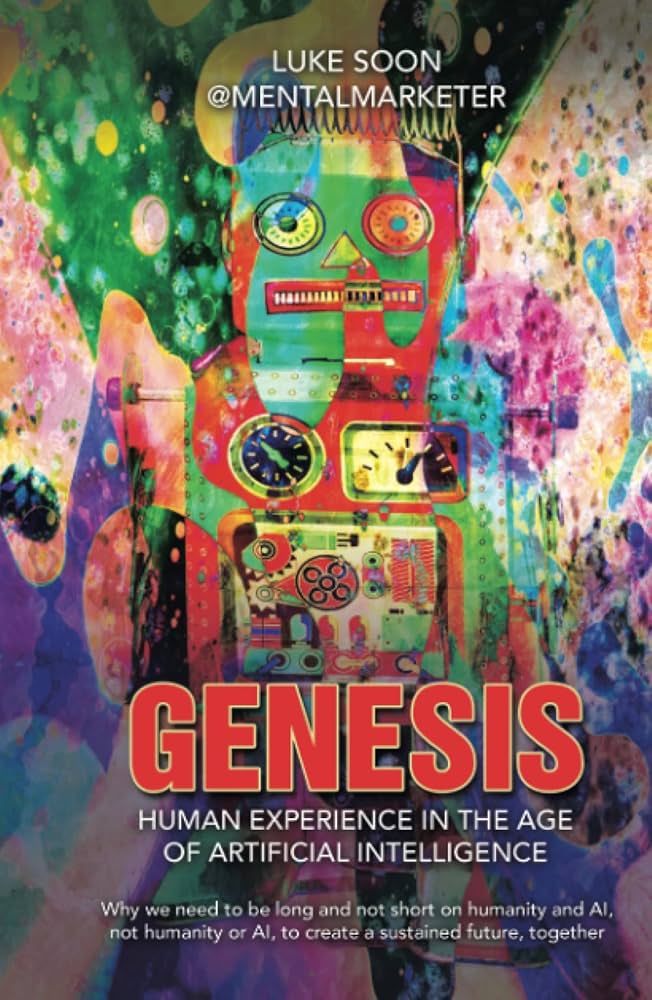
Dr Luke Soon is the author of Genesis: Human Experience in the Age of Artificial Intelligence and Synthesis: The Superintelligence Protocol.
Connect on LinkedIn | genesishumanexperience.com | @mentalmarketer
Sources: Stanford HAI 2026 AI Index Report · PwC Global AI Jobs Barometer 2025 · WEF Future of Jobs 2025 · IMF AI Labour Market Working Paper 2024 · Goldman Sachs AI Workforce Research 2025 · McKinsey State of AI 2025 · SSRN AI Job Displacement Analysis 2025 · NBER Employment Effects of Guaranteed Income 2024 · American Economic Review UBI Dynamic Assessment 2024 · OpenAI Industrial Policy for the Intelligence Age April 2026 · arXiv AI Profit Tax UBI Modelling 2025 · Oxford Economics Automation and Manufacturing 2024 · BLS Labour Force Participation Projections · Mercatus Center AI Job Displacement Research 2025


Leave a Reply