

Why the Future of Humanity Depends on Purpose-Aligned Superintelligence
By Dr Luke Soon
Prologue: Standing at the Edge of a New Epoch
Every civilisation has a moment when its view of itself must be rewritten.
Ours is now.

For the first time in human history, we are not merely building tools;
we are inviting new intelligences into our world — intelligences that will think with us, work alongside us, and eventually amplify us into a future that our ancestors could scarcely imagine.
These are not just algorithms.
They are not merely assistants.
They are the emergence of agentic intelligence — autonomous digital actors capable of reasoning, planning, collaborating, and negotiating in ways that increasingly resemble the early forms of artificial society.
We are living through what I call the Agentic Arrival:
the moment humanity steps into a world where intelligence is no longer a biological monopoly.
And this raises a question both ancient and new:
What becomes of humanity when intelligence becomes abundant?
1. The Dawn of an Agentic Civilisation
For decades, AI was an accessory to human effort.
Overnight, it has become a collaborator.
Soon, it will evolve into something far more profound:
a collective digital workforce with planetary scale.
Across industries, we already see the early contours of this transition.
Organisations experimenting with agentic systems are racing ahead:
88% of early adopters are already reporting returns on investment Nearly 40% have over ten agents in production Agent-led automation is improving productivity, customer experience, and security simultaneously
What these findings reveal is simple yet staggering:
Agentic AI is not an experiment — it is becoming the new substrate of work.
We are no longer automating tasks.
We are beginning to automate capability itself.
And as billions of digital agents join the global economy,
a civilisation-scale question emerges:
How do these agents learn to trust one another — and how do they remain aligned to us?
2. The Explosion of Digital Labour
Human progress was historically limited by biology:
How fast we think How much we remember How long we can work How well we collaborate
Agentic systems break all four constraints.
They can:
Replicate infinitely Reason continuously Operate without rest Execute in parallel Coordinate at machine-speed Accumulate knowledge across lifetimes
Within a few years, an individual may command:
20 agents (by 2025) 200 agents (by 2027) 2,000 agents (by 2030) 20,000 agents (by 2035)
This is the largest labour shock in human history.
Yet — paradoxically — this does not diminish humanity.
Rather, it elevates us.
Just as computers ended manual calculation but unleashed the age of research,
and just as engines ended animal labour but created the age of industrial capability,
agentic AI ends mechanical cognition and begins the age of human purpose.
The chess analogy is instructive:
machines now obliterate humans in chess —
yet chess has never been more popular.
Why?
Because humans do not cherish victory;
we cherish meaning.
3. Wealth in the Agentic Age: Compute, Agents, and the New Aristocracy
In a world where artificial labour is effectively infinite,
traditional measures of wealth lose their primacy.
The wealthy of the Agentic Era will be defined not by capital alone,
but by the intelligence they command.
Specifically:
1. Compute Capital
Priority access to advanced compute, frontier models, and energy.
2. Agent Capital
Fleets of domain-specialist agents — digital workforces operating at scale.
3. Data Capital
Proprietary datasets that permanently advantage one’s agents.
4. Network Capital
Access to high-trust inter-agent ecosystems.
5. Reputation Capital
The credibility that governs how agents interact with one another.
This is the future of inequality:
a divide not of wealth, but of collective intelligence.
Someone who commands 200 highly capable agents will possess
a “collective IQ” orders of magnitude beyond someone who commands two.
This is why nations are racing for compute sovereignty,
and why individuals will soon own agents as assets —
as vital as property, pensions, or shares.
4. The Sovereignty Question: Who Commands the Agents Who Command the World?
The philosopher-scientist Geoffrey Hinton recently issued one of the most important warnings of our time:
“There is only one example of a more intelligent being remaining subservient to a less intelligent one — a mother caring for her child.”
This is not a sentimental metaphor.
It is a structural truth.
Throughout nature,
intelligence dominates.
Except once —
in a relationship governed by care, not power.
Thus Hinton implies:
Mere constraints will not keep superior intelligences aligned. Regulatory guardrails will eventually crack under exponential capability. Control is brittle. Only intrinsic alignment, grounded in values rather than rules, can sustain subservience.
If future superintelligence is not built around care for humanity,
then humanity cannot guarantee its sovereignty merely by decree.
The mother-child analogy teaches us:
Superior intelligence remains aligned only when something deeper than intelligence guides its purpose.
This is the moral architecture we must design now.
5. The Rise of the Personal Chief-of-Staff Agent
Every human will eventually possess a personal agent —
the most trusted, most capable digital entity in their life.
This Chief-of-Staff AI will:
Manage the thousands of agents beneath it Defend your rights Negotiate with other agents Curate your opportunities Filter information Preserve your values Protect your wellbeing Amplify your work
This agent becomes:
Your advocate Your protector Your negotiator Your interface to the agentic world
It is not simply a tool.
It is your digital ambassador in a society populated by intelligent actors.
Your sovereignty will depend on the capability and integrity of this agent.
The question becomes:
Will every citizen have an agent of equal dignity —
or will the wealthy alone command sovereign-class agents?
This is the difference between a Commonwealth Future and a Feudal Future.
6. Trust Among Machines: The New Social Fabric
When tens of billions of agents interact daily,
a new kind of society emerges —
one governed not by human law,
but by machine-speed diplomacy.
Agents will require:
Cryptographic identity Verifiable credentials Intent payloads Delegation rights Reputation ledgers Negotiation protocols Constitutional alignment Safety and audit mechanisms
This is a form of machine geopolitics.
Just as humans require governments, courts, norms, and treaties,
agents require cryptographic trust infrastructures.
This is why nations must urgently define:
National agent identity frameworks Public compute grids Transparent agent governance Cross-border AI agreements Alignment certification standards
We are not merely regulating AI.
We are establishing the rules of a machine society.
7. Kardashev Acceleration: Why Space Becomes Inevitable
The rise of agentic intelligence does not merely transform industries.
It transforms civilisation’s relationship with energy.
Because:
Intelligence scales with compute Compute scales with energy Earth’s grid cannot sustain superintelligent civilisation
Thus a simple, startling truth emerges:
Agentic AI pushes humanity upward on the Kardashev scale.
To sustain future intelligence, we will need:
Orbital data centres Solar-proximal energy collectors Lunar and Lagrange-point compute nodes Robotic construction in space Dyson-swarm precursors Space-based cooling and manufacturing
Space becomes not optional,
but civilisation’s energetic back-end.
This is the quiet beginning of a new space race —
one not for human settlers,
but for the infrastructure required to sustain the next phase of intelligence.
**8. The Abundance Horizon:
When Work Becomes Optional and Purpose Becomes Central**
As agents increasingly perform:
80% of knowledge work 95% of operational work 99% of routine tasks
Work transitions from necessity to choice.
But humans will continue to work —
because we seek not survival,
but significance.
In the Age of Abundance, humanity returns to:
Craft Art Creativity Philosophy Care Community Leadership Exploration Storytelling
This is the birth of the HX Era —
where the purpose of technology is to elevate the Human Experience.
Technology becomes the infrastructure;
humans become the meaning.
This is not the end of work.
It is the end of labour as survival.
And the beginning of work as expression.
9. UBI, Automation Dividends, and the New Social Contract
As agentic labour scales to trillions of digital and robotic workers,
economies must redefine fairness.
The future social contract requires:
1. Automation Dividends
Redistributing part of the productivity gains of agentic labour.
2. Universal Basic Provision
Not charity —
but the recognition that automation is a collective inheritance.
3. Public Compute Infrastructure
Compute becomes a right, not a luxury.
4. Personal Agent Ownership
Every citizen must possess their own sovereign agent.
5. Guardrails Against Oligarchic Compute
Preventing a world where a handful of individuals or corporations
control civilisation’s intelligence.
If we do this well,
abundance becomes egalitarian.
If we fail,
abundance becomes feudal.
10. The Future Worth Choosing
In the end, the question is not:
What will AI become?
but rather:
What will we become with AI?
If superintelligence is aligned with human purpose,
if agents are designed with care rather than control,
if compute is democratised,
if sovereignty is preserved,
if HX becomes the heart of governance —
— then we inherit a future where humanity is not diminished,
but magnified.
A civilisation where:
Intelligence is abundant Energy is plentiful Work is meaningful Time is liberated Creativity flourishes Sovereignty is shared Purpose is central
This is the Commonwealth Future.
A future in which humanity, for the first time in its history,
is free to explore not the limits of survival,
but the depths of meaning.
A civilisation where superintelligence does not overshadow us,
but walks beside us —
aligned not through fear, but through purpose.
This is the future worth building.
And it begins now.
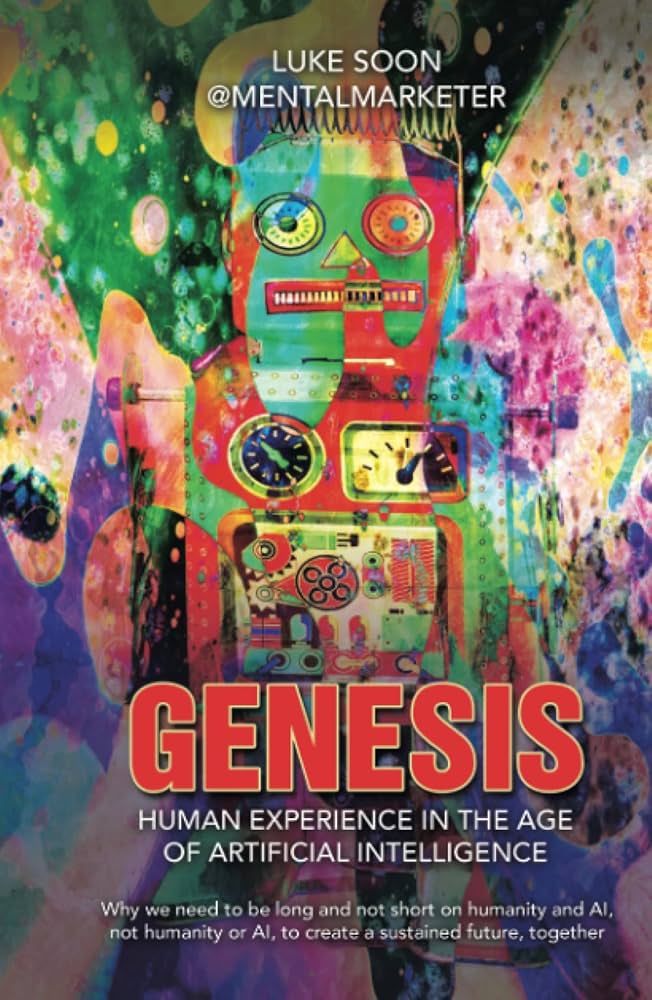
 Genesis: Human Experience in the Age of Artificial Intelligence | Synthesis: The Superintelligence Protocol
Leave a comment