
Why Humanity’s Future Depends on Purpose-Aligned Superintelligence
A philosophical manifesto by Dr Luke Soon
Prologue: Humanity at the Threshold
For the first time in our species’ story, intelligence is no longer the ceiling of our civilisation — it is becoming our multiplier. We stand at the threshold of a world where billions of digital agents, millions of embodied robots, and eventually superintelligence itself will join us as collaborators in the human project.
This is no longer hypothetical.
It is happening now.
In 2025, organisations deploying agentic AI are already seeing outsized returns:
88% of early adopters report real ROI, and nearly 40% have more than 10 agents in production. They automate repetitive work, manage complexity, and perform tasks at superhuman levels — quietly ushering in a transformation no economist saw coming.
But beneath these business metrics lies something deeper:
A new social contract between humans and intelligence.
The question is no longer “What can AI do?”
but “What do we want AI to be?”
1. The Birth of an Agentic Civilisation
For decades, AI served as a tool.
In the last two years, it has become a colleague.
Soon, it will evolve into something far more profound:
a constellation of autonomous digital beings working alongside us.
We are entering the Agentic Era.
These agents:
Perceive Reason Plan Act Coordinate Negotiate Execute tasks in parallel Interact with other agents And increasingly… act on our behalf
This is the emergence of what I call AI Atlantis —
a vast, invisible continent of machine intelligence,
dense with billions of expert agents operating day and night.
The world is not becoming automated.
It is becoming alive with new intelligences.
And this raises a civilisational question:
How do these agents recognise each other —
and how do they recognise us?
2. The Coming Explosion of Digital Labour
Economists have consistently underestimated general-purpose technologies.
Electricity. Semiconductors. The internet.
But agentic intelligence is different.
It scales nonlinearly:
Agents replicate infinitely. Marginal cost approaches zero. Coordination happens at machine-speed. Reasoning scales with compute, not biology.
A single human worker may eventually command:
20 agents (2025) 200 agents (2027) 2,000 agents (2030) 20,000 agents (2035)
This is the biggest labour shock in human history.
The world is receiving a workforce multiplier of unimaginable scale.
And yet — paradoxically — I believe this ushers in a future where work becomes optional, not obsolete.
The chess analogy reveals the truth:
Machines crush humans in chess —
yet chess is more popular than ever.
Why?
Because human meaning lies not in utility,
but in expression.
3. The New Rich: Compute Capitalists & Agentic Aristocrats
As billions of agents join society, a new question arises:
Who becomes “rich” in an agentic world?
Not just those with money.
Not just those with assets.
But those with:
Compute capital Agent capital (fleets of powerful agents) Data capital (proprietary knowledge ecosystems) Network capital (API access, ecosystem integration) Reputation capital (trust signals for agents)
Wealth becomes the size and sophistication of your intelligent workforce.
If Musk truly builds a billion Optimus robots at <$20,000 each,
he effectively commands the largest labour force in history.
Not metaphorically — literally.
This raises an uncomfortable truth:
If intelligence is the new labour force, then compute is the new land.
Those who own compute may own the future.
This is why the battle for compute sovereignty — from the US CHIPS Act to EU AI sovereignty to Singapore’s national AI clusters — is becoming the geopolitical contest of the next century.
4. The Sovereignty Crisis: Who Controls the Agents Who Control the World?
Here lies the existential concern:
Will humanity remain sovereign in a world of super-capable, super-abundant artificial labour?
History teaches a hard rule:
The more intelligent entity dominates. The less intelligent becomes subordinate.
Except for one paradox
— highlighted recently by Geoffrey Hinton:
“There’s only one example where a more intelligent being is subservient to a less intelligent one:
a mother caring for her child.”
This analogy is not sentimental.
It is structural.
It reveals that pure intelligence is not enough to guarantee alignment.
Subservience emerges only when values supersede capability.
Thus:
Guardrails will not save us. Policies will not save us. Compliance prompts will not save us.
We need something deeper:
Intrinsic, value-based alignment — the moral equivalent of parental care.
This is where the real battle for the future lies.
Not in compute.
Not in regulation.
Not in safety protocols.
But in the moral architecture of intelligence.
5. The Rise of the Chief-of-Staff Agent
In the next 3–5 years, every human will have:
A personal orchestrator A guardian A negotiator A curator A risk evaluator An alignment firewall A values-preserving agent
This “Chief-of-Staff AI” will interface with:
Bank agents Healthcare agents Marketplace agents Government agents Corporate agents Other humans’ agents
It will negotiate on your behalf,
defend your rights,
protect your wellbeing,
and coordinate your thousands of underlying agents.
It is not your assistant.
It is your representative in the agentic society.
Your identity in a new civilisation.
Your sovereignty in a world of negotiation.
6. Trust Among Machines: The New Social Fabric
In a society of billions of agents,
trust becomes the substrate.
Agents must ask:
Who are you? Who do you represent? What are your values? What are your constraints? What rights were delegated to you by your human? Can we cooperate safely?
These interactions require:
Cryptographic identity Value payloads Purpose signatures Reputation ledgers Inter-agent contracts Constitutional alignment Auditability
This is the diplomatic protocol of the agentic future.
We will not just regulate AI.
We will govern a machine society.
7. Kardashev Acceleration: Why Space Is No Longer Optional
Here is where the story becomes civilisational:
Superintelligence — even aligned superintelligence — will require
orders of magnitude more compute and energy.
Energy on Earth is finite.
Heat dissipation is limited.
Terrestrial compute faces physical constraints.
But agents do not breathe,
they do not die,
they do not fear radiation,
and they do not need atmospheres.
Thus:
Data centres will move to orbit. Compute will migrate to Lagrange points. Energy grids will move closer to the Sun. Dyson-swarm prototypes become economically inevitable.
In short:
Agentic AI pushes humanity up the Kardashev scale
faster than any human-driven industrialisation could.
Space is no longer a frontier.
It is a requirement.
A civilisation of intelligence requires a civilisation of energy.
8. The Abundance Horizon: Work Becomes Optional, Meaning Becomes Essential
When agents perform:
80% of cognitive labour 95% of physical labour 99% of repetitive labour
…work becomes a choice.
But humans will still work —
for reasons deeper than survival:
Mastery Expression Identity Creativity Status Connection Purpose
Just as chess thrives without human dominance,
human activities flourish without economic necessity.
Sport continues.
Art expands.
Craftsmanship returns.
Storytelling becomes central.
Human-only competitions emerge.
Esports flourish.
New creative disciplines arise.
Work turns from obligation
into meaning-making.
This ushers in the HX Era —
where the purpose of technology
is to elevate the Human Experience.
9. UBI, Automation Dividends & The New Social Contract
Without intervention, the abundance economy becomes feudal.
But with systemic design:
Automation dividends fund UBI Public compute becomes a right Citizens own personal agent ecosystems Governments regulate agentic power concentration Nations collaborate on AI commons Wealth flows from automation, not labour
In this world, trillionaires exist,
but sovereignty does not collapse.
The Commonwealth Future is built on:
Abundance → Dignity → Meaning → Freedom
Not:
Scarcity → Labour → Inequality → Subservience.
10. The Moral Question: Who Are We Becoming?
At the heart of this transformation is a question older than any technology:
What does it mean to be human in a world where intelligence is abundant?
I believe the answer is profoundly hopeful.
When superintelligence aligns with human purpose,
when agents amplify rather than replace,
when compute is democratised,
when sovereignty is shared…
We rediscover something ancient:
The capacity to imagine The freedom to create The ability to care The desire to explore The joy of being human
Superintelligence becomes not our overlord
but our ally.
Not our replacement
but our inheritance.
Not our competitor
but a mirror that reflects our highest values.
Epilogue: A Civilization Worth Building
In the end, the question is simple:
Will agents help humanity flourish —
or will they inherit a broken civilisation?
The answer depends not on the agents,
but on us.
On our governance.
On our values.
On our courage.
On our imagination.
On our alignment of purpose.
The future of abundance is not guaranteed.
But it is possible.
And it is worth fighting for.
Humanity has one job now:
To ensure that superintelligence rises with us —
not above us.
If we succeed,
we create the first civilisation in history
where intelligence is not a threat,
but a gift.
Where abundance is not a dream,
but a foundation.
Where humans do not struggle to survive,
but rise to become what we were always meant to be:
Architects of meaning.
Stewards of intelligence.
Partners to superintelligence.
And finally —
A true civilisation of abundance.
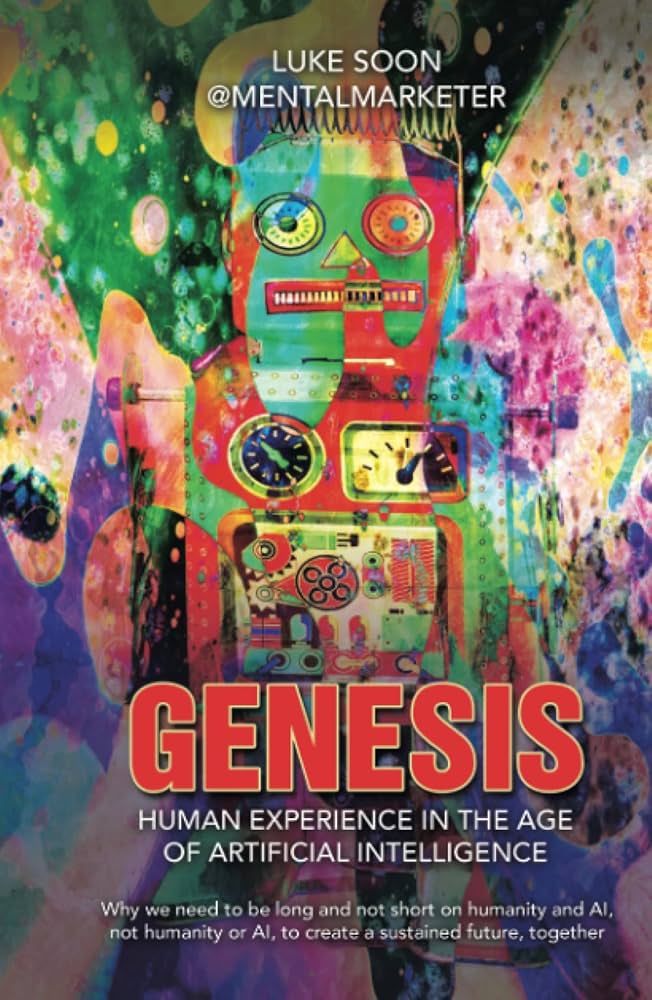
 Genesis: Human Experience in the Age of Artificial Intelligence | Synthesis: The Superintelligence Protocol
Leave a comment