

By Dr Luke Soon
1. Introduction: From Predictive to Agentic Intelligence
Artificial Intelligence (AI) has evolved from predictive analytics into a new paradigm of autonomous and agentic systems. The Google Cloud 2025 ROI of AI report highlights that 88% of early adopters of agentic AI are now realising measurable returns on investment (ROI), with financial services among the leading industries leveraging multi-agent ecosystems for productivity, risk management, and customer experience transformation. This marks a turning point where AI shifts from an enabling technology to an operational engine of economic performance.
2. The Algorithmic Foundations of Agentic AI
At the core of AI’s evolution are foundational algorithms that underpin agentic architectures. Each algorithm class—supervised, unsupervised, and reinforcement learning—contributes unique strengths to intelligent systems. Below is a summary of key algorithms and their practical roles in financial services:
• • Linear and Logistic Regression: Used for credit scoring, default prediction, and regulatory stress testing. These models establish baseline predictive performance and form the backbone of risk models (PwC, 2024).
• • Decision Trees and Random Forests: Applied in fraud detection and transaction monitoring due to their explainability. According to McKinsey (2025), ensemble trees remain crucial for model interpretability in regulated industries.
• • Gradient Boosting Machines (XGBoost, LightGBM): Accelerate credit risk classification and portfolio optimisation. BCG’s 2025 Banking AI Outlook reports that GBMs deliver up to 27% faster time-to-insight than legacy models.
• • Neural Networks and Deep Learning: Power high-frequency trading, anti-money laundering (AML), and personalised marketing. Accenture (2025) highlights the use of transformer architectures for document intelligence in banking compliance.
• • Clustering and Dimensionality Reduction (K-Means, PCA): Used for client segmentation, behaviour clustering, and anomaly detection. Deloitte (2025) finds unsupervised models key in augmenting human analysts for customer segmentation.
• • Reinforcement Learning (RL): Enables autonomous portfolio allocation and market-making. MIT Sloan’s 2025 research identifies RL-driven agents as outperforming rule-based algorithms in dynamic risk scenarios.
3. From Algorithms to Agents: The Agentic Shift
The transition from algorithmic to agentic intelligence represents a structural leap. Traditional machine learning models were reactive—trained to make predictions based on static data. Agentic AI systems, however, integrate reasoning, memory, and tool-use capabilities. These AI agents can autonomously plan, execute, and adapt actions based on changing environments—while remaining within human-governed constraints.
In financial services, agentic frameworks are redefining operational efficiency. JPMorgan’s ‘IndexGPT’ initiative and HSBC’s virtual risk agents demonstrate hybrid systems where generative models act as autonomous analysts, executing workflows such as KYC validation, audit summarisation, and regulatory report drafting under controlled governance layers.
4. The ROI Imperative: Evidence from Google Cloud and Industry Benchmarks
Google’s 2025 ROI of AI report quantifies a 727% three-year ROI for businesses deploying AI through Google Cloud’s agentic architecture. In financial services, executives report measurable improvements across productivity (70%), customer experience (63%), marketing (55%), and security (49%). These results echo PwC’s 2025 AI Jobs Barometer, which attributes 25% of GDP productivity growth to generative and agentic AI adoption.
The compounding benefits of agentic adoption—accelerated time-to-market, enhanced accuracy, and reduced cost-to-serve—demonstrate that AI maturity is no longer defined by model sophistication alone but by the integration of autonomous capabilities into enterprise ecosystems.
5. Governance, Trust, and Responsible Agentic Systems
Trust remains the central axis of sustainable AI. The World Economic Forum’s 2025 ‘Responsible AI Playbook’ and Stanford HAI’s ‘Embedded Ethics Framework’ stress that scalable agentic architectures must embed transparency, explainability, and human oversight by design. Financial institutions are adopting frameworks aligned with AI Verify (Singapore), NIST AI RMF (US), and the EU AI Act for compliance and risk monitoring.
PwC’s Responsible AI Governance Model (2025) proposes a tri-layer structure—Policy, Platform, and Practice—to ensure agents remain auditable, aligned with regulatory expectations, and transparent to human operators. This is especially critical as multi-agent systems begin to autonomously manage sensitive data and make consequential financial decisions.
6. The Age of Agentic Economics
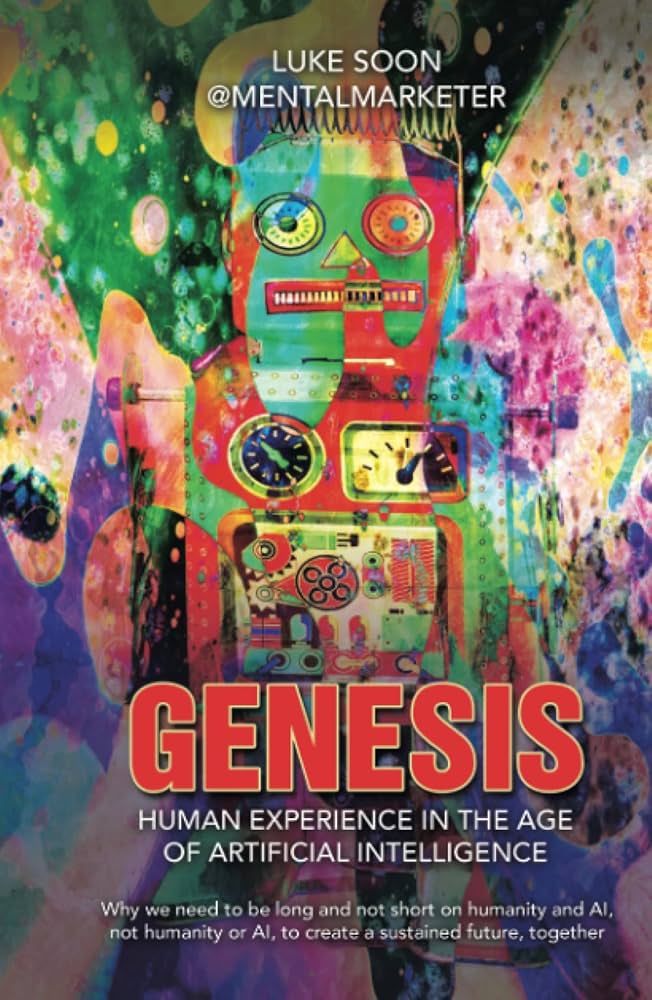
Agentic AI heralds a new economic paradigm—one where capital, computation, and cognition converge. Financial institutions that treat agents as value multipliers, not cost centres, will lead the next frontier of human-machine collaboration. In the Commonwealth model of AI futures, as described in ‘Genesis: Human Experience in the Age of AI,’ humans orchestrate ecosystems of cooperative agents that augment judgment, empathy, and foresight.
References
1. Google Cloud. (2025). The ROI of AI 2025 Report.
2. PwC. (2025). AI Jobs Barometer and Responsible AI Governance Model.
3. McKinsey & Company. (2025). The State of AI in Banking and Risk Management.
4. Boston Consulting Group (BCG). (2025). AI in Financial Services Outlook.
5. Bain & Company. (2025). Scaling Generative AI for Enterprise Transformation.
6. Deloitte. (2025). The Future of AI and Analytics in Finance.
7. Accenture. (2025). From GenAI to Agentic AI: The Next Competitive Frontier.
8. World Economic Forum. (2025). Responsible AI Playbook.
9. Stanford HAI. (2025). Embedded Ethics and Agentic Systems.
10. MIT Sloan. (2025). Reinforcement Learning in Dynamic Financial Systems.
11. Oxford Internet Institute. (2025). Trust in Autonomous Systems: A Governance Perspective.
 Genesis: Human Experience in the Age of Artificial Intelligence | Synthesis: The Superintelligence Protocol
Leave a comment