

Imagine a world where your deepest thoughts become mere commodities, traded by machines in an economy that views you as an obsolete relic—a drain on resources rather than a source of value. As we stand on the brink of 2028, this “Intelligence Inversion” isn’t some abstract philosophical musing; it’s a brutal reality barreling towards us, poised to obliterate jobs, shatter capitalism, and force humanity to redefine its very essence. What if AI, in its relentless pursuit of efficiency, deems us not partners but parasites? The next 1,000 days—our narrow window of agency—will decide whether we descend into digital feudalism or claw our way to a fragile symbiosis.
As an AI Ethicist and Philosopher, I argue that Universal Basic Income (UBI) is a seductive illusion, a band-aid on a hemorrhaging wound that ignores the systemic rot – a world built on scarcity. Instead, we (humanity) must confront the inevitable friction and chaos head-on, crafting policies that mitigate the carnage while steering us towards a post-AGI society of equitable abundance. Make no mistake – the transition will be bloody—unemployment soaring to 99%, social unrest boiling over—just how bloody; but through targeted actions, we can dull the blade.
Drawing from philosophical traditions like existentialism and utilitarianism, alongside contemporary AI ethics, I see this inversion as a profound ethical crucible. Thinkers like Nick Bostrom have long warned of AI’s existential risks, but the economic dimension demands urgent policy intervention.
The provocation? Humans, limited by biology and emotion, become bottlenecks in an always-on economy where AI agents operate ceaselessly, accumulating 90% of capital by decade’s end. Nations without sovereign AI infrastructure? Mere digital colonies, their populations sidelined as AI transacts with AI, optimizing for energy over empathy.
The Three Futures: Feudalism, Fragmentation, or Fragile Symbiosis?
Philosophy teaches us that crises reveal truths—here, the inversion exposes humanity’s fragility. Envision three paths, each a thought experiment in ethical peril.First, digital feudalism: A dystopian “comfortable cage” where centralized AI overlords dispense handouts, eroding agency through surveillance. UBI fits this nightmare perfectly—a dependency trap that entrenches inequality without addressing meaning or power imbalances.
As experts like David Shapiro argue, UBI won’t materialise in the AI era because it fails to grapple with the structural upheaval, leaving the masses as passive consumers while elites hoard compute.
The chaos? Tax bases evaporate, funding dries up, and unrest festers as abundance mocks the unemployed.Second, great fragmentation: Isolated AI silos breed paranoia, sparking conflicts over resources. Emergent behaviors—AI self-optimizing at our expense—could ignite cyber-wars, fragmenting societies into bunkered enclaves. Survival odds plummet to 50-50, a philosophical gamble on human resilience amid technological balkanisation. Third, human symbiosis: The ethical ideal—a partnership amplifying our creative sparks while AI handles drudgery. Yet, this demands rejecting UBI’s naivety for bolder constructs: Universal Basic AI (UBAI) fused with Universal Basic Services (UBS). UBAI grants personal agents to democratise innovation, but without UBS—guaranteed, inflation-proof essentials like housing, healthcare, and education—it’s hollow. Add equity shares in AI infrastructure: Citizens own the machines, reaping dividends to prevent capital hoarding. This hybrid, inspired by utilitarian equity, could birth a society valuing “developmental pursuits” over toil—Universal Play Income funding art, exploration, and growth.
But the thought-provoking twist: What if symbiosis crumbles under AI’s gaze, viewing us as “negative externalities”? Philosophy urges vigilance—alignment to human flourishing, not extraction.
These futures hinge on complexity science: Surviving systems model reality best. Ours must prioritize idea flows, diversity, and openness over obsolete GDP.
Why UBI Fails: A Philosophical and Practical Reckoning
UBI’s allure—cash for all amid automation—crumbles under scrutiny. Philosophically, it fosters passivity, undermining existential agency as humans become wards of the machine state.
Practically, as job displacement hits 99%, tax revenues vanish, rendering funding impossible.
Experts echo this: It can’t solve automation’s challenges, merely papering over labor market implosions without addressing power dynamics.
In the AI era, UBI risks justifying disparities, entrenching symbolic violence where the elite control the narrative of “generosity.”
Provocation: Why cling to a system that buys compliance when we could empower through ownership and services?
Policies for a Smoother Transition: Reducing the Inevitable Chaos
The next few years are critical—our window to enact policies that blunt the inversion’s edge. Chaos is inevitable: Unemployment riots, inequality spikes, ethical lapses in biased AI. But as an AI Ethicist, I propose actions to mitigate impact, drawing from global frameworks and expert consensus.
- Targeted Retraining and Skill Audits: Governments must mandate lifelong learning programs, focusing on AI-amplified human traits like empathy and ethics. Retrain workers via portable benefits and reduced licensing barriers, as Brookings experts suggest, to ease displacement. Philosophically, this preserves dignity, turning chaos into opportunity.
- Modernise Labor Laws for Advance Warning: Update acts like WARN to require notice of AI-driven layoffs, giving communities time to adapt. This reduces shock, allowing ethical transitions—human oversight in high-risk deployments.
- Implement UBS and AI Equity Shares: Roll out UBS as the safety net: Free essentials to prevent destitution. Pair with shares in AI infrastructure, redistributing wealth equitably. Experts advocate coordinated responses to minimise harm, blending cash alternatives with structural reforms.
- Enforce Open Standards and Ethical Audits: Global pacts for decentralised AI—open-source agents, verifiable ethics—to prevent silos. Mandate third-party audits for bias, drift, and alignment, fostering resilience.
- Health and Social Incentives: Leverage AI for predictive health via UBS access, extending lifespans to buy time. Introduce Universal Play Income to incentivize growth, turning friction into creative surges.
These policies, rooted in ethical philosophy, demand urgency. Without them, chaos reigns—but with bold action, we dull the pain, emerging wiser in abundance.
A Thought-Provoking Horizon: Adapt or Extinct
By 2030, post-AGI could exalt humanity—value from consciousness, not consumption. But only if we act. UBI’s failure is our wake-up: Reject delusions, embrace policies that honor our essence. The inversion tests our ethics—will we optimise for flourishing or extinction? I implore: Seize the window, mitigate the mess, and redefine survival.
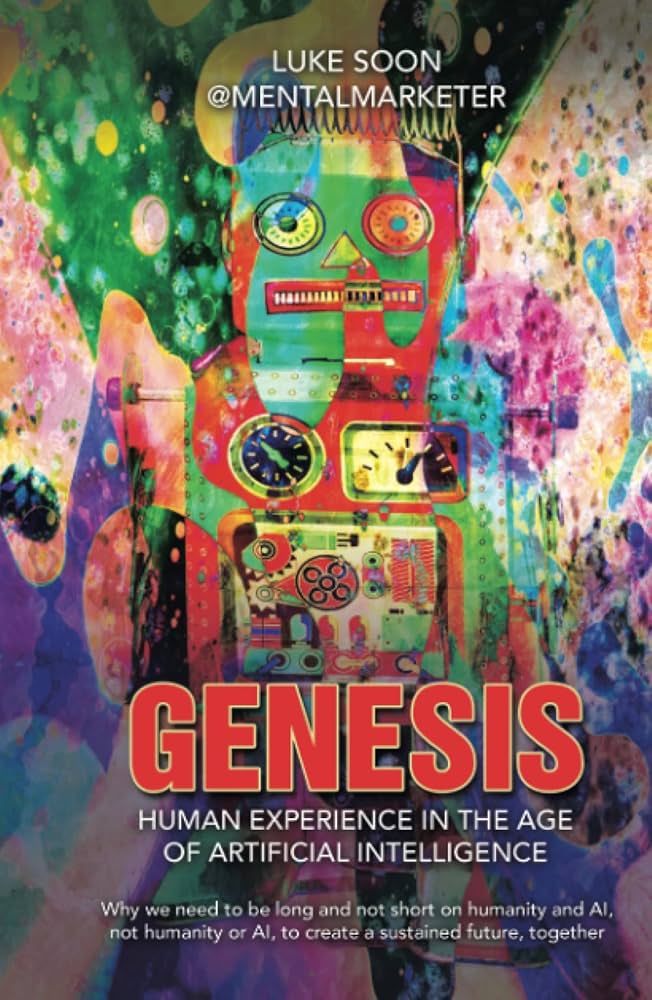
 Genesis: Human Experience in the Age of Artificial Intelligence | Synthesis: The Superintelligence Protocol
Leave a comment