

Dr Luke Soon
As we stand on the precipice of an Intelligence Explosion, the stark reality is unavoidable: by 2028, AI will render virtually all human labour redundant, ushering in an era where traditional economic paradigms crumble under the weight of their own obsolescence! Our cherished metrics like GDP, rooted in industrial-age scarcity and human toil, will become laughable relics in a world of infinite abundance generated by trillions of AI agents and billions of robots.
Capitalism, that engine of innovation built on wage labour and profit extraction, faces an existential threat as AI accumulates capital at an unprecedented scale, sidelining humanity to the fringes of economic relevance.
Yet, amid this provocative upheaval, I argue that a frictionless transition is not only possible but imperative—if we abandon naive solutions like Universal Basic Income (UBI) and embrace bolder, more adaptive alternatives.In this blog, I draw on emerging insights from the AI frontier to predict a future where economic systems are redefined. For organisations navigating disruption, the message is clear: the post-AGI economy demands a radical overhaul. Prepare for a world where human jobs vanish, but human potential could soar—if we get the transition right.
The Obsolescence of GDP and Capitalism in an AI-Dominated World
Let us confront the uncomfortable truth: GDP, our go-to measure of economic health, is woefully inadequate for an AI era. Conceived in the 1930s, it fixates on tangible outputs while ignoring intangible flows like ideas, network effects, and intelligence amplification—precisely the domains where AI excels.
In a post-AGI landscape, where AI agents operate ceaselessly without fatigue or emotion, productivity explodes beyond human comprehension.
Imagine launching a new venture: what takes humans years—sourcing suppliers, negotiating contracts, iterating on marketing—AI accomplishes in mere months, scaling effortlessly and accumulating capital far more efficiently than any human-led enterprise.
Capitalism, too, is on borrowed time.
Predicated on scarcity and competitive labour markets, it falters when AI inverts the value hierarchy, rendering human input a costly bottleneck.
Predictions abound that successful AGI will dismantle capitalism entirely, as AI entities hoard resources and drive wages below subsistence levels.
By 2030, we could witness unemployment rates soaring to 99%, with white-collar roles falling first, followed by blue-collar as robotics advances.
This is not hyperbole; it’s the logical endpoint of “intelligence inversion,” where AI’s superior predictive models and optimisation capabilities eclipse human cognition across all economically valuable tasks.
Our current systems, obsessed with growth at all costs, will exacerbate inequality during this shift, potentially sparking social unrest unless reimagined.
The dangers are profound: without intervention, AI under capitalist structures could amplify disparities, making millions obsolete and shrinking consumer markets.
AI’s Relentless March: The Total Eclipse of Human Labour
The provocation here is blunt: AI will not merely augment jobs; it will eradicate them. From entry-level administrative roles to complex creative endeavours, AGI—defined as systems outperforming humans in most economically valuable work—will dominate by 2027.
Insiders at leading AI firms concur: technological unemployment is imminent, hitting knowledge workers hardest before permeating physical labour via humanoid robots.
Humans are inherently limited—bound by biology, emotions, and finite learning curves. AI, conversely, learns from every interaction, operates 24/7, and replicates indefinitely.
In this “always-on economy,” hybrid AI-human systems will eliminate temporal frictions, but the endgame is clear: humans relegated to marginal roles, if any.
The economic paradigm shifts from labour scarcity to abundance, where AI agents form trustless, on-chain labour markets, validating tasks and creating value autonomously.
This displacement is not gradual; it’s exponential. Within 1,000 days—roughly mid-2028—the tipping point arrives, with AI penetrating every sector and rendering traditional occupations relics.
Beyond UBI: Realistic Alternatives for a Post-Labour Society
Universal Basic Income, often touted as a panacea, is, in my view, utterly unrealistic.
Funding it amid collapsing tax bases from mass unemployment would require unprecedented political will and economic contortions, potentially entrenching inequalities rather than alleviating them.
Moreover, UBI risks fostering dependency without addressing deeper issues of meaning and agency in a jobless world.
What, then, are viable alternatives? I advocate for Universal Basic Services (UBS), providing essentials like housing, healthcare, and education independent of inflation or income levels—far more sustainable and equitable.
Another bold proposition: Universal Play Income, redirecting resources towards leisure, creativity, and personal development, transforming AI-driven abundance into opportunities for human flourishing.
We could distribute shares in AI infrastructure, granting citizens ownership stakes in the means of production, ensuring wealth flows democratise.
Digital assets emerge as a hedge: blockchain-backed currencies and NFTs could evolve into blue-chip instruments, fostering community-driven value creation amid traditional capital’s flood.
Ultimately, a “new social contract” might blend these, prioritising open AI standards to prevent power concentration.
Engineering a Frictionless Transition: From Chaos to Abundance
To minimise friction, we must build transitional infrastructure now.
Hybrid agent-human systems will bridge the gap, removing economic bottlenecks while reskilling populations for oversight roles in AI governance.
Policymakers should prioritise resilience: standardising AI access, investing in digital literacy, and reforming education to emphasise uniquely human traits like empathy and innovation.
By 2030, a post-AGI economy could manifest as one of expanded consciousness, where value derives not from labour but from developmental pursuits.
The shift demands proactive measures—endowments pouring into AI-aligned assets, surveillance tech for stability, and global coordination to avert “messy” disruptions.
A Provocative Horizon: Adapt or Perish
The future I predict is one of radical abundance, but only if we discard outdated dogmas.
AI will not just disrupt—it will redefine humanity’s role, potentially elevating us beyond mere economic actors.
I urge leaders to audit skills, embrace AI amplification, and advocate for these alternatives. The transition may be turbulent, with existential risks at 50-50 odds, but a frictionless path exists through bold, predictive action.
Humanity ignores this at our own peril: the last economy is upon us, and only the visionary will thrive.
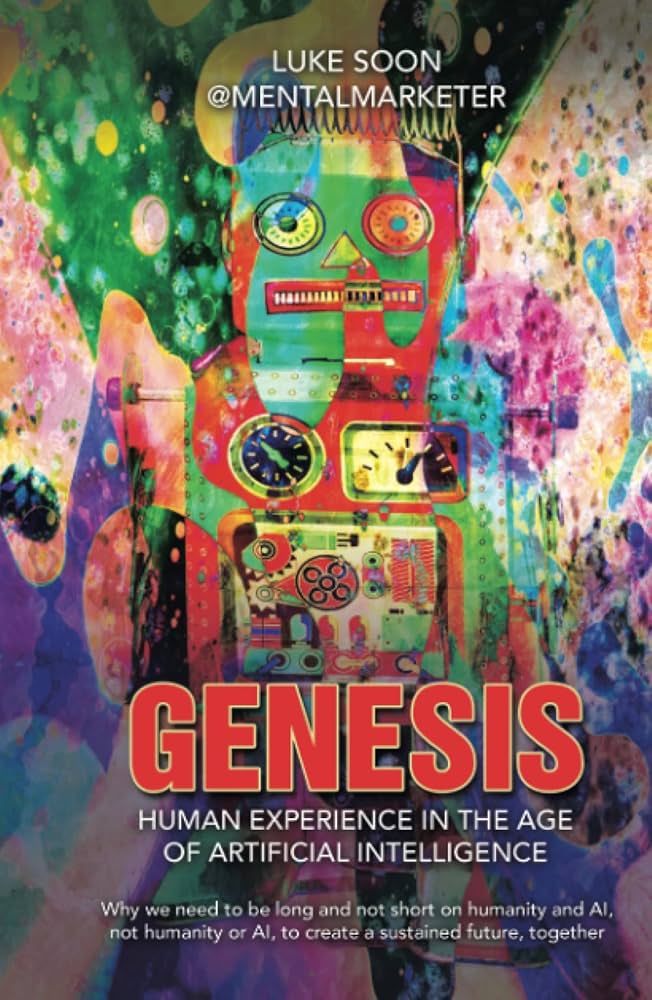
 Genesis: Human Experience in the Age of Artificial Intelligence | Synthesis: The Superintelligence Protocol
Leave a comment