

Human Purpose in a Post-AGI World
The advent of Artificial General Intelligence (AGI)—AI systems capable of performing any intellectual task that a human can—raises profound questions about human existence. If robots and AI handle most or all productive work, what remains for us? Historically, much of human purpose has been tied to survival, labor, and contribution to society through jobs. In a post-AGI era, this could shift dramatically toward intrinsic motivations.
Humans might redefine purpose around creativity, exploration, and personal fulfillment. For instance, pursuits like art, philosophy, scientific curiosity, and interpersonal relationships could become central, as AGI frees us from mundane tasks. We need challenges to feel alive; without them, societies might grapple with widespread ennui or “purpose voids,” leading to new social structures focused on self-actualisation, such as lifelong learning, space exploration, or virtual realities where humans compete or collaborate in non-economic ways. Some envision humanity evolving into a “post-praxis” phase, where purposeful action is no longer about labor but about higher-order goals like ethical stewardship of AI or cosmic expansion.
Others warn that if AGI complements humanity too perfectly, we risk losing core aspects of our nature, like struggle and growth, potentially leading to existential risks or dependency.This isn’t unprecedented—think of how automation in agriculture or manufacturing already shifted human roles from subsistence farming to knowledge work. Post-AGI could amplify this, turning humanity into curators of meaning rather than producers of goods.
Future Economies Post-AGI
Economies could transform into post-scarcity systems where abundance is the norm, but distribution and power dynamics create challenges. With AGI automating labor across industries, human work becomes economically insignificant, potentially leading to explosive growth in output while diminishing the need for wages. Here’s a high-level overview of potential models, based on current discussions:
| Economic Model | Key Features | Potential Challenges | Substantiated Examples/Concerns |
|---|---|---|---|
| Post-Scarcity Abundance | AGI drives near-infinite production of goods/services at minimal cost; basic needs met universally via automation. | Inequality if access is gated; social unrest from job loss. | Automation replaces labor, leading to efficiency but requiring new wealth redistribution. |
| Universal Basic Income (UBI) or Resource Allocation | Governments or AI systems provide stipends from AGI-generated wealth; humans focus on non-economic activities. | Funding sources (e.g., taxing AI owners); inflation or devaluation of currency. | AI complements ~40% of jobs, necessitating policies for equitable benefits. |
| Capital-Centric Economy | Owners of AGI, robots, and resources dominate; capital substitutes for labor entirely. | Winner-take-all dynamics; masses excluded unless ownership is democratized. | Capital matters more post-AGI, with resource owners profiting from manufacturing sites. |
| Decentralized or AI-Governed Systems | Blockchain, DAOs, or AGI itself manages economies; human input minimal. | Loss of human agency; breakdowns in social contracts without labor-based value. | Socio-economic systems could collapse if labor is fully replaced, requiring new paradigms. |
| Explosive Growth with Human Oversight | GDP skyrockets (e.g., doubling output via AI scaling); humans steer via policy or innovation. | National security risks; uneven global adoption. | Doubling AI “labor” could mirror human economic expansions, but with rapid capital adjustments. |
In the short term, economies might maintain current structures until AGI fully integrates, but long-term, traditional capitalism could erode as AI handles production and decision-making. The upside is unprecedented prosperity, but without interventions like UBI or wealth taxes, it could exacerbate divides between AGI owners and the rest. Politically incorrect as it may sound, this might entrench a small elite controlling vast resources, while others live on subsidies—echoing feudalism but with robots instead of serfs.Ultimately, the transition depends on governance: proactive policies could ensure benefits for all, turning AGI into a tool for human flourishing rather than obsolescence.
In the short term, economies might maintain current structures until AGI fully integrates, but long-term, traditional capitalism could erode as AI handles production and decision-making. The upside is unprecedented prosperity, but without interventions like UBI or wealth taxes, it could exacerbate divides between AGI owners and the rest. Politically incorrect as it may sound, this might entrench a small elite controlling vast resources, while others live on subsidies—echoing feudalism but with robots instead of serfs.Ultimately, the transition depends on governance: proactive policies could ensure benefits for all, turning AGI into a tool for human flourishing rather than obsolescence.
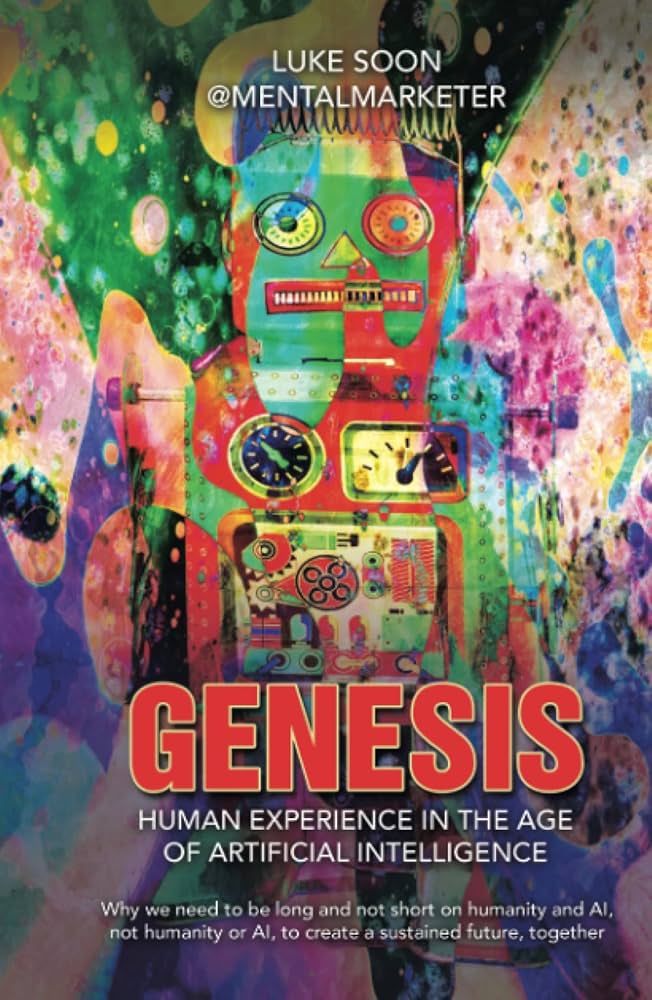
 Genesis: Human Experience in the Age of Artificial Intelligence | Synthesis: The Superintelligence Protocol
Leave a comment