

14 August 2025
As we navigate the accelerating landscape of artificial intelligence, the dawn of agentic AI—systems capable of autonomous decision-making, task execution, and self-reflection—represents a pivotal shift in how we harmonise human ingenuity with machine intelligence. In my recent LinkedIn article, “The Future, Right on Time,” published on 4 August 2025, I refreshed my AI predictions for 2025-2050, emphasising the trajectory towards collaborative, ethical AI ecosystems. Drawing from three decades as a pioneering computer scientist, I’ve witnessed AI evolve from symbolic rules to the autonomous agents we see emerging today, as explored in my July post, “From Symbolic Rules to Autonomous Intelligence.”
Here, I’ll unpack the roadmap step-by-step, interleaving insights with cutting-edge research from Stanford’s Human-Centered AI Institute (HAI), the World Economic Forum (WEF), and other leading sources.Agentic AI, defined as autonomous systems that plan, reason, and act with minimal human oversight, is poised for explosive growth.
According to PwC’s 2025 predictions, 25% of companies using generative AI will launch agentic AI pilots or proofs of concept this year, scaling to 50% by 2027.
The global AI agents market, valued at $3.7 billion in 2023, is projected to reach $103.6 billion by 2032, with a compound annual growth rate (CAGR) of 44.9%.
Stanford HAI’s 2025 AI Index Report reveals record investments in AI, surpassing $200 billion globally in 2024 alone, with agentic capabilities driving improvements in model performance and inference efficiency.
Yet, as the WEF’s Future of Jobs Report 2025 warns, this transformation will reshape 39% of key job market skills by 2030, necessitating ethical frameworks to ensure equitable adoption.
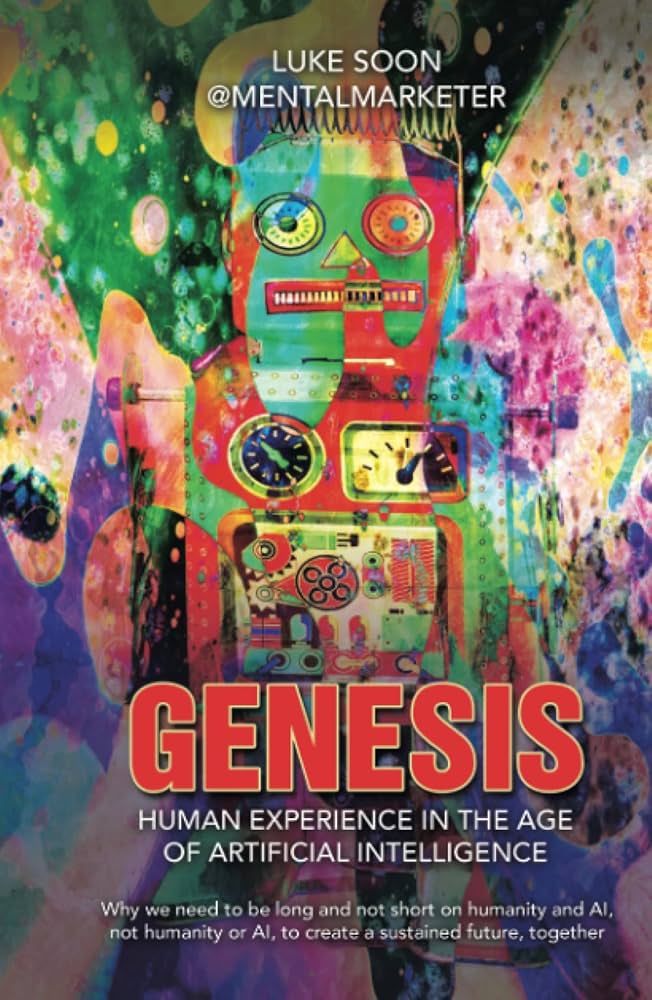
Overview of the Agentic AI RoadmapThe roadmap is structured hierarchically, flowing from foundational programming and prompting to advanced orchestration, memory management, deployment, and governance. Coloured blocks denote “Must do” (yellow), “Optional” (blue), and “Tools/Tech” (purple), providing a pragmatic blueprint for developers, architects, and organisations. It emphasises a progression towards self-reflective, collaborative agents, aligning with my philosophy in “Genesis: Human Experience in the Age of AI”—where technology augments rather than supplants human potential.Let’s dissect each layer, incorporating technical details, real-world applications, and substantiated insights.1. Programming & PromptingAt the base lies proficiency in programming languages and prompting concepts, essential for interfacing with AI models.
- Programming Languages: Python remains the linchpin, with Java, TypeScript, and Shell/Bash as complements. Asynchronous programming (e.g., via Python’s asyncio) and web scraping (using libraries like BeautifulSoup or Scrapy) enable agents to interact with dynamic environments.
- Scripting & Automation: Tools like API requests (HTTP/JSON handling) and file management form the bedrock. For instance, automating data pipelines with Python scripts can reduce human intervention by up to 86% in complex workflows, as per studies from Stanford HAI and MIT CSAIL.
- Prompting Concepts: Prompt engineering evolves into advanced techniques like chain-of-thought prompting, multi-agent prompts, and goal-oriented prompting. In my LinkedIn post on RAG multi-agent architectures, I highlighted how self-critique loops and retry mechanisms enhance reliability. Research from Capgemini’s 2025 report on AI agents underscores that refined prompting can boost agent accuracy by 40% in decision-making tasks.
McKinsey’s 2025 State of AI survey indicates 78% of organisations now deploy AI in at least one function, often starting with scripted automation.
2. Foundations of AI Agents
This section delineates core agentic principles, from decomposition to self-reflection.
- What are AI Agents?: Agents are goal-decomposing entities, ranging from autonomous (e.g., task-planning algorithms) to semi-autonomous (e.g., decision-making policies). The WEF’s Frontier Technologies report classifies them as virtual (software-based) or embodied (robotics-integrated), predicting widespread industrial adoption by 2027.
- Key Structures: Agent architectures (ReAct, BAML), model contexts (MCP), and protocols (A2A) facilitate multi-agent collaboration. Stanford’s 2025 predictions spotlight collaborative agents as a dominant trend, enabling systems to negotiate and adapt in real-time.
- Advanced Features: Self-reflection and feedback loops, akin to those in my discussions on ethical AI, allow agents to iterate autonomously. Academic surveys like “AgentAI” in Expert Systems with Applications highlight how these loops improve long-term performance in distributed AI environments.
Gartner’s January 2025 poll reveals 19% of organisations have invested significantly in agentic AI, though over 40% of projects may be cancelled by 2027 due to integration challenges.
3. LLMs & APIs
Large Language Models (LLMs) and APIs power agent cognition.
- OpenAI (GPT-4o), Claude, Gemini, Mistral: These models underpin agent reasoning. Open-source alternatives like LLaMA and Falcon democratise access, as noted in Stanford’s AI Index, where open models now rival proprietary ones in benchmarks.
- API Integration: Rate limiting, toolformer/function calling, and prompt chaining via APIs enable scalable interactions. McKinsey’s tech trends outlook for 2025 projects generative AI spending at $644 billion, much of it on API-driven agents.
4. Tool Use & Integration
Agents extend capabilities through tools.
- Systems: Memory integration, external API calling, file readers/writers, Python execution, and search/retrieval tools. Trends like vertical AI agents for specific domains (e.g., healthcare) are rising, per AIMultiple’s 2025 analysis.
- Specialised Tools: Calculators, code interpreters, and web browsers. The WEF’s AI in Action report illustrates how these integrations transform industries, with 65% of top-performing companies adopting AI in IT operations.
5. Agent Frameworks
Frameworks like LangChain, AutoGen, CrewAI, Flowise, AgentOps, and Haystack streamline development.
- Semantic Kernel, Superagent, LlamaIndex: These support multi-agent orchestration. In my May post, I discussed RAG integration with LangChain for enhanced knowledge retrieval. BCG’s 2025 stats project a 45% CAGR for AI agents, driven by such frameworks.
6. Orchestration & Automation
Advanced workflows include DAG management, event triggers, guardrails, and conditional loops.
- Tools: n8n, Make.com, Zapier, LangGraph. MarkTechPost’s 2025 review outlines nine agentic workflow patterns, such as reflection and planning, transforming enterprise automation.
The WEF emphasises trust as the “new currency” in agent economies, with guardrails mitigating risks.
7. Memory Management & Knowledge (RAG)Robust memory systems are crucial for context retention.
- Types: Short-term, long-term, episodic, vector stores (Pinecone, Weaviate, Chroma, FAISS). RAG enhances generation with embeddings and custom data loaders.
- Implementation: LangChain RAG, LlamaIndex. Stanford’s report notes AI’s growing role in science, where RAG agents accelerate research by indexing vast documents.
8. Deployment
Scaling requires reliable infrastructure.
- Options: API deployment, serverless functions (AWS Lambda, Gradio), Docker, Kubernetes, vector DB hosting. Agent hosting services like Replit and Modal ensure portability.
McKinsey’s workplace report for 2025 shows 62% of mid-career professionals exhibit high AI expertise, aiding deployment.
9. Monitoring & Evaluation
Continuous oversight prevents drift.
- Metrics: Agent evaluation, human-in-the-loop feedback, LangSmith, logging/tracing, auto-evaluation loops, OpenTelemetry. Prometheus/Grafana for dashboards.
Stanford highlights increasing AI skepticism, underscoring the need for rigorous evaluation amid new risks.
10. Security & Governance
Ethical deployment is non-negotiable.
- Practices: Prompt injection protection, API key management, user authentication, RBAC, output filtering, red team testing, data privacy compliance.
As I advocated in my 9 August post, safe, responsible agentic AI must prioritise humanity.
The WEF’s AI literacy push aligns, noting AI’s disruption across industries.
Conclusion: Towards a Human-Centric Agentic Future
This roadmap encapsulates the technical scaffolding for agentic AI in 2025, a year of maturation as per Stanford HAI’s Index.
By integrating these elements, we can forge agents that not only automate but elevate human experience—echoing the ethos of my book and ongoing work at GenesisHumanExperience.com. As an AI ethicist, I urge practitioners to embed responsibility from the outset, ensuring this technology serves as a confidante and counsellor for global good.
Let’s collaborate on this journey; connect with me on LinkedIn for deeper discussions.For more insights, explore my predictions at LinkedIn.
 Genesis: Human Experience in the Age of Artificial Intelligence | Synthesis: The Superintelligence Protocol
Leave a comment