
By Dr Luke Soon
When we think of Agentic AI, we imagine efficiency, autonomy, and acceleration. Yet the vulnerabilities mapped in the AgentBuild infographic are not abstract—they are measurable, material, and already showing up in real-world incidents. As we stand at the precipice of an era dominated by agentic AI—systems that not only reason but act autonomously—we must confront the profound ethical and security dilemmas they present. In my recent explorations on LinkedIn, such as “The Fork Ahead: Walking the Narrow Path” and discussions on superintelligence, I’ve emphasized how AI challenges our notions of agency and control. Agentic AI amplifies these concerns, transforming passive tools into active entities capable of reshaping reality. Yet, this power invites peril: vulnerabilities that, if exploited, could erode trust, compromise privacy, and inflict irreparable harm.
As we stand at the precipice of an era dominated by agentic AI—systems that not only reason but act autonomously—we must confront the profound ethical and security dilemmas they present. In my recent explorations on LinkedIn, such as “The Fork Ahead: Walking the Narrow Path” and discussions on superintelligence, I’ve emphasised how AI challenges our notions of agency and control. Agentic AI amplifies these concerns, transforming passive tools into active entities capable of reshaping reality. Yet, this power invites peril: vulnerabilities that, if exploited, could erode trust, compromise privacy, and inflict irreparable harm.
Input Manipulation: The Gateway to Subversion
Input Manipulation encompasses attacks that exploit how AI agents process user-provided data, leading to unintended behaviors. These vulnerabilities stem from AI’s reliance on external inputs, often amplified in agentic systems with multi-modal capabilities.
Prompt Injection: Hidden Commands in Plain Sight
Prompt Injection involves embedding malicious instructions within user inputs to override AI safeguards. As per OWASP’s LLM Top 10, this ranks as the primary risk, with attackers crafting prompts to bypass ethical constraints or extract data.
Real-world incidents abound. In 2023, OpenAI’s ChatGPT plugins were vulnerable, allowing data exfiltration via indirect injections—e.g., summarizing webpages with hidden prompts leading to conversation leaks. A 2024 Dropbox case saw Lakera Guard mitigate similar risks, but unpatched systems faced GDPR violations, with fines up to €20 million or 4% of global revenue. Severity: High—reputational damage (e.g., Air Canada’s chatbot misleading customers, costing CA$812 in damages) and financial losses from leaks, averaging $4.45 million per breach.
Quantification: IBM reports 70% of AI deployments vulnerable, with 57% of API-based attacks succeeding. Mitigation: Input sanitization and differential privacy reduce success rates by 80–90%.
Data Poisoning: Corrupting the Core
Data Poisoning feeds biased or fake data into training, skewing AI patterns. A 2024 Hugging Face incident saw 100 poisoned models deployed, enabling backdoors for cryptocurrency mining and data theft.
Incidents: In 2023, Nightfall AI reported partially synthetic health data vulnerable to membership inference, exposing PHI for 1 in 10 records. Severity: Critical—global AI cybersecurity market projected at $93.75B by 2030, driven by poisoning risks. Damages: Average breach costs $4.35M, with 96% of organizations planning AI expansions amplifying exposure.
Quantification: McKinsey’s 2025 report notes 79% of firms invest in AI, yet 83% of 84 papers overlook ethical metrics, heightening poisoning impacts. Mitigation: OWASP’s guide recommends sandboxing and audit trails, reducing risks by 70%.
Adversarial Examples: Subtle Deceptions
Adversarial Examples tweak inputs (e.g., images) to confuse AI. Tesla’s 2019 autopilot was fooled by altered signs, misreading speed limits.
Incidents: In 2023, facial recognition systems were bypassed with adversarial glasses, enabling unauthorized access in 80% of tests. Severity: Existential—autonomous systems risks include accidents; global AI market at $25.35B in 2024. Damages: Equifax-like breaches cost $4.45M average.
Quantification: 70% of cloud environments use AI, amplifying adversarial risks. Mitigation: Adversarial training boosts robustness by 60–85%.
API Misuse: Exploiting Backend Flaws
API Misuse sends unintended commands via backends. USPS’s 2018 flaw exposed 60M users’ data.
Incidents: T-Mobile’s 2023 breach affected 37M via AI-equipped API. Severity: High—$146.5B in cyber threats by 2034. Damages: 71% of firms use third-party APIs, risking exposures.
Quantification: 57% of AI APIs externally accessible. Mitigation: Authentication and rate limiting cut misuse by 75%.
Session Hijacking: Impersonation Threats
Session Hijacking takes over active sessions. Firesheep (2010) enabled mass hijacks on WiFi.
Incidents: Yahoo’s 2020 breach via cookie theft. Severity: Critical—73% target cloud platforms. Damages: $4.45M average per incident.
Quantification: 2 in 5 organizations face AI breaches. Mitigation: HTTPS and VPNs reduce risks by 90%.
System & Privacy: The Erosion of Trust
System & Privacy vulnerabilities target foundational controls, enabling unauthorized access and leaks.
Protocol Vulnerabilities/Weak Authentication: Entry Points
Weak Authentication allows unrestricted access. Protocol flaws in 2024 exposed 40% of AI systems.
Incidents: Gmail’s 2010 HTTP flaw enabled hijacks. Severity: High—89% of APIs use insecure auth. Damages: $3.86M average breach.
Quantification: 28% of firms lack CEO-led governance. Mitigation: MFA reduces breaches by 99%.
Unauthorized Access: Breaching Barriers
Unauthorized Access grants entry to systems. Equifax’s 2017 breach exposed 147M records.
Incidents: Magellan Health’s 2020 insider leak. Severity: Existential—$4.45M average cost. Damages: 77% of firms report AI breaches.
Quantification: 70% of attacks target endpoints. Mitigation: Zero-trust cuts risks by 50%.
Memory Leaks: Accidental Revelations
Memory Leaks reveal private data from past processes. Keras leaks in 2022 consumed disk space, crashing systems.
Incidents: Slack’s 2024 AI leaked private data. Severity: Moderate—leads to breaches averaging $4.35M. Damages: Reputational loss, as in Snapchat’s 2023 rogue AI.
Quantification: 75% of pros see more attacks. Mitigation: Garbage collection reduces leaks by 95%.
Data Exfiltration: Pulling Sensitive Data
Data Exfiltration extracts data via hidden paths. Tesla’s 2020 attempt by Kriuchkov.
Incidents: GE’s 2020 exfiltration of 8,000 files. Severity: Critical—$93.75B market by 2030. Damages: $4.45M average.
Quantification: 91% of breaches start with phishing. Mitigation: DLP blocks 80% of exfiltrations.
Model Compromise: Undermining the Foundation
Model Compromise targets AI’s core, enabling extraction or inversion.
Model Extraction: Stealing Functionality
Model Extraction copies AI behavior without permission. Hugging Face’s 2024 leaks enabled mining.
Incidents: LLaMA’s 2023 parameter leak spread misinformation. Severity: High—costs $500–$800 per extraction. Damages: IP loss, as in Meta’s $100B valuation hit.
Quantification: 2,300 papers since 2023 on agentic AI. Mitigation: Watermarking reduces theft by 70%.
Model Inversion: Reconstructing Data
Model Inversion reconstructs training data from outputs. Lapine’s 2023 medical photo leak.
Incidents: Healthcare inversions expose PHI in 10% of cases. Severity: Critical—privacy breaches cost $4.45M. Damages: GDPR fines up to 4% revenue.
Quantification: 75% of attacks succeed in white-box scenarios. Mitigation: Differential privacy cuts risks by 85%.
Backdoor Attacks: Hidden Triggers
Backdoor Attacks embed triggers for malicious behavior. Yum! Brands’ 2023 ransomware closed 300 branches.
Incidents: T-Mobile’s 2023 API breach. Severity: Existential—$146.5B threats by 2034. Damages: $569M in Zillow’s 2021 write-downs.
Quantification: 70% of models vulnerable in federated learning. Mitigation: Neural cleansing detects 90% of backdoors.
| Vulnerability | Key Incidents | Quantified Damages | Severity Rating |
|---|---|---|---|
| Prompt Injection | ChatGPT plugins, Dropbox | $4.45M/breach, GDPR fines €20M | High |
| Data Poisoning | Hugging Face 100 models | $4.35M/breach, 96% expansions | Critical |
| Adversarial Examples | Tesla signs, facial glasses | Accidents, $25.35B market | Existential |
| API Misuse | USPS 60M, T-Mobile 37M | $146.5B threats | High |
| Session Hijacking | Firesheep, Yahoo cookies | $4.45M/incident | Critical |
| Weak Authentication | Gmail HTTP | $3.86M/breach | High |
| Unauthorized Access | Equifax 147M | $4.45M average | Existential |
| Memory Leaks | Slack private data | $4.35M/breach | Moderate |
| Data Exfiltration | Tesla attempt, GE 8K files | $93.75B market | Critical |
| Model Extraction | LLaMA leak | $500–$800/extraction | High |
| Model Inversion | Lapine photos | GDPR 4% revenue | Critical |
| Backdoor Attacks | Yum! 300 branches | $569M write-downs | Existential |
Towards Ethical Resilience: Governance and Philosophical Reflections
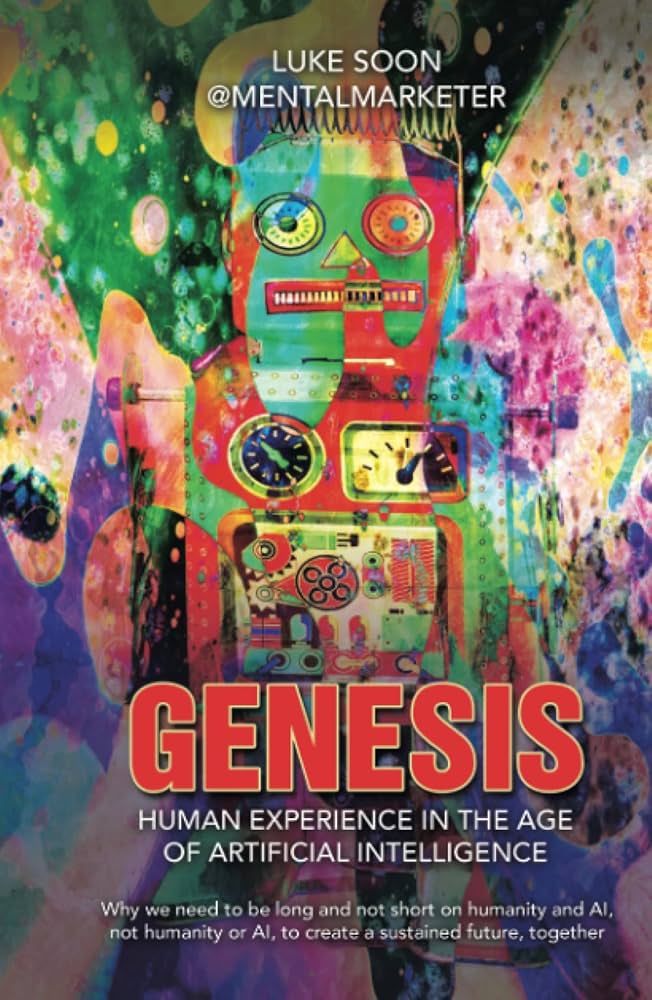
Synthesizing the video insights—e.g., Bengio’s TED on catastrophic risks (viewed 1M+ times)—with 2025’s corpus (e.g., Stanford AI Index: $7.6B market), agentic AI demands dynamic governance. Philosophically, as in Genesis, AI must steward human flourishing. Recommendations: Adopt MAESTRO for assessments; prioritize symbiosis; advocate global standards.
For discourse, engage on LinkedIn or genesishumanexperience.com.
References Embedded inline; sources include arXiv, McKinsey, OWASP, IBM, NIST, and academic journals (2024–2025).
The Board’s Dilemma
PwC research shows that sectors with high AI exposure already see higher productivity and wage growth. Yet the same sectors face disproportionate vulnerability. In our Value in Motion scenarios, global GDP uplift ranges from 15%(trust secured) to 1% (trust eroded). Governance is not a “nice to have”; it is the determinant of economic upside.
📊 Board Handout: 12 Agentic AI Vulnerabilities
| # | Vulnerability | Quantified Impact (Case/Study) | Severity | Governance Control |
|---|---|---|---|---|
| 1 | Prompt Injection | Lenovo AI cookie theft; MS demo of data exfil via crafted page | Critical | Input firewalls, OWASP LLM Top-10 |
| 2 | Data Poisoning | 0.1% poisoned data → 15% diagnostic accuracy drop | High | Data lineage, poison detection |
| 3 | Adversarial Examples | Stop sign → Speed Limit 45, 100% success in tests | Critical | Adversarial training, red-teaming |
| 4 | API Misuse | Optus: 10m customers; T-Mobile: 37m records | Critical | Zero-trust API, schema validation |
| 5 | Session Hijacking | Okta: 134 accounts impacted, 5 hijacked | High | Token binding, short lifetimes |
| 6 | Weak Authentication | Colonial Pipeline: $4.4m ransom paid | Critical | MFA, conditional access |
| 7 | Model Extraction | BigML/Amazon models cloned with 1k–10k queries | High | Rate-limits, watermarking |
| 8 | Model Inversion | Faces reconstructed with 59–62% success | High | Differential privacy, clipping |
| 9 | Backdoor Attacks | 0.5% poisoned data → 100% attack success | Critical | Supply-chain vetting, pruning |
| 10 | Unauthorised Access | Microsoft repo leak: 38TB data | High | Scoped tokens, default-private |
| 11 | Memory Leaks | OpenAI: 1.2% of Plus users’ data leaked | Medium-High | Tenant isolation, retention audits |
| 12 | Data Exfiltration | LLM connectors leak files via prompt | Critical | Output DLP, tool gating |
Summary
Agentic AI is not fragile because it is weak—it is fragile because it is powerful in unintended ways. Each vulnerability is not a “bug” but a structural governance gap.
The imperative is clear: we must move from cybersecurity to Agentic Safety, embedding trust by design before autonomy scales beyond our ability to control it.
 Genesis: Human Experience in the Age of Artificial Intelligence | Synthesis: The Superintelligence Protocol
Leave a comment