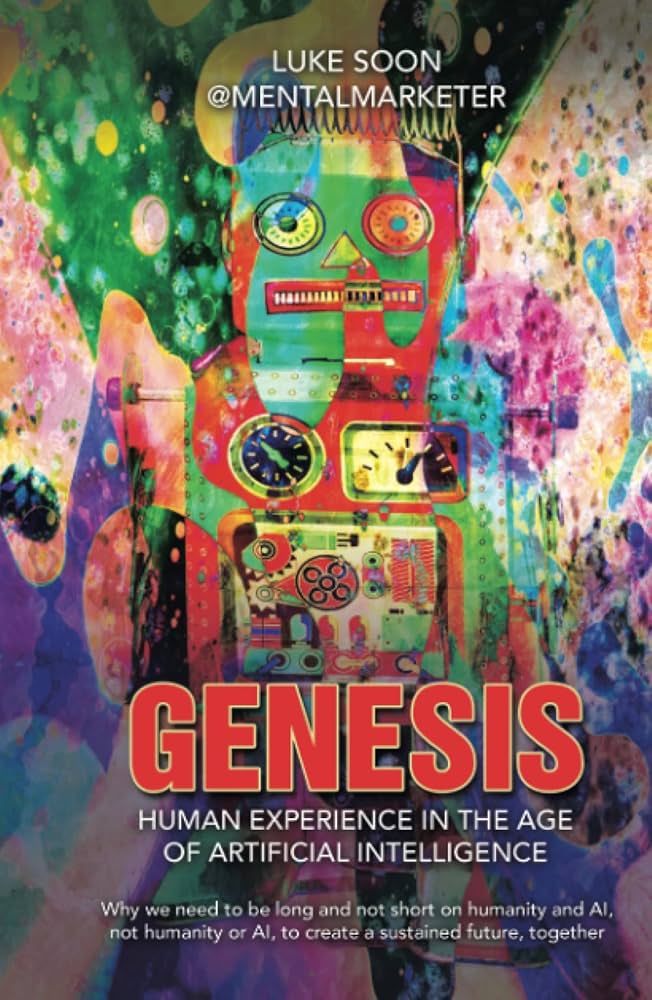


by Dr Luke Soon, AI Ethicist, August 2025
The artificial intelligence (AI) landscape is undergoing a profound transformation, driven by the emergence of agentic AI—systems that can reason, plan, and act with a high degree of independence. These agents are not only automating routine tasks but are also collaborating with humans and other agents to solve complex, real-world problems. This blog explores the seven foundational pillars of agentic AI, referencing leading tools, frameworks, and the latest research, including insights from PwC, Agent OS, and Responsible AI white papers.

1. Autonomy: Independent Operation
Autonomy is the cornerstone of agentic AI, enabling agents to operate independently and initiate actions without continuous human input. This capability is essential for applications such as digital research assistants, autonomous vehicles, and industrial automation.
Key Tools:
AutoGen, CrewAI, LangGraph, OpenAgents, MetaGPT, AgentVerse
Research Context:
Autonomous agents rely on advanced planning algorithms, reinforcement learning, and self-supervised learning to make decisions in dynamic environments (Russell & Norvig, 2021). PwC’s 2023 AI Business Survey highlights that 72% of executives expect autonomous agents to drive significant productivity gains in the next five years (PwC, 2023). Frameworks like AutoGen and MetaGPT are at the forefront, enabling agents to generate and execute plans with minimal oversight (Microsoft Research, 2023).
2. Goal-Directed Planning: Decomposing and Adapting
Goal-directed planning allows agents to break down high-level objectives into actionable tasks and adapt their strategies as circumstances evolve.
Key Tools:
AutoGPT, BabyAGI, ReAct, LangChain Agent Executors, Camel, DUST
Research Context:
Hierarchical planning and task decomposition are central to this pillar (Barto & Mahadevan, 2003). PwC’s research underscores the importance of adaptive planning in AI, noting that organisations leveraging AI for dynamic task management report a 30% improvement in project delivery times (PwC, 2023). Tools like AutoGPT and BabyAGI use large language models (LLMs) to iteratively plan and execute subtasks, inspired by cognitive architectures (Richards et al., 2023).
3. Communication & Collaboration: Multi-Agent and Human Interaction
Modern agents must interact seamlessly with both humans and other agents, sharing information and coordinating actions to achieve shared goals.
Key Tools:
AutoGen, CrewAI, LangGraph, ChatDev, SupaAgent, AgentHub
Research Context:
Multi-agent systems (MAS) research has long emphasised the importance of communication protocols and collaborative strategies (Wooldridge, 2009). The Agent OS white paper highlights the need for robust communication frameworks, enabling agents to negotiate, delegate, and resolve conflicts autonomously (Agent OS White Paper, 2024). Recent advances, such as ChatDev and CrewAI, facilitate natural language-based collaboration, drawing on LLMs’ conversational abilities (Zhou et al., 2023).
4. Reasoning & Decision Making: Contextual Intelligence
Reasoning and decision-making capabilities allow agents to apply logic and contextual understanding, making informed choices in complex scenarios.
Key Tools:
GPT-4o, Claude 3 Opus, Mistral, Chain-of-Thought Prompting, Self-Ask Prompting, OpenDevin, Thought Source
Research Context:
Chain-of-thought prompting and self-ask strategies have significantly improved LLMs’ reasoning abilities (Wei et al., 2022). The Responsible AI white paper from PwC stresses the importance of transparent and explainable decision-making in AI systems, advocating for mechanisms that allow stakeholders to understand and audit agent decisions (PwC Responsible AI, 2022). Models like GPT-4o and Claude 3 Opus exemplify the integration of advanced reasoning with real-world decision-making (OpenAI, 2024; Anthropic, 2024).
5. Tool Use & Environment Interaction: Bridging the Digital and Physical
Agents increasingly interact with external tools, APIs, and browsers, enabling them to gather information, automate workflows, and manipulate digital environments.
Key Tools:
LangChain Toolkits, Function Calling (OpenAI, Claude, Gemini), BrowserPilot, WebAgent, ToolLM, Gorilla, CrewAI Tools
Research Context:
Tool use is a hallmark of advanced intelligence (Lake et al., 2017). The Agent OS white paper details how modular toolkits and API integrations are essential for building flexible, environment-aware agents (Agent OS White Paper, 2024). LangChain and similar toolkits allow agents to invoke APIs, browse the web, and perform complex operations, bridging the gap between language models and actionable intelligence (LangChain, 2023).
6. Memory & Learning: Contextual Recall and Adaptation
Memory and learning mechanisms enable agents to store, recall, and adapt based on past experiences, context, and knowledge.
Key Tools:
LangChain Memory, MemGPT, LlamaIndex, Pinecone, Chroma, Weaviate, Qdrant, MemoryGraph
Research Context:
Vector databases and memory modules are critical for persistent, context-aware agents (Johnson et al., 2019). The Agent OS framework emphasises the importance of persistent memory for long-term agent effectiveness (Agent OS White Paper, 2024). Tools like MemGPT and LlamaIndex provide scalable memory solutions, allowing agents to learn and adapt over time (Pinecone, 2023; LlamaIndex, 2023).
7. Safety, Alignment & Evaluation: Ensuring Responsible AI
As agents become more autonomous, ensuring their safety, alignment with human values, and robust evaluation is paramount.
Key Tools:
Guardrails AI, Constitutional AI, OpenAI Moderation API, Red-Teaming Agents, Trulens, Helicone
Research Context:
AI alignment and safety are active areas of research, focusing on techniques like constitutional AI, red-teaming, and automated moderation (Leike et al., 2018; OpenAI, 2023). PwC’s Responsible AI white paper outlines best practices for governance, transparency, and ethical compliance, urging organisations to implement robust monitoring and evaluation frameworks (PwC Responsible AI, 2022). Tools such as Guardrails AI and Trulens provide frameworks for monitoring and constraining agent behaviour, ensuring reliability and ethical compliance.
Conclusion
The agentic AI ecosystem is rapidly maturing, with each pillar representing a critical capability for building robust, intelligent, and responsible agents. From autonomy and planning to memory and safety, the integration of these capabilities is driving the next generation of AI systems. As research and industry continue to innovate, the tools and frameworks highlighted here—supported by insights from PwC, Agent OS, and Responsible AI white papers—will play a pivotal role in shaping the future of autonomous agents.
References:
- Russell, S., & Norvig, P. (2021). Artificial Intelligence: A Modern Approach (4th ed.). Pearson.
- Barto, A. G., & Mahadevan, S. (2003). Recent advances in hierarchical reinforcement learning. Neural Networks, 16(4), 531-538.
- Wooldridge, M. (2009). An Introduction to MultiAgent Systems (2nd ed.). Wiley.
- Wei, J., et al. (2022). Chain-of-Thought Prompting Elicits Reasoning in Large Language Models. arXiv:2201.11903.
- Lake, B. M., Ullman, T. D., Tenenbaum, J. B., & Gershman, S. J. (2017). Building machines that learn and think like people. Behavioral and Brain Sciences, 40.
- Johnson, J., Douze, M., & Jégou, H. (2019). Billion-scale similarity search with GPUs. arXiv:1906.08902.
- Leike, J., et al. (2018). Scalable agent alignment via reward modeling: a research direction. arXiv:1811.07871.
- Microsoft Research: AutoGen
- LangChain
- OpenAI: GPT-4o
- Anthropic: Claude 3 Opus
- PwC: Sizing the Prize – What’s the real value of AI for your business and how can you capitalise?
- PwC: Responsible AI – A framework for building trust in your AI solutions
- Agent OS White Paper
- Pinecone
- LlamaIndex
 Genesis: Human Experience in the Age of Artificial Intelligence | Synthesis: The Superintelligence Protocol
Leave a comment