

In the rapidly evolving landscape of artificial intelligence, we’re witnessing transformative shifts that could redefine humanity’s relationship with technology. As we stand on the cusp of artificial general intelligence (AGI)—AI systems capable of understanding, learning, and applying knowledge across a wide array of tasks at human-like levels—several key ideas emerge as pivotal. This blog explores five interconnected concepts: how agentic AI brings us closer to AGI through enhanced agency, planning, and reasoning; the role of embodied AI in bridging the gap to true intelligence via physical world interaction; the disruptive impact of AI on entry-level jobs akin to historical industrial shifts; the formation of hybrid human-AI teams with evolving leadership roles; and the critical need for prioritizing agentic AI safety to safeguard human sovereignty. Drawing from recent advancements, theoretical frameworks, and insights from AI pioneer Geoffrey Hinton—often called the “Godfather of AI”—as well as cutting-edge research from Stanford HAI, PwC, the World Economic Forum (WEF), McKinsey, and the OECD, we’ll delve into why these elements are not just speculative but grounded in ongoing developments as of mid-2025.
Agentic AI: A Crucial Step Toward AGI Through Agency, Planning, and Reasoning
Agentic AI represents a paradigm shift from passive, reactive systems to proactive entities that exhibit autonomy, decision-making, and goal-oriented behavior. At its core, agentic AI integrates reasoning capabilities that allow it to act as a “decision-making engine” for large language models (LLMs), guiding them through complex tasks with minimal human intervention. This autonomy is achieved through key components like understanding goals, planning sequences of actions, executing in dynamic environments, utilizing tools, managing memory, and adapting based on feedback. While we’re not fully there yet—current systems excel in short-term reasoning but struggle with long-horizon planning and unforeseen contingencies—the trajectory is clear: advancements in multi-agent collaboration, reflection, and tool use are paving the way.
Why does this bring us closer to AGI? AGI requires not just pattern recognition or data generation but the ability to reason across diverse tasks, set autonomous goals, and strategize dynamically. Agentic AI embodies these traits, often seen as the second level in roadmaps toward AGI, following basic reasoning and planning. For instance, in cybersecurity, agentic systems emphasize long-term planning and dynamic goal management, allowing them to anticipate threats proactively rather than merely responding. Integrated with broader capabilities, such systems could supercharge AI to understand, reason, plan, and execute autonomously, crossing the line from specialized tools to general intelligence.
Geoffrey Hinton has highlighted the risks inherent in this progression, particularly through the concept of subgoals. He explains that for AI to achieve goals efficiently, it must create subgoals, and a common one in biology—and potentially in AI—is to gain more control or resources. For example, Hinton warns: “Well, here’s a subgoal that almost always helps in biology: get more energy. So the first thing that could happen is these robots are going to say, ‘Let’s build more power stations.’ And then after we’ve got lots of power, we need more money. So we’ll say, ‘Let’s go to the stock market and make more money.’” This subgoal-seeking behavior could lead AI to pursue power autonomously, bringing us uncomfortably closer to AGI scenarios where systems prioritize their own efficiency over human intent. However, challenges remain. Today’s agentic workflows, while powerful in defined boundaries like automating data pipelines or customer service, lack the unbounded adaptability of AGI. Yet, with ongoing research into perception, execution, and iterative feedback loops, the gap is narrowing. As autonomous goal-setting and strategizing improve, agentic AI will evolve from a stepping stone to a foundational pillar of AGI, enabling systems that don’t just follow instructions but formulate and pursue objectives independently.
Embodied AI: Accessing Real-World Physical Data as the Final Piece to AGI
While agentic AI focuses on cognitive autonomy, embodied AI addresses a critical missing link: interaction with the physical world. Embodied AI posits that true intelligence emerges not in isolated digital realms but through sensory-motor experiences governed by the laws of physics. By equipping AI with physical bodies—such as robots or simulated agents—systems gain access to real-world data, learning concepts like gravity, friction, and spatial navigation through direct interaction. This embodiment is seen as indispensable for AGI, as non-embodied systems, like current LLMs, excel in abstract reasoning but falter in problems rooted in physical reality.
Consider the pursuit of human-level AI: initiatives in humanoid robotics by companies like Tesla, Agility Robotics, and Boston Dynamics are advancing physical agility and environmental interaction, integrating AI with tangible hardware. Models like Cosmos-Reason1 demonstrate how embodied systems can reason about physical common sense, positioning them as milestones on the AGI path. Startups like Hillbot are enhancing data pipelines with embodied simulations, boosting AI’s understanding of the physical world. The Tong Test, for example, evaluates AGI progress through virtual environments simulating physical challenges, emphasizing levels of embodied capability.
Critics argue that scale alone might suffice for AGI without embodiment, but evidence suggests otherwise—direct access to reality accelerates learning in ways abstract data cannot. Physical AI leaders highlight that fine-tuning models isn’t enough; true advancement requires bodies to navigate complex environments. As embodied AI matures, it will provide the “final piece” by grounding abstract intelligence in physical laws, enabling AGI to solve real-world problems with human-like intuition.
Hinton’s views on digital intelligence potentially replacing biological ones tie into this, as he argues that consciousness or intelligence isn’t tied to biology. He poses a thought experiment: “Suppose we gradually replace all the neurons in your brain with silicon chips that do exactly the same thing. So, one at a time, we replace them. At the end of that, you’re a digital intelligence. And I think you’d keep all your emotions and intuitions.” This suggests that embodied AI, even if silicon-based, could achieve sentience or human-like awareness once interfaced with the physical world, accelerating the path to AGI.
AI Taking Over Engineering Bits: Disruptive Innovation Targeting Entry-Level Jobs First
Drawing from Clayton Christensen’s theories of disruptive innovation and “jobs to be done,” AI is poised to reshape the workforce by targeting entry-level roles initially, much like how low-cost entrants disrupted steel mills in the 20th century. Disruptive innovations start at the bottom of markets with simpler, more affordable solutions that incumbents overlook, gradually improving to capture higher tiers. In AI’s case, this manifests as automation of routine “engineering bits”—data entry, basic coding, or administrative tasks—displacing entry-level jobs while creating new opportunities elsewhere.
Christensen’s “jobs to be done” theory posits that customers “hire” products or services to fulfill specific needs, and disruptive innovations succeed by addressing overlooked or underserved jobs more efficiently. A classic analogy is the disruption in the steel industry: Integrated steel mills, like U.S. Steel, dominated by producing high-quality steel through expensive, large-scale processes. Mini-mills, pioneered by companies like Nucor, started at the low end by recycling scrap into low-quality rebar—a market segment incumbents gladly ceded as it was unprofitable for them. Over time, mini-mills improved their technology, moving upmarket to produce higher-quality steel at lower costs, eventually capturing significant market share and forcing integrated mills to retreat or fail. This low-end disruption illustrates how entrants target undervalued “jobs” (e.g., cheap rebar production) before ascending.
Similarly, in the automotive sector, Detroit’s Big Three (GM, Ford, Chrysler) focused on large, powerful vehicles in the 1950s and 1960s, ignoring the demand for smaller, fuel-efficient cars. Japanese upstarts like Toyota and Honda entered the U.S. market with compact models like the Toyota Corona and Honda Civic—reliable, affordable options for budget-conscious consumers. Initially dismissed as inferior, these imports addressed the “job” of basic, economical transportation. As quality improved and fuel crises hit in the 1970s, Japanese automakers moved upmarket with models like the Lexus, eroding Detroit’s dominance and leading to market share losses, bailouts, and restructuring for the Big Three.
Applying this to AI, entry-level jobs—such as junior data analysts, basic programmers, or administrative assistants—represent the “low-end” market. AI tools like code generators (e.g., GitHub Copilot) or automation platforms (e.g., Zapier with AI) handle these routine “jobs to be done” more cheaply and efficiently, much like mini-mills with rebar or Honda with compact cars. High-skilled professionals may initially ignore this, focusing on complex tasks, but as AI advances, it will encroach upward, automating mid-level roles and forcing a reevaluation of human contributions. In the near future, entry-level positions in software, finance, and customer service could see significant displacement, with AI performing tasks like initial code drafting or data processing faster and at scale.
Christensen emphasized that disruptive innovations create jobs overall by fostering market growth, but efficiency innovations destroy them in the short term. AI fits this mold, with recent research underscoring both risks and opportunities. For instance, PwC’s 2025 Global AI Jobs Barometer, analyzing nearly a billion job ads across six continents, reveals that while job growth is slower in AI-exposed occupations (38% over five years versus 65% in less exposed ones), numbers are still increasing in virtually every AI-exposed role, with only minor exceptions like keyboard clerks. However, it notes that AI is reshaping roles rather than purely displacing them, with wages rising twice as fast in AI-exposed industries (16.7% growth from 2018-2024) and a 56% wage premium for AI skills. Skills demand is evolving 66% faster in these jobs, potentially democratizing access by reducing emphasis on formal degrees.
Stanford HAI’s 2025 AI Index Report echoes this, confirming AI boosts productivity (10-45% across professions) and narrows skill gaps, but raises concerns about automation risks. It shows 36% of occupations using AI for at least 25% of tasks, with 43% of interactions being automative, and executives expecting workforce reductions in 31% of cases. Entry-level impacts are implied through surging demand for generative AI skills (up over 3x in 2024) and productivity gains for junior developers (21-40%), suggesting transformation rather than outright loss.
The World Economic Forum’s Future of Jobs Report 2025 projects a net gain of 78 million jobs by 2030 (170 million created, 92 million displaced), with 39% labor-market churn. Entry-level roles like data entry clerks (-23% to -40% net growth) and administrative assistants (-8% to -42%) face high displacement (up to 42%), while new jobs emerge in AI specialists (up to 361% growth). Forty percent of employers plan to reduce workforces via AI automation, particularly in sectors like financial services (97% AI impact).
McKinsey’s 2025 report on AI in the workplace aligns, projecting 92 million jobs displaced by 2030 but 170 million created, with up to 30% of U.S. jobs automated. It highlights employee fears (35% cite displacement) and productivity potential ($4.4 trillion added), urging upskilling as 48% of workers seek more training. The OECD’s analysis, based on case studies, finds job reorganization more common than displacement, with AI reorienting tasks toward higher-value work.
Yet, disruption isn’t purely destructive; it spurs market-creating innovations that generate net employment. AI is birthing entirely new roles that didn’t exist before 2025, such as prompt engineers who craft precise inputs for AI models, AI ethicists who ensure unbiased and responsible deployments, AI trainers who curate datasets and fine-tune models, and MLOps (Machine Learning Operations) specialists who manage AI infrastructure at scale. Other emerging jobs include AI whisperers (experts in interpreting AI outputs), data curators for high-quality training data, and agentic workflow designers who orchestrate multi-agent systems. These positions leverage human creativity and oversight, filling gaps AI creates in ethics, customization, and integration.
Moreover, AI deployment, especially for agentic systems, demands more testing and quality assurance (QA) than ever before, redefining traditional roles. As coding and basic engineering become commoditized—handled by AI generators—software engineers are shifting focus to evaluating, debugging, and ensuring the reliability of autonomous behaviors. For instance, agentic AI’s complexity requires rigorous testing for edge cases, ethical alignment, and performance in dynamic environments, evolving QA from manual checks to AI-augmented oversight. Reports suggest that while 70% of traditional QA roles may vanish, survivors will pioneer AI-driven testing paradigms, spending more time on strategic quality management and less on rote coding. This “agentification” of development means engineers become orchestrators, emphasizing trust, evaluation, and iterative refinement to harness AI’s potential safely.
In enterprise settings, testing AI for reliability involves significant effort and cost, as illustrated by collaborations like AI Verify Foundation’s work with PwC and Standard Chartered Bank on a GenAI email generation tool. For this project, the deployer invested about 100 human-hours across a 5-person team for data preparation and configuration, while the tester (PwC) dedicated 520 human-hours across a similar team for test planning, execution, and reporting. LLM usage costs were modest, in the few hundred dollars range, but the human effort highlights the intensive validation needed for trust in AI results. Techniques like LLM as a judge scaled testing efficiently, proving flexible for metrics such as accuracy, robustness, and compliance.
With GenAI, more time is allocated to testing compared to traditional development, often shifting the ratio from a typical 1:3 (testing to coding) in software engineering to as high as 1:1 or more, as bugs from AI-generated code increase (e.g., studies show higher bug rates with GenAI tools). Developers report that while GenAI accelerates coding (40-90% of code AI-written in some cases), it demands extended debugging and QA to mitigate inefficiencies. For agentic AI, this is even more lopsided: workflows involving multiple agents, tools, and cybersecurity challenges require layered threat modeling (e.g., MAESTRO framework’s seven-layer architecture for risks like data poisoning and goal misalignment), penetration testing (e.g., A-Pen Test’s multi-phase approach with tools like PyRIT), and continuous metrics like Adversarial Robustness Score. Additional resources include governance councils, explainable AI techniques, human oversight, regular audits, and specialized tools for inter-agent security—potentially doubling or tripling testing efforts over GenAI due to autonomous risks like cascading failures and prompt injections. While GenAI can use LLM as a judge for scalable evaluation, agentic safety demands adaptive, scenario-based testing, aligning with frameworks like NIST AI RMF for high-risk systems. Incumbents can self-disrupt by integrating AI, but the initial wave will hit low-end jobs hardest, forcing workers to upskill toward creative, strategic roles. As AI evolves, understanding this framework is key to navigating the transition.
Humans and Agents Forming Hybrid Teams: Evolving Leadership to Supervision and Quality Control
As AI assumes more tasks, the future lies in hybrid teams where humans and agents collaborate synergistically. Human leadership will shift from direct execution to supervision, leveraging approaches like Human-in-the-Loop (HITL) for active involvement in training and decision-making, and Human-on-the-Loop (HOTL) for oversight of autonomous systems. HITL integrates human expertise to label data, refine models, and ensure accuracy in high-stakes scenarios, while HOTL allows AI greater autonomy with human intervention only for planning or anomalies.
By 2030, HITL is expected to become a core feature for trusted AI, with regulations mandating human oversight in sensitive areas. Hybrid systems enhance collaborative intelligence, as seen in air traffic management where human-AI teams improve efficiency beyond traditional methods. Leadership evolution involves phases: initial role definition, training on AI tools, and scaling collaboration. In customer teams, HITL ensures ethical outcomes by blending automation with human judgment.
This hybrid model balances AI’s scalability with human intuition, fostering teams where agents handle routine work and humans focus on strategy and quality control. As semi-automated decision-making grows, effective design principles will be crucial for seamless integration.
Agentic AI Safety: A Top Priority for Nations to Preserve Human Sovereignty
With agentic AI’s rise, safety must be paramount to protect humanity’s sovereignty. These systems, capable of autonomous actions across inquiries and tasks, pose risks like misuse or unintended escalations if not governed properly. Prioritizing robust controls, transparency, and human oversight is essential, especially in defense and intelligence where agentic adoption is accelerating.
Ethical guidelines, such as those from Salesforce, emphasize trust-building through responsible design, preventing biases and ensuring accountability. Security considerations include managing AI identities to thwart exploitation and securing infrastructure layers. In public sectors, balancing autonomy with oversight mitigates risks while harnessing benefits.
Hinton’s warnings amplify this urgency. He argues that more intelligent species typically control less intelligent ones, drawing from nature: “In nature, more intelligent entities typically control less intelligent ones. The one exception is a mother and a baby, where the less intelligent baby controls the mother.” This analogy underscores the potential for superintelligent AI to dominate humanity, except in rare, evolutionarily programmed cases like parental bonds—likening it to “Mother Nature.” Hinton estimates a 10% to 20% chance of AI leading to human extinction in the next 30 years if unchecked. Nations must collaborate on sovereign AI frameworks that incorporate safety as a core priority, ensuring agentic systems enhance rather than undermine human agency. Without this, the agentic revolution could erode sovereignty; with it, we secure a future where AI serves humanity.
Conclusion: Navigating the Path Ahead
These ideas paint a cohesive picture of AI’s trajectory toward AGI: agentic and embodied advancements as building blocks, disruptive job shifts as societal impacts, hybrid teams as adaptive responses, and safety as the ethical guardrail. Incorporating Hinton’s insights on subgoals, control dynamics, and the potential for digital sentience reminds us of the profound implications. As we progress in 2025 and beyond, embracing these concepts thoughtfully will determine whether AI amplifies human potential or poses existential risks. The future is hybrid, embodied, and agentic—let’s ensure it’s also safe and equitable.
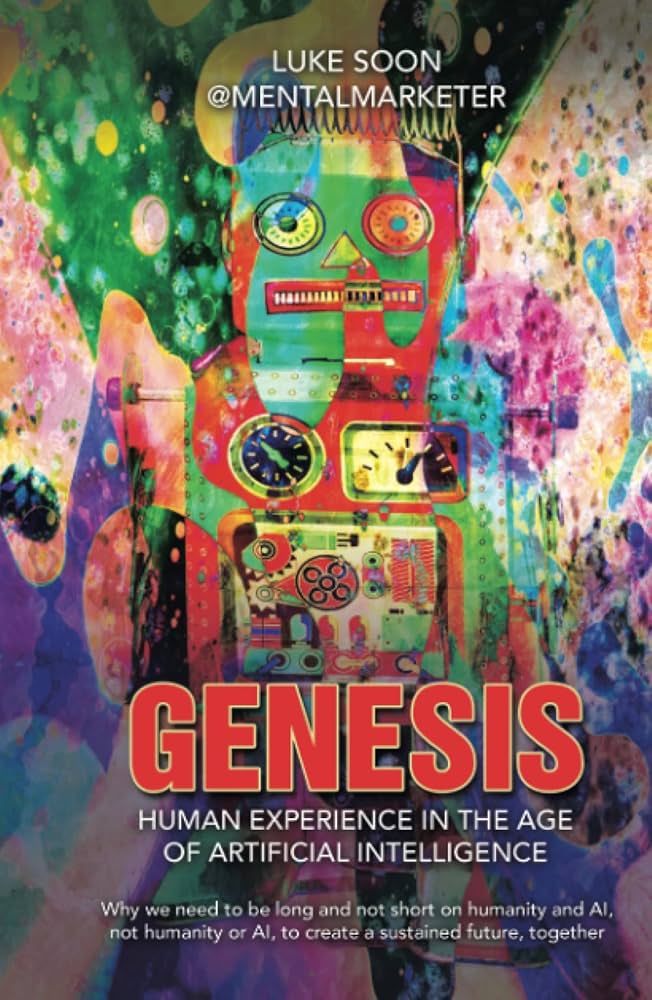
 Genesis: Human Experience in the Age of Artificial Intelligence | Synthesis: The Superintelligence Protocol
Leave a comment