
We must examine the profound impact (AI) on humanity, and a re-evaluation of what truly makes us human and a prioritisation of essential skills that AI cannot replicate. While most conversations acknowledge the incredible capabilities of AI, we have to shift focus from the technology itself to its less-discussed impact on personal growth, relationships, and societal well-being.
The Overlooked Value of Struggle and the Illusion of Perfection
Society is overly obsessed with results and destinations, particularly when it comes to AI’s remarkable ability to generate output, such as writing a book or painting a picture. However, this focus neglects the invaluable journey and the struggle inherent in doing the work oneself. True growth, problem-solving abilities, and resourcefulness come not from a perfect, AI-generated solution, but from the “excruciating journey” of wrestling with challenges and making mistakes.
• Growth through Imperfection: What makes people beautiful is not getting everything right, but getting many things wrong. Love and deep relationships thrive on accepting imperfections, both our own and others’.
• The Problem with “Perfect” Solutions: Relying on AI to resolve personal conflicts, like a fight with a partner, might provide the “right” answer, but it bypasses the human experience of bumbling, fumbling, and learning through shared struggle. It is this struggle that ultimately deepens relationships and fosters growth, leading to greater closeness after conflict, not despite it.
The Erosion of Human Skills in an AI World
The discussion highlights a concerning trend: technology, including AI, is causing the loss of fundamental human skills. Just as mobile phones have diminished the ability to memorise phone numbers, AI threatens skills crucial for navigating complex human interactions and coping with stress.
• Essential Human Skills: The skills most at risk, and therefore most important to cultivate, include:
◦ Listening and holding space for others.
◦ Peacefully resolving conflict and having effective confrontations.
◦ Giving and receiving feedback.
◦ Taking accountability and expressing empathy.
◦ Being a genuine friend and understanding what to do when a loved one is struggling.
• The Inauthenticity Epidemic: AI-generated content, such as emails and social media posts, often feels “perfect” but lacks authenticity, leading to a mental discounting of the message. This creates a premium on human-written language and things “made by hand” due to their unique, imperfect, and human touch, much like the Japanese concept of wabi-sabi – beauty in that which is temporary or imperfect. Items made by hand are valued for the human effort, struggle, and story behind their creation, which machines cannot replicate.
The Irony of Job Displacement and the Future of Work
There’s irony on AI’s impact on employment, contrasting it with the rise of robotics in the 1970s and 80s. While factory workers were once told to “reskill” when robots took their jobs, now it is “knowledge workers” (coders, finance professionals) who face this threat from AI. The expert notes the different reactions when it’s “their job on the line”.
• Changing Job Landscape: While AI will likely reshape the workforce, it is suggested that jobs will change rather than disappear. New roles in areas like nuclear energy (due to AI’s massive power consumption) are predicted as AI requires “massive incredible amounts of energy”.
• Universal Basic Income (UBI): It’s “ironic” that figures like the founder of OpenAI advocate for UBI now that knowledge workers are at risk, given that similar ideas were resisted when factory jobs were being displaced. The impact of UBI on human purpose and meaning is questioned.
• Future Focus for Youth: For a 10-year-old, the advice is to focus on human skills – learning how to be a good friend, resolving conflict, taking accountability – and learning a “real skill” that involves difficult, hands-on creation, design, or writing, as opposed to mere AI prompting.
Addressing Loneliness and the Need for Connection
The rise of technology and social media has exacerbated feelings of disconnection, lack of control, and loneliness, leading to stress and suicide epidemics. The expert asserts that there is a collective loneliness epidemic, with mental health issues like depression and anxiety being closely linked to feelings of isolation.
• Counterproductive Self-Preservation: When people feel lonely, they can enter a state of “self-preservation,” becoming more selfish, bitter, or angry, which ironically makes it harder to form new connections in a social environment, though it might aid individual survival in isolation.
• Service as a Solution: To combat loneliness, it is suggested to put oneself second and find ways to help others who are also struggling with loneliness. The act of service can be profoundly valuable.
• Vulnerability and Risk: Building true connection, whether in friendships or romantic relationships, requires vulnerability and taking risks. Being guarded, like the masseuse who fears sharing personal details, can prevent deep connections from forming. The willingness to say “me too” and find common ground is crucial for community and understanding.
The Pursuit of Purpose and Happiness Beyond Material Gains
We have to explore deeper philosophical questions about happiness, purpose, and the nature of business. It is contended that once basic survival needs are met (around $70,000 annual income), money doesn’t significantly increase happiness, though it can buy options and time.
• Ambition and Creativity: Small, innovative companies often have “outsized ambitions” that exceed their current resources, forcing creativity and resourcefulness. This contrasts with larger companies whose ambitions might be too modest relative to their capabilities.
• Gratitude in the Face of Loss: A profound experience during the LA fires taught the importance of gratitude for what one has, even in the face of potential loss. This shift in perspective can lead to greater happiness and detachment from material possessions.
• Purpose and Meaning: A lack of meaning and purpose is directly linked to loneliness. Having a sense of purpose provides a mechanism to meet people and make decisions, acting as a “magnet” for others.
Slowing Down and Prioritising Relationships
The expert argues that the modern world’s obsession with speed and immediate results often comes at the expense of quality and well-being. The constant connectivity afforded by cell phones and the internet has blurred the lines between work and personal life, leading to a perpetual state of “being at work”.
• Friction Creates Freedom: The “friction” of not having constant access to work (like before cell phones) paradoxically offered more freedom. When technology removes friction, the pressure to “do it now” increases, contributing to stress and overwhelm.
• Intentionality: Hiding social media apps to make their use intentional, rather than a default action, significantly reduced engagement, demonstrating the power of conscious choice.
• The Power of Friendship: Friendship is described as an “ultimate biohack” – addressing loneliness, depression, anxiety, and stress. Friendship should be prioritised by scheduling dedicated time, treating it with the same importance as work meetings, and being willing to serve friends. True friendships involve mutual support, growth, and the willingness to learn from each other.
• Mentorship and Growth: Choosing jobs and relationships based on who you will work for or connect with (i.e., potential mentors) rather than just money or status, is crucial for long-term growth and learning. The value of this approach lies in gaining knowledge and skills, which are more enduring than network, resources, or reputation. Good leaders let people “screw up and fix your own problems,” fostering self-reliance and the ability to navigate challenges.
This is our last call to (re)embrace our humanity, value the journey over the destination, cherish our imperfections, and consciously cultivate the deep, authentic connections that make life meaningful, especially as AI continues to reshape our world.
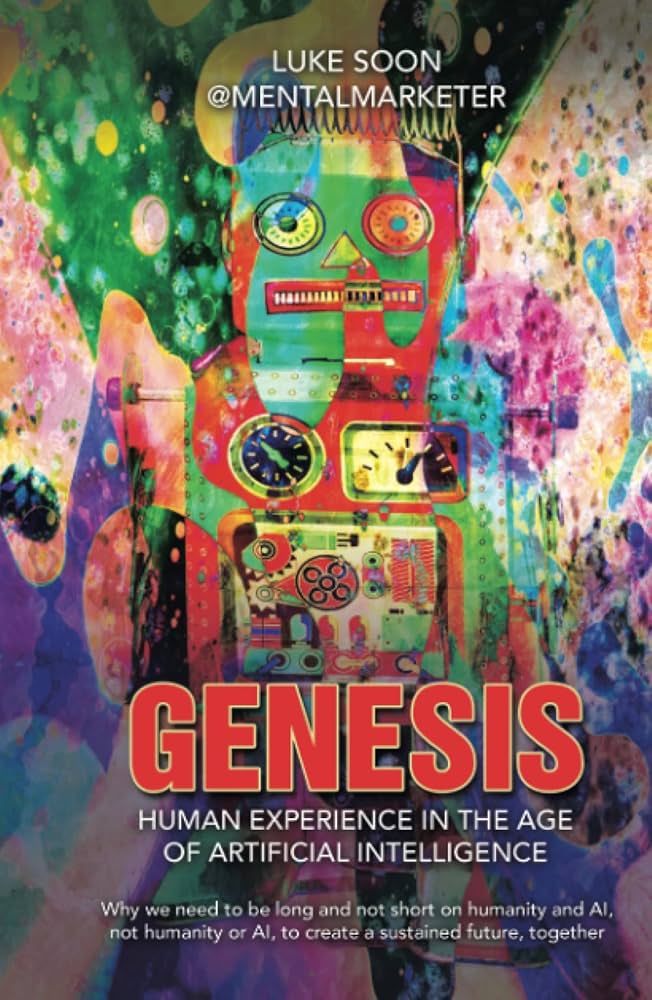
 Genesis: Human Experience in the Age of Artificial Intelligence | Synthesis: The Superintelligence Protocol
Leave a comment