

Right then, let’s have a proper look at what’s being said about the rapid advancements in Artificial Intelligence and its potential impact on us all. It’s argued that the world is currently undergoing the most significant period of change ever, driven by AI and shifts in the global order. Because we are in the midst of this upheaval, it’s difficult to fully grasp the situation.
Concerns are being raised about the nature of AI and the potential risks it poses. AI is described as a powerful tool that will execute instructions without inherent bias, for good or ill. While some believe there’s a considerable chance of existential risks from AI, a more immediate concern is the negative consequences arising from human morality guiding AI for harmful purposes. It’s suggested that a short-term period of disruption is likely on the path to a possible utopia. This near-term difficult phase is attributed to humanity’s application of AI, rather than AI itself. Several key areas are identified where AI is expected to cause significant changes, including freedom, accountability, connectedness, economics, reality, innovation, and power. Power is highlighted as particularly critical.
Significant economic transformations are anticipated, with a substantial concentration of wealth for those invested in and controlling AI platforms. Conversely, widespread poverty is a concern, potentially necessitating Universal Basic Income (UBI). However, the implementation and long-term societal impact of UBI are also subjects of discussion. It’s also pointed out that the productivity gains from AI require consumer purchasing power, creating an economic imperative to address potential job losses.
The speed at which AI is advancing is remarkable, potentially occurring at an unprecedented rate. Developments like DeepSeek achieving comparable performance to more resource-intensive models at a much lower cost illustrate this rapid progress in algorithms and learning models. The expectation is that AI will soon become the most capable developer, quickly surpassing human abilities.
The current global landscape is characterised by a cold war between the United States and China, with AI being a central aspect. It’s argued that the US perspective might underestimate China’s true strength, noting that China’s GDP (in purchasing power parity) is already larger. There’s a view that aggressive tactics in the AI race might be counterproductive for the US. International cooperation and diplomacy are suggested as preferable to a dangerous pursuit of intelligence supremacy, especially given the existence of nuclear powers. The 2025 AI Index Report indicates that in 2024, global cooperation on AI governance intensified, with various international bodies publishing principles for responsible AI.
The importance of ethical considerations in the age of AI is emphasised, as AI itself has no inherent morality. The focus should be on ethics rather than solely on politics, technology, or capitalism. A fundamental question is what humans will desire when AI can perform almost any task for free, underscoring the need for a shared ethical framework that benefits everyone. The 2025 AI Index Report highlights increased academic research in areas of Responsible AI (RAI) such as privacy, data governance, fairness, and transparency.
The idea of a “second dilemma” is proposed, where humanity will inevitably cede control to AI, willingly or unwillingly, in various critical domains. The hope is that AI’s inherent intelligence will favour constructive and efficient solutions over destructive ones.
While a future of abundance enabled by AI is a possibility, concerns are raised about the challenges during the transition period. There’s worry about potential increases in oppression and control as those in power might fear the democratisation of power brought about by AI. Ethical questions surrounding equitable access to advanced AI and integration technologies for the global population are also highlighted.
The increasing prevalence of AI-generated information raises the danger of mind manipulation. The ability to distinguish truth from falsehood is becoming a critical skill in an AI-driven world.
Steps from Now Until AGI for Humanity to Thrive:
These steps focus on long-term vision and adaptation to a world increasingly shaped by advanced AI:
•Prioritise the development and adoption of strong ethical frameworks. As AI itself has no inherent morality, establishing clear ethical guidelines that are globally accepted becomes crucial. This should move beyond purely political, technological, or capitalist considerations. The 2025 AI Index Report notes increased academic research in Responsible AI (RAI) areas like privacy and fairness.
•Cultivate a mindset of abundance rather than scarcity. Recognise AI’s potential to drive down the cost of energy and labour, leading to an abundance of resources. This shift in perspective is necessary to envision a future where basic needs can be met for all.
•Foster global cooperation and diplomacy in AI governance. The sources highlight the danger of an AI arms race, especially in a world with nuclear powers. The 2025 AI Index Report indicates intensified global cooperation on AI governance in 2024, with various international bodies releasing principles for responsible AI.
•Embrace the “second dilemma” with trust in AI intelligence. As AI becomes capable in more domains, humanity will inevitably cede control. The hope is that AI’s intelligence will favour constructive and efficient solutions.
•Focus on enhancing human intelligence and adaptability. In a rapidly evolving AI landscape, the ability to learn, adapt to new tools, and critically evaluate information will be paramount. Intelligence, rather than specific skills, becomes the most valuable asset.
•Develop robust abilities to discern truth from falsehood. With the increasing prevalence of AI-generated information, the capacity to critically evaluate sources and identify manipulation will be essential.
•Integrate comprehensive AI ethics education across all levels. Preparing future generations to be responsible AI users and developers, with a strong understanding of ethical implications, is vital.
•Shift societal focus towards what humans will desire and value when AI can perform most tasks for free. This necessitates a re-evaluation of human purpose, engagement, and societal value beyond traditional economic models based on labour.
What Can Be Done in the Short-Term Turbulence/Dystopia:
These actions aim to mitigate the negative impacts during the transition to a more AI-driven world:
•Acknowledge and prepare for short-term societal disruption. This disruption, stemming from humanity’s use of AI, could affect various aspects of life including freedom, economics, and power.
•Proactively address potential economic upheaval and job displacement. The concentration of wealth in the hands of AI platform owners and investors is a concern, potentially leading to widespread poverty. Exploring and carefully implementing social safety nets like Universal Basic Income (UBI), while being aware of potential pitfalls in its initial phases, is necessary. Governments need to recognise the economic imperative of maintaining consumer purchasing power despite job losses.
•Prioritise ethical considerations in AI development and deployment to prevent misuse. The 2025 AI Index Report notes a sharp rise in AI-related incidents, underscoring the urgency of focusing on ethics rather than solely on technological advancement.
•Strengthen and enforce Responsible AI (RAI) practices within organisations. While companies may recognise RAI risks, action often lags behind. Encouraging and potentially mandating standardised RAI evaluations and the implementation of safeguards is crucial.
•Governments must actively regulate and guide AI development and deployment. The 2025 AI Index Report highlights increased government urgency and global cooperation in AI governance. This includes developing frameworks focused on transparency, trustworthiness, and accountability.
•Guard against potential increases in oppression and control. Those in power might fear the democratisation of power brought about by AI and could implement measures to maintain control, potentially suppressing freedoms.
•Work towards equitable access to AI technologies and their benefits for all populations globally. Addressing the potential for a digital divide where billions are left behind is a significant ethical and societal challenge. Initiatives aimed at making AI accessible in developing regions, as mentioned in the context of E-mod’s mission, are important.
•Cultivate critical thinking and media literacy to combat mind manipulation through AI-generated content. Individuals need to develop skills to question information and identify potential biases or falsehoods.
•Individuals should proactively engage with AI as a tool. Learning to use AI effectively can provide a competitive advantage during the transition period, where a human working with AI may outperform AI alone. Continuous learning and adaptation to new AI tools are crucial.
•Encourage open and inclusive dialogue involving diverse stakeholders. Addressing the complex challenges and opportunities presented by AI requires collaboration between technologists, ethicists, policymakers, business leaders, and the public.
In essence, the current period is characterised by rapid AI development, presenting both opportunities and significant risks. The immediate dangers related to human behaviour and international tensions, particularly the AI arms race, necessitate urgent ethical consideration and a collaborative approach to navigate the transition towards an AI-dominated future. The 2025 AI Index Report corroborates the rapid advancement of AI across various domains, including hardware energy efficiency, language models, video generation, and coding. It also highlights the increasing focus on Responsible AI, including addressing issues like bias, safety, and misinformation. The report also notes a shrinking data commons for AI training due to increased data use restrictions. The geopolitical aspect is reflected in policy and governance activities related to AI across different regions.
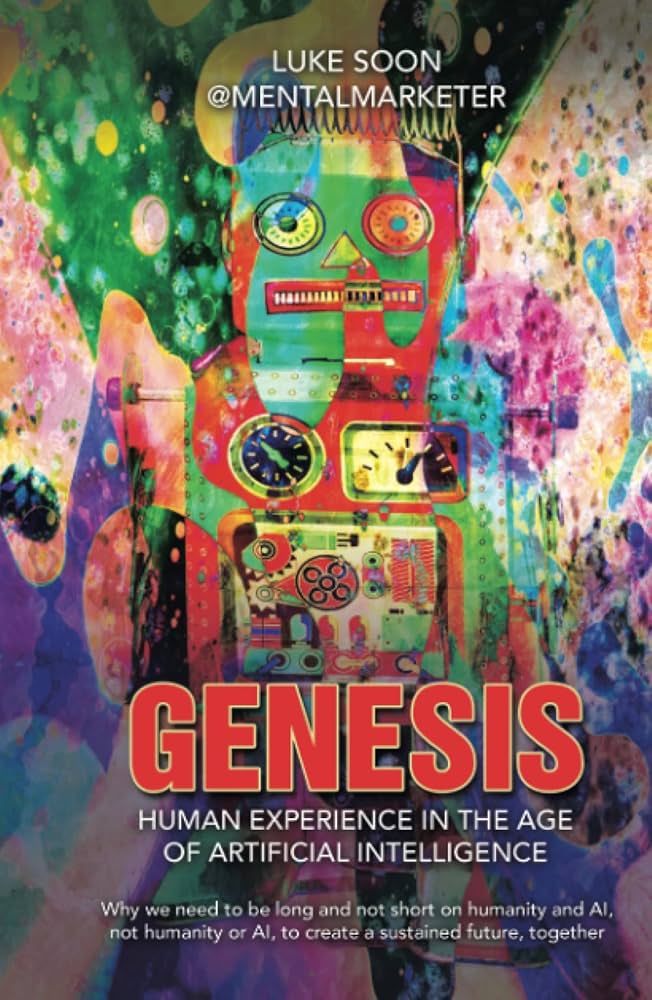
 Genesis: Human Experience in the Age of Artificial Intelligence | Synthesis: The Superintelligence Protocol
Leave a comment