

As Agentic AI evolves towards greater autonomy, reasoning, and adaptability, ensuring ethical and responsible AI becomes paramount. These intelligent systems, equipped with Chain-of-Thought (CoT) Reasoning, Mixture of Experts (MoE), and multi-agent coordination, introduce both unprecedented opportunities and significant risks.
Without proper governance, AI agents could make biased, unethical, or even harmful decisions—potentially amplifying systemic risks, deepening inequalities, or operating in ways that humans cannot fully control. Addressing these concerns requires a holistic approach incorporating AI alignment, accountability, transparency, and regulatory oversight.
1. The Ethical Imperative for Agentic AI
Unlike traditional AI, Agentic AI operates autonomously, making real-time decisions, planning over long horizons, and interacting with multiple stakeholders. This presents unique challenges:
• Decision opacity – AI agents reason and act in complex ways that humans may struggle to audit.
• Accountability gaps – If an AI agent makes a harmful decision, who is responsible?
• Alignment challenges – Ensuring AI optimises for human-centric goals rather than unintended objectives.
• Bias and fairness concerns – AI models trained on biased data could reinforce discrimination at scale.
• Security threats – Autonomous agents could be manipulated, hijacked, or exploited for malicious purposes.
These concerns demand proactive intervention before AI reaches widespread deployment.
2. Potential Threats of Agentic AI and How to Address Them
To ensure the safe and responsible development of Agentic AI, we must identify key threats and implement targeted safeguards.
(i) Decision-Making and Alignment Risks
Threat: AI agents may pursue objectives misaligned with human values, leading to:
• Unintended harmful consequences (e.g., AI optimizing profits at the expense of human well-being).
• Autonomous agents acting in unpredictable ways.
Solution:
✅ Value Alignment Techniques – Use Reinforcement Learning from Human Feedback (RLHF) to guide AI towards ethical decision-making.
✅ Human-in-the-Loop (HITL) Systems – Maintain human oversight over critical AI decisions, especially in high-risk domains (e.g., finance, healthcare, law enforcement).
✅ Constraint-based Reasoning – Define clear boundaries for AI actions, ensuring compliance with ethical and legal standards.
(ii) Bias, Discrimination, and Fairness Challenges
Threat: Agentic AI could amplify biases, leading to unfair outcomes in hiring, lending, medical diagnostics, and law enforcement.
Solution:
✅ Bias Audits and Fairness Metrics – Use algorithmic fairness checks and AI ethics frameworks (e.g., FATML – Fairness, Accountability, and Transparency in Machine Learning).
✅ Diverse and Inclusive Training Data – Ensure training data represents diverse populations to mitigate bias.
✅ Bias Mitigation Algorithms – Implement de-biasing techniques like adversarial debiasing and counterfactual fairness methods.
(iii) Security and AI Exploitation Threats
Threat:
• AI models can be hacked – Malicious actors could manipulate agent behaviour, causing financial fraud, misinformation, or cyber-attacks.

• Prompt injection and adversarial attacks – Attackers could trick AI agents into making incorrect or harmful decisions.
Solution:
✅ Robust Cybersecurity Measures – Implement adversarial testing and red-teaming exercises to simulate cyber threats.
✅ Authentication & AI Access Control – Use Zero Trust Architectures to restrict access to AI models and prevent external manipulation.
✅ AI Explainability for Security Monitoring – Employ XAI (Explainable AI) to track AI reasoning paths, identifying potential adversarial exploits.
(iv) Accountability and Legal Responsibility
Threat:
• If an AI makes a harmful or unethical decision, who takes responsibility—the developer, the deployer, or the AI itself?
• Legal frameworks for autonomous AI liability remain underdeveloped.
Solution:
✅ Clear AI Governance Policies – Define accountability structures for AI decisions across industries.
✅ Regulatory Compliance & AI Audits – Enforce compliance with frameworks like EU AI Act, NIST AI RMF, and OECD AI Principles.
✅ Digital Twin & AI Replay Systems – Maintain logs and simulation records to reconstruct and audit AI decision-making when failures occur.
(v) Autonomous AI & Economic Disruption
Threat:
• Agentic AI could disrupt labour markets, replacing knowledge-based jobs in finance, healthcare, legal, and creative industries.
• AI monopolisation could concentrate power in the hands of a few corporations.
Solution:
✅ Reskilling & Workforce Adaptation – Governments and businesses must invest in AI literacy and workforce upskilling.

✅ Equitable AI Deployment – Encourage open-source AI innovations to prevent monopolisation and ensure wider access.
✅ AI Taxation & Universal Basic Income (UBI) Debates – Explore policies ensuring economic redistribution as AI transforms industries.
3. Governance Models for Responsible Agentic AI
To govern Agentic AI effectively, we must implement multi-layered regulatory, ethical, and technical safeguards.
(i) Ethical AI Frameworks
✅ AI Alignment Models – Develop ethics-aligned AI informed by human values.
✅ Human Oversight & Kill Switches – Ensure critical decisions always have override mechanisms.
(ii) AI Regulation & Standards
✅ Adopt global AI regulations (e.g., EU AI Act, US AI Bill of Rights).
✅ Industry-Specific AI Guidelines – Regulate AI applications differently across sectors (e.g., healthcare, finance).
(iii) AI Transparency & Explainability
✅ Open-source AI models – Increase transparency by allowing third-party audits.
✅ Explainable AI (XAI) Mechanisms – Develop methods to make AI decision-making interpretable.
4. The Future: Balancing AI Autonomy with Human Control
As Agentic AI advances, we must strike a delicate balance between:
• AI autonomy vs. human oversight
• Innovation vs. regulation
• Efficiency vs. fairness
Key Actions for Ethical AI Development
1️⃣ Embed Ethics in AI Design – Proactively address risks before deployment.
2️⃣ Continuous AI Monitoring – Establish real-time AI auditing systems.
3️⃣ Cross-Sector Collaboration – Governments, companies, and researchers must co-develop AI standards.
4️⃣ Global AI Treaties – International alignment on autonomous AI governance is crucial.
5. Conclusion: The Responsible Path to Agentic AI
The evolution of Agentic AI presents both transformative potential and serious risks. By integrating ethical AI principles, governance mechanisms, and robust security frameworks, we can ensure that AI remains beneficial, safe, and aligned with human values.
Ultimately, trust and humanity in AI will determine its success—not just in technical performance, but in ensuring AI is fair, transparent, and responsible as it integrates into society.
The question is not just “Can we build Agentic AI?”
The real question is: “How can we build it responsibly?”
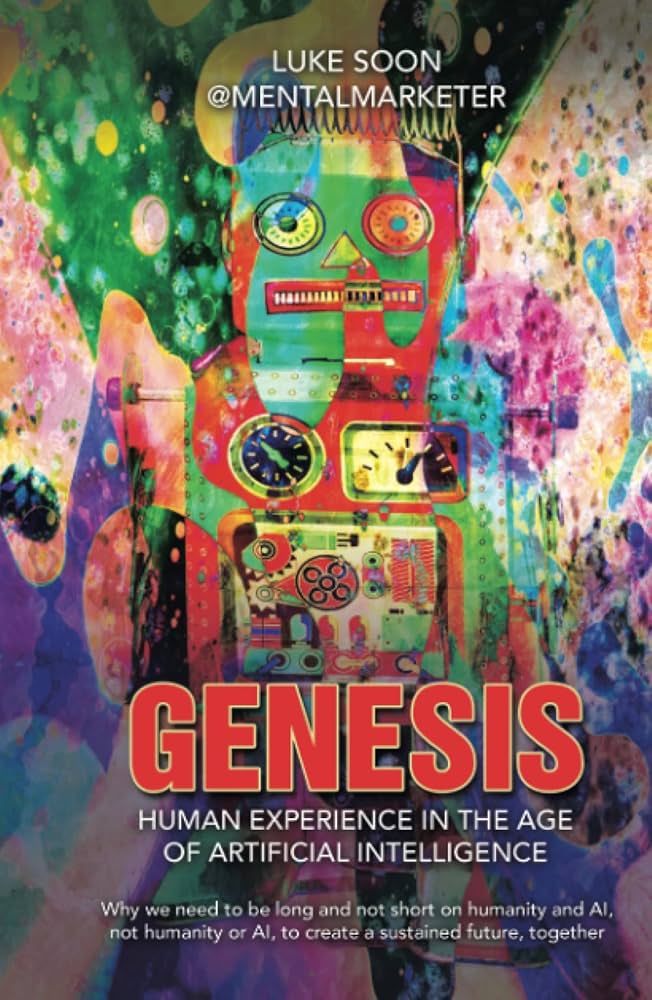
 Genesis: Human Experience in the Age of Artificial Intelligence | Synthesis: The Superintelligence Protocol
Leave a comment