

Here’s how Agentic AI, Large Language Models (LLMs), and recent AI advancements enhance Next Best Action (NBA) systems, along with a detailed architecture:
How Agentic AI & LLMs Improve NBA
- Dynamic Contextual Understanding
- LLMs: Process unstructured data (emails, chat logs, social media) to infer customer intent, sentiment, and preferences.
- Agentic AI: Autonomously adjusts strategies based on real-time interactions (e.g., escalating a frustrated customer to a human agent).
- Autonomous Decision-Making
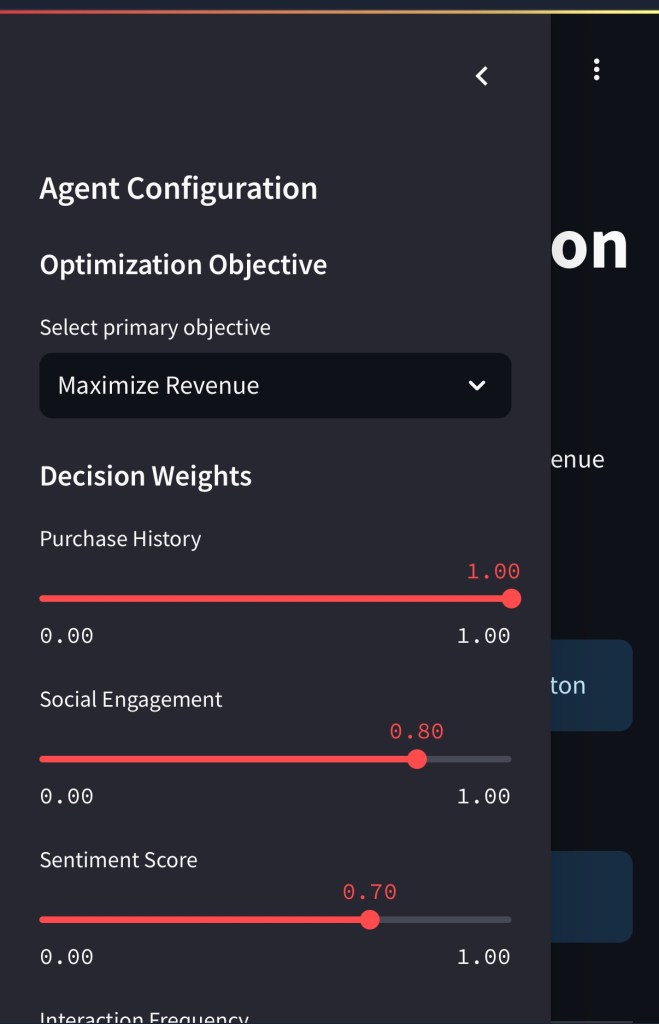
- Agentic AI agents self-optimize using reinforcement learning (RL), testing actions and refining policies to maximize rewards (e.g., revenue, retention).
- Multi-Modal Insights
- Combine text (LLMs), voice (speech-to-text), and vision (image analysis) for richer context (e.g., analyzing a customer’s tone during a call).
- Generative Capabilities
- LLMs generate hyper-personalized content (emails, product descriptions) tailored to individual customers.
- Real-Time Adaptability
- Edge computing and lightweight models enable instant decisions (e.g., in-app offers during a browsing session).
Enhanced NBA Architecture with Agentic AI & LLMs
Below is a step-by-step breakdown of the architecture:
1. Data Ingestion Layer
- Sources:
- Structured data (CRM, transactions).
- Unstructured data (emails, chat logs, social media, call transcripts).
- Real-time streams (clickstream, IoT sensors).
- Tools: Apache Kafka, AWS Kinesis, Snowflake.
2. Data Processing & Enrichment
- LLM-Powered NLP Pipeline:
- Text Embeddings: Convert unstructured text into vectors (e.g., using OpenAI embeddings).
- Sentiment Analysis: Detect frustration, urgency, or satisfaction.
- Intent Recognition: Classify customer goals (e.g., “complaint” vs. “purchase inquiry”).
- Multi-Modal Fusion: Combine text, voice, and image data into unified customer profiles.
- Tools: Hugging Face Transformers, LangChain, vector databases (Pinecone, Milvus).
3. Predictive & Prescriptive Analytics
- Predictive Models:
- Churn Risk: Gradient-boosted trees or neural networks.
- Lifetime Value (LTV): Time-series forecasting.
- LLM-Augmented Insights:
- Generate hypotheses (e.g., “Customers mentioning ‘price’ in chats are 20% more likely to churn”).
- Tools: PyTorch, TensorFlow, AutoML platforms.
4. Agentic Decision Engine
- Components:
- Reinforcement Learning (RL) Agents: Learn optimal policies by simulating outcomes (e.g., “Offer A increases conversion by 5% vs. Offer B”).
- LLM-Based Reasoning:
- Chain-of-Thought (CoT): Explain why an action was chosen (e.g., “Discount offered due to high churn risk”).
- Constitutional AI: Ensure compliance with business rules (e.g., “Exclude underage users from alcohol ads”).
- Multi-Agent Systems:
- Specialized agents for retention, sales, and compliance collaborate/compete to optimize outcomes.
- Tools: OpenAI GPT-4, Microsoft Autogen, RLlib.
5. Execution Layer
- Action Channels:
- Chatbots (e.g., GPT-4-powered bots for instant responses).
- Email/SMS (generated by LLMs).
- Human agent guidance (real-time prompts during calls).
- Tools: Twilio, Salesforce Marketing Cloud, Rasa.
6. Feedback & Optimization Loop
- Reinforcement Learning:
- Reward signals (e.g., revenue, click-through rate) update decision policies.
- LLM-Powered Post-Action Analysis:
- Generate natural language reports (e.g., “Offer X underperformed due to poor timing”).
- Tools: MLflow, Weights & Biases.
7. Governance & Ethics Layer
- Bias Mitigation: Monitor fairness across customer segments.
- Explainability: LLMs generate plain-English explanations for audits.
- Tools: IBM AI Fairness 360, SHAP.
Architecture Diagram
[Data Sources] → [Ingestion] → [Processing & Enrichment (LLMs)] → [Predictive Analytics] ↓ [Agentic Decision Engine (RL + LLMs)] → [Execution Channels] ↓ [Feedback Loop] → [Optimization]
Key Enhancements Over Traditional NBA
- Autonomy: Agentic AI handles edge cases without human input (e.g., resolving a complaint via chatbot).
- Personalization: LLMs craft messages that mirror a customer’s communication style.
- Adaptability: RL agents continuously refine strategies in dynamic environments (e.g., holiday sales).
- Multi-Modal Context: Decisions account for voice tone, facial expressions (in video calls), and text.
Use Cases
- Real-Time Upselling:
- A customer browses a $500 camera → LLM infers budget from past purchases → Agentic AI offers a $50 lens discount.
- Churn Prevention:
- Detects frustration in a support chat → LLM drafts apology → Agent approves a $10 credit.
- Compliance-Driven Actions:
- Blocks a loan offer to a high-risk customer, with an LLM explaining the denial.
Challenges
- Latency: Heavy LLMs may slow real-time decisions (mitigated with smaller models like Mistral-7B).
- Hallucinations: LLMs may generate incorrect reasoning (addressed with retrieval-augmented generation).
- Cost: GPU infrastructure for LLM inference can be expensive.


Future Outlook
- Autonomous Agents: Self-improving NBA systems that negotiate with customers (e.g., dynamic pricing).
- AI Legislation: Stricter rules for explainability and consent in automated decisions.
By integrating Agentic AI and LLMs, NBA evolves from a static rules engine to a self-optimizing, empathetic system capable of handling unprecedented complexity.
 Genesis: Human Experience in the Age of Artificial Intelligence | Synthesis: The Superintelligence Protocol
Leave a comment