

Automation has undergone a remarkable transformation, evolving from simple mechanized tasks to sophisticated systems capable of planning, reasoning, and autonomous decision-making. Below, we explore the key evolutionary steps of automation, its current state, and predictions for its future.
1. The Evolutionary Steps of Automation
Step 1: Robotic Process Automation (RPA)
RPA marked the beginning of automation, focusing on automating repetitive, rule-based tasks such as data entry, invoice processing, and payroll management. While efficient, RPA lacked adaptability and decision-making capabilities, relying heavily on predefined rules.
Step 2: Cognitive Automation
Building on RPA, cognitive automation introduced AI and machine learning to handle unstructured data like emails and images. This phase enabled predictive tasks such as demand forecasting and improved decision-making by learning from historical data.
Step 3: Intelligent Assistants
Intelligent assistants integrated RPA and cognitive automation into workflows, enabling more complex tasks like customer support chatbots and HR onboarding. These systems could make decisions based on predefined rules but still required significant human oversight.
Step 4: AI-Driven Automation
Today, automation leverages generative AI and advanced machine learning to create autonomous systems capable of independent decision-making and task execution. These systems can generate content, solve problems, and adapt to dynamic environments with minimal human intervention.
2. The Rise of Planning and Reasoning in Automation
Current State
Modern automation systems are increasingly capable of planning and reasoning, thanks to advancements in AI and machine learning. For example:
- AI Planning: Systems can now generate plans to achieve specific goals, such as optimiding production schedules or managing supply chains.
- Reasoning: AI agents can analyze complex scenarios, predict outcomes, and make decisions based on real-time data. This is particularly evident in industries like healthcare and manufacturing, where predictive maintenance and quality control are critical.
Key Technologies
- Digital Twins: Virtual replicas of physical assets enable real-time monitoring and optimisation of processes.
- Behavior Trees: These hierarchical decision-making structures allow systems to handle complex tasks and recover from errors autonomously.
- Reinforcement Learning: AI systems learn optimal strategies through trial and error, improving their ability to plan and reason over time.
3. The Future of Automation: Predictions for 2025 and Beyond
The next evolutionary step for AI and automation will indeed involve creating and innovating—moving beyond solving complex problems to generating novel ideas, designs, and solutions. This shift represents a transition from task execution to creative collaboration, where AI becomes a partner in innovation rather than just a tool for efficiency. Here’s a deeper look at what this future might hold:
AI is already demonstrating its ability to generate creative content, from art and music to marketing campaigns and product designs. The next step will involve AI systems that not only create but also innovate—coming up with entirely new concepts, strategies, and solutions.
Examples:
- Generative Design: AI tools like Autodesk’s generative design software create optimized product designs by exploring thousands of possibilities based on user-defined constraints (e.g., weight, material, cost).
- Creative Writing: AI models like GPT-4 can draft stories, scripts, and even poetry, offering writers new ideas and perspectives.
- Scientific Innovation: AI-driven platforms like Atomwise are designing new drugs by simulating molecular interactions, accelerating the discovery of life-saving treatments.
2. Innovation Through Multi-Agent Collaboration
Future AI systems will involve multi-agent architectures, where specialized AI agents collaborate to innovate. For example:
- One agent could generate ideas.
- Another could evaluate feasibility.
- A third could refine the concept based on feedback.
This collaborative approach will enable AI to tackle grand challenges like climate change, energy optimization, and space exploration by generating innovative solutions that humans alone might not conceive.
3. AI-Driven Disruptive Innovation
AI will not just improve existing processes but also disrupt industries by creating entirely new business models and markets. For instance:
- Personalized Products: AI could enable mass customization, where every product is tailored to individual preferences, from clothing to cars.
- AI-Generated Startups: Platforms like OpenAI’s GPT-4 could help entrepreneurs brainstorm business ideas, create business plans, and even draft marketing strategies.
- New Art Forms: AI-generated art, music, and virtual experiences will redefine creativity, blending human and machine ingenuity.
4. Human-AI Co-Creation
The future of innovation lies in human-AI collaboration, where humans and machines work together to amplify creativity. AI will handle data-intensive tasks, generate ideas, and provide insights, while humans will focus on refining concepts, making ethical decisions, and adding emotional depth.
Example:
- Architecture: AI could generate building designs optimized for sustainability and functionality, while architects add aesthetic and cultural elements.
- Entertainment: AI could draft movie scripts or game narratives, with writers and directors adding emotional nuance and storytelling flair.
5. Challenges and Ethical Considerations
While AI-driven innovation holds immense promise, it also raises important questions:
- Ownership: Who owns AI-generated creations—the developer, the user, or the AI itself?
- Bias: How do we ensure AI-generated ideas are free from bias and aligned with human values?
- Job Displacement: As AI takes on more creative roles, how do we ensure humans remain central to the innovation process?
Addressing these challenges will require robust governance frameworks, ethical guidelines, and a focus on human-centric AI.
6. The Future: AI as an Innovator
By 2030, AI could become a prolific innovator, driving breakthroughs in fields like:
- Healthcare: AI-designed treatments and personalized medicine.
- Energy: AI-optimized renewable energy systems and smart grids.
- Space Exploration: AI-generated strategies for colonizing Mars or mining asteroids.
This future will not replace human creativity but augment it, enabling us to achieve feats that were once unimaginable.
1. Multi-Agent Systems
By 2025, multi-agent systems will become the norm, with multiple AI agents collaborating to solve complex tasks. These systems will be orchestrated by a central superagent, optimising interactions and enhancing efficiency.
2. Industry-Specific Applications
Automation will revolutionise vertical industries like healthcare, finance, and manufacturing. For example, AI agents in healthcare will manage patient care, monitor vital signs, and administer medication, while in manufacturing, they will optimise supply chains and predict maintenance needs.
3. Democratisation of AI
Advanced AI tools will become accessible to small and midsized businesses, leveling the playing field. User-friendly platforms and low-code/no-code solutions will enable organizations to integrate AI into their workflows without extensive technical expertise.
4. Enhanced Human-AI Collaboration
Automation will transition from being a tool to a collaborator, working alongside humans to amplify creativity and productivity. For instance, AI agents will generate preliminary designs or storylines, allowing professionals to focus on refining concepts.
The next step in the evolution of AI and automation is creating and innovating. By moving beyond problem-solving to generating novel ideas and solutions, AI will become a true partner in human progress. This shift will redefine industries, unlock new possibilities, and empower us to tackle the world’s most pressing challenges.
The future of innovation is not just human or machine—it’s human + machine, working together to create a better world.
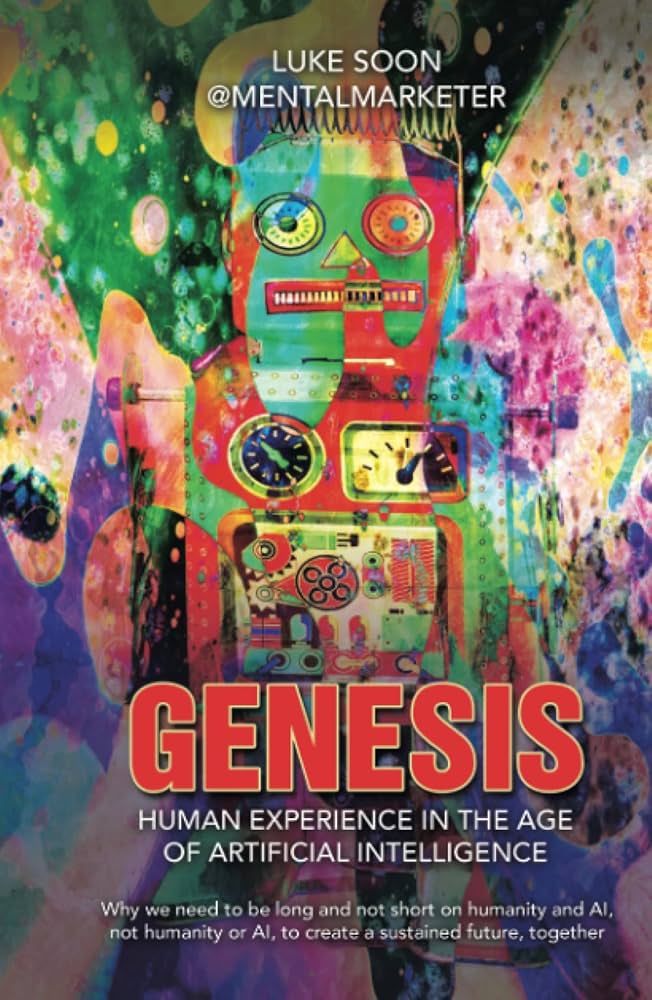
 Genesis: Human Experience in the Age of Artificial Intelligence | Synthesis: The Superintelligence Protocol
Leave a comment