

The buzz around AI agents is real. We discuss how Agentic AI is super-charging RPA. With Microsoft and Salesforce diving headfirst into the game, and HR-tech solutions racing to integrate agentic AI, it’s clear this isn’t just hype – it’s a paradigm shift. Let’s break down what makes AI agents revolutionary, how they’re different from the trusty old robotic process automation (RPA), and explore some use cases that show their true potential.
In the rapidly advancing field of artificial intelligence, the distinction between Robotic Process Automation (RPA) and Agentic AI is becoming increasingly significant. While both technologies aim to automate tasks, their capabilities, architectures, and potential to contribute to Artificial General Intelligence (AGI) differ markedly. This blog explores these differences, focusing on planning and reasoning abilities that are crucial for advancing towards AGI.
What’s the Big Deal About AI Agents?
Unlike RPA, which sticks to a script, AI agents can think, adapt, and learn – just like your best colleague (minus the coffee breaks). They combine natural language understanding, memory, tool integration, planning, execution, and adaptability. It’s this flexibility that’s making companies rethink how work gets done.
Here’s a comparison to make it crystal clear:
• RPA: The assembly-line worker – great at repetitive, rule-based tasks.
• AI Agent: The problem-solving teammate – great at handling complexity, thinking on the fly, and even learning as they go.
1. Planning and Reasoning
RPA: Can only execute pre-programmed tasks in a sequence. For example, an RPA bot might log into a portal, download a report, and email it. If a step fails (like a missing file), the bot stops.
AI Agent: Thinks ahead and adapts dynamically. An agent tasked with managing recruitment for high-volume roles doesn’t just process tasks; it plans:
• If candidates aren’t responding to outreach, it adjusts communication channels or timelines.
• If a new skill requirement is added mid-hiring, it recalibrates candidate evaluations to reflect the change.
• If interviewers become unavailable, it reschedules while informing all stakeholders.
Example: A global manufacturing firm uses an AI agent for hiring. When a candidate unexpectedly requests a rescheduled interview, the agent adjusts all downstream schedules, avoiding manual intervention and keeping the process on track.
2. Natural Language Understanding and Reasoning
RPA: Understands structured commands. For instance, an RPA bot can pull data from predefined fields in a form.
AI Agent: Understands context and nuances in human communication. It reasons about questions and provides insightful responses.
• When a candidate asks about working hours, the agent suggests hybrid work policies and flex-time options.
• If an employee inquires about upskilling, the agent proposes relevant courses, based on their career history and future aspirations.
Example: AI-powered assistants like Salesforce’s Einstein GPT create tailored employee career paths by analysing skills and preferences, while an RPA tool might only process fixed course recommendations.
3. Learning and Adaptability
RPA: Requires manual updates for every new scenario. If the process changes, the bot needs reprogramming.
AI Agent: Learns on the fly. An agent optimises workflows over time by analysing what works best. For instance:
• It notices that candidates respond faster to emails sent during lunch hours and adjusts outreach schedules accordingly.
• It identifies patterns where candidates from certain industries excel in specific roles, improving sourcing strategies.
Example: A tech startup uses an AI agent for customer support. It learns to identify recurring complaints, proactively improving its responses without human input, unlike an RPA system that would require reprogramming for every new complaint type.
4. Multi-Step Task Execution
RPA: Executes individual tasks in a fixed order, like moving data from a spreadsheet to a CRM system.
AI Agent: Orchestrates complex, multi-step workflows. For example:
• A sourcing agent finds candidates.
• A screening agent evaluates their profiles.
• A scheduling agent sets up interviews.
• A feedback agent follows up post-interview.
Example: LinkedIn’s Hiring Assistant is a real-world AI agent that sources, screens, and engages candidates seamlessly. In contrast, an RPA bot might only handle isolated tasks like interview scheduling.
Key Use Cases of AI Agents
1. Candidate Communications in Recruitment
Imagine a hiring agent that doesn’t just answer FAQs but connects the dots:
• When asked about working hours, it also shares hybrid work policies.
• If a candidate inquires about professional development, it adds details about mentorship programs and certifications.
Why it works: Agents use context and reasoning to build meaningful conversations, something traditional chatbots simply can’t achieve.
2. Intelligent Scheduling
Forget the back-and-forth emails. An AI agent can:
• Auto-schedule interviews based on availability.
• Reschedule seamlessly when conflicts arise.
• Coordinate multiple interview panels without human intervention.
Impact: HR teams save hours, and candidates get a smoother, more professional experience.
3. Learning Pathways for Employees
Picture an agent acting as a personalised career coach:
• Recommending courses based on past projects and performance.
• Scheduling mentorship sessions and even job shadowing opportunities.
• Adapting its suggestions as employees grow.
Result: Employees feel valued and supported, boosting engagement and retention.
Case Study 1: Insurance Processing
• RPA Implementation: An insurance company uses RPA to automate the processing of claims. The system follows predefined rules to extract data from forms, validate information, and update databases. This leads to faster processing times and reduced errors.
• Agentic AI Implementation: In contrast, an agentic AI system in the same company can analyze claim data in real-time, identify patterns, and make decisions on claim approvals or denials based on complex criteria. This system can also adapt to new types of claims and learn from past decisions to improve accuracy over time.
Key Characteristics of RPA be Agentic AI
Key Characteristics of RPA:
• Rule-Based Operations: RPA systems execute tasks based on predefined rules and workflows.
• Limited Adaptability: They are not designed to handle unforeseen scenarios or complex decision-making.
• Efficiency in Repetitive Tasks: RPA excels in automating straightforward, repetitive processes, leading to efficiency gains and cost reductions .
Key Characteristics of Agentic AI:
• Autonomous Decision-Making: Agentic AI systems can make decisions without human intervention, adapting to new situations and learning from experience .
• Advanced Reasoning and Planning: These systems are capable of complex reasoning, planning, and problem-solving, which are essential steps towards achieving AGI .
• Adaptability: Agentic AI can handle unforeseen scenarios and dynamic environments, making it suitable for a broader range of applications compared to RPA .
Architectural Differences
The architectural differences between RPA and Agentic AI are fundamental to understanding their respective capabilities and limitations
RPA Architecture:
• Workflow Automation: RPA systems use predefined workflows to automate tasks. They typically involve a series of steps that the system follows to complete a task.
• Integration with Existing Systems: RPA often integrates with existing software applications through user interfaces, mimicking human interactions with these systems.
• Limited Learning Capabilities: RPA systems do not incorporate machine learning or advanced AI techniques, limiting their ability to adapt and improve over time.
Agentic AI Architecture:
• Machine Learning and AI Integration: Agentic AI systems leverage machine learning algorithms and advanced AI techniques to learn from data and improve their performance over time.
• Autonomous Agents: These systems are built around autonomous agents that can perceive their environment, make decisions, and take actions to achieve specific goals.
• Dynamic Adaptation: Agentic AI architectures are designed to adapt to changing conditions and handle complex tasks that require reasoning and planning .
Case Study 2: Customer Service in Contact Centers
• RPA Implementation: A contact center uses RPA to automate routine customer inquiries, such as balance checks and account updates. The system follows scripted responses and interacts with customers through predefined workflows.
• Agentic AI Implementation: An agentic AI system in the same contact center can handle more complex customer interactions. It uses natural language processing (NLP) to understand customer queries, reason about the best course of action, and provide personalized responses. The system can also learn from each interaction to improve future responses and handle a wider range of inquiries .
Why AI Agents Matter: The Data Behind the Hype
• Companies using AI agents for recruitment report a 30% faster time-to-hire and 20% higher candidate satisfaction scores .
• In talent management, AI agents have shown a 25% improvement in engagement metrics by providing tailored development opportunities .
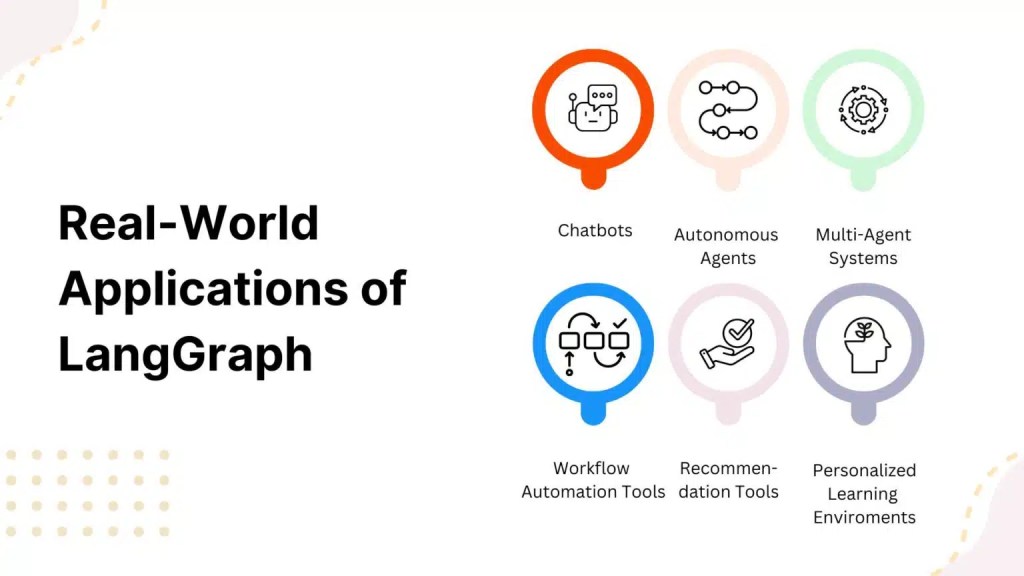
• When used in high-volume hiring, agents achieve an 80% reduction in manual tasks, freeing up HR teams to focus on strategic work . There’s almost infinite possibilities how Agents can be built to solve problems:
Challenges and Opportunities
While AI agents promise transformative benefits, they’re not without hurdles:
• Privacy Concerns: Data governance must be airtight.
• Complexity: Integration with legacy systems can be tricky.
• Trust: Building confidence in agent decisions requires transparency and oversight.
But the opportunities far outweigh the challenges. Agents can scale effortlessly, provide consistent quality, and even suggest process optimisations based on their learnings.
Challenges and Opportunities
While AI agents promise transformative benefits, they’re not without hurdles:
• Privacy Concerns: Data governance must be airtight.
• Complexity: Integration with legacy systems can be tricky.
• Trust: Building confidence in agent decisions requires transparency and oversight.
But the opportunities far outweigh the challenges. Agents can scale effortlessly, provide consistent quality, and even suggest process optimisations based on their learnings.
The Future of AI Agents
Looking ahead, the game-changer will be multi-agent systems – teams of specialised agents working in harmony. Imagine:
• A sourcing agent scanning job boards.
• A screening agent evaluating applications.
• A scheduling agent managing interviews.
• An engagement agent maintaining personalised candidate communication.
Together, they create seamless workflows, from recruitment to onboarding, and beyond.
Sample Agent Workflows
I prefer open source and thus has been working with LangGraph Studio for a few months (there’s a lot of slicker, paid alternatives e.g. CrewAI). To illustrate that we could ‘layer on’ Agentic workflows on top of your chosen/preferred RPA architectures.
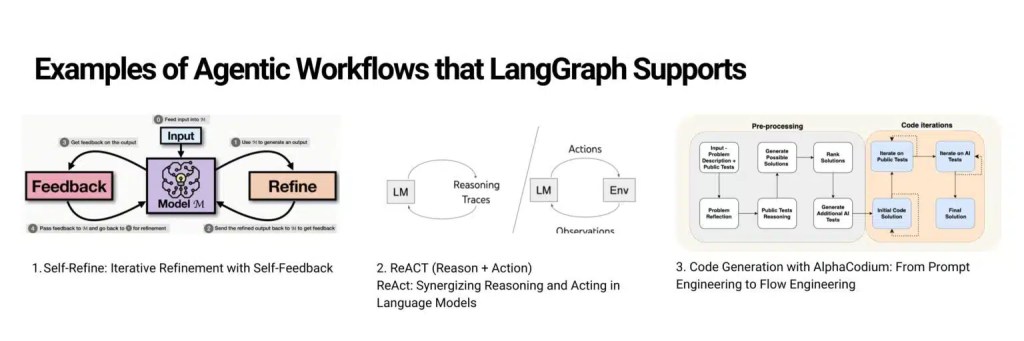
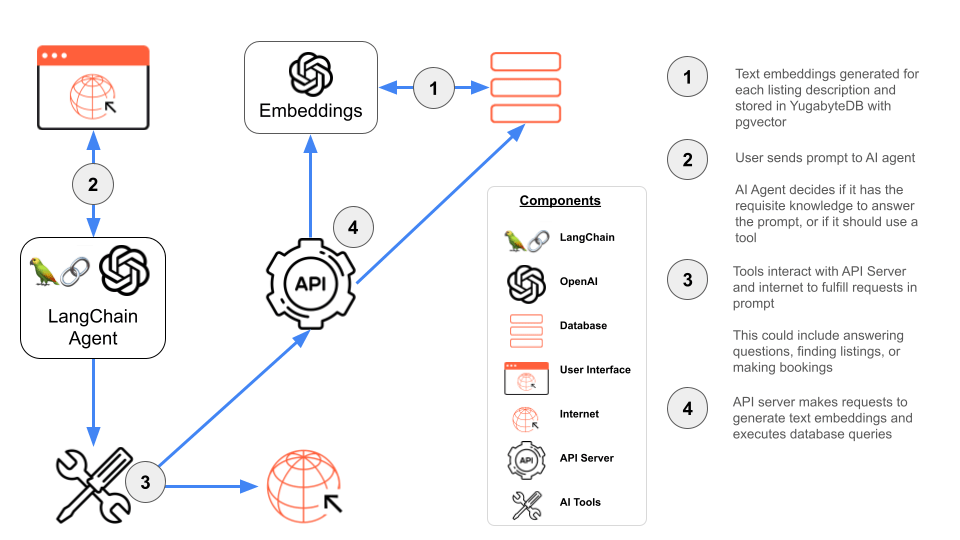
The ability of Agents to access toolkits and maintain memory is a key differentiator; enabling/adding much required planning and reasoning abilities.
Here’s a primer on what’s possible with LangChain: https://tinyurl.com/43hjrfkd
Key Contributions of Agentic AI to AGI:
• Complex Reasoning: Agentic AI systems can perform complex reasoning tasks, which are essential for general intelligence .
• Self-Improvement: These systems can learn from experience and improve their performance over time, a key characteristic of AGI .
• Adaptability: The ability of Agentic AI systems to adapt to new situations and handle unforeseen scenarios is a critical step towards achieving the flexibility required for AGI .
Final Thoughts
AI agents aren’t just about doing work faster – they’re about doing it smarter. They free up teams for creative, strategic work and create experiences that feel less transactional and more human. Whether you’re in HR, operations, or IT, the potential is enormous.
So, what’s your next step? Start small – pick a low-risk use case, experiment, and let the agent surprise you. The future isn’t just automated; it’s intelligent, adaptive, and collaborative.
Let’s make it happen.
 Genesis: Human Experience in the Age of Artificial Intelligence | Synthesis: The Superintelligence Protocol
Leave a comment