

Artificial Intelligence (AI) is transforming industries and reshaping societies, but its rapid advancement has raised critical concerns about fairness, transparency, and safety. Leading AI ethicists and researchers, including Gary Marcus, Yoshua Bengio, and Max Tegmark, have been at the forefront of these discussions, offering valuable insights into the challenges and opportunities of AI development. Below, we explore their perspectives and the latest research on AI safety and ethics.
I’d like to delve into the crucial concepts of fairness and transparency in artificial intelligence (AI), exploring both philosophical foundations and technical interpretations.
Gary Marcus, a prominent AI critic and professor at New York University, has consistently highlighted the limitations of current AI systems. In his 2025 predictions, Marcus emphasises that **artificial general intelligence (AGI) will not emerge by 2025, and existing AI models will continue to struggle with reliability, reasoning, and “hallucinations” (inaccurate outputs).
Key Concerns:
– Reliability and Reasoning: Marcus argues that AI systems, particularly large language models (LLMs), lack robust reasoning capabilities and struggle with tasks requiring deep understanding or common sense.
– Economic and Regulatory Challenges: He predicts that AI companies will face profitability issues, and regulatory frameworks, particularly in the U.S., will lag behind Europe.
– Hybrid AI Systems**: Marcus advocates for combining neural networks with symbolic reasoning (neurosymbolic AI) to address the limitations of pure deep learning.
Yoshua Bengio: Bridging Deep Learning and AI Safety**
Yoshua Bengio, a Turing Award winner and pioneer in deep learning, has shifted his focus toward AI safety and ethics. He emphasises the need for hybrid AI systems that combine deep learning with other methods to improve generalisation and reasoning.
– Key Contributions:
– AI Safety Frameworks: Bengio has been instrumental in developing safety frameworks for AI, advocating for rigorous testing and risk assessment to mitigate potential harms.
– Ethical Deployment: He stresses the importance of aligning AI systems with human values and ensuring their deployment benefits society as a whole.
– Collaborative Efforts: Bengio supports international collaboration on AI safety, as seen in his involvement with the AI Safety Index Report, which evaluates leading AI companies on their safety practices.
Max Tegmark: Advocating for Global AI Governance
Max Tegmark, a physicist and co-founder of the Future of Life Institute (FLI), has been a vocal advocate for global AI governance. His organization recently released the AI Safety Index Report, which evaluates companies like OpenAI, Google DeepMind, and Anthropic on their safety practices.
– Key Initiatives:
– Risk Assessment: Tegmark emphasises the need for comprehensive risk assessments to address potential dangers, such as AI misuse in cyberattacks or bioweapons.
– Transparency and Accountability: He calls for greater transparency in AI development and deployment, urging companies to disclose their safety practices and energy consumption.
– Global Collaboration: Tegmark supports international efforts to regulate AI, citing Europe’s leadership in this area as a model for other regions.
Philosophical Concepts of Fairness
You know how everyone’s buzzing about AI and its potential to revolutionise everything? Well, this course dived deep into two crucial aspects of responsible AI development: fairness and transparency. And trust me, they’re more important than you might think!
First off, let’s talk fairness. We all want AI systems to be fair, right? But what exactly does that mean? The course highlighted that there’s no single definition of fairness. It’s super context-dependent. What’s considered fair in one scenario might not be in another.
Think about it: fairness in healthcare, where AI is used to diagnose patients, might mean ensuring everyone has equal access to quality care, regardless of background. But fairness in hiring, where AI helps screen candidates, might focus on preventing bias against certain demographics.
This blog entry I want to emphasise that building fair AI systems starts with understanding different philosophical concepts of fairness. We looked at the ideas of big thinkers like John Rawls and Iris Marion Young, who’ve grappled with these issues for years.
Then there’s the technical side of things. The course explored how to measure fairness in AI models, looking at things like how well they perform across different subgroups. It also delved into strategies for actually achieving fairness, like adjusting algorithms or using special techniques to protect privacy during training.
Now, onto transparency. Ever heard the phrase “black box AI”? That’s when we don’t really understand how an AI system arrives at its decisions. And that’s a problem, especially when those decisions have real-world consequences.
What we want to do is to tackle head on tackled, focusing on explainable AI, which basically means making AI systems more understandable. We learned about different methods for explaining AI decisions, such as:
●Perturbation-based methods: Imagine tweaking the input data slightly and seeing how the AI’s output changes. That helps pinpoint which factors are most influential in the decision-making process.
●Gradient-based methods: These use the inner workings of the AI model to figure out which features are driving the predictions. It’s like peeking under the hood to see how the engine works!
We even got hands-on with software tools and visualisations that help make AI explanations clearer. Think of it like translating complex code into plain English—making it accessible to everyone, not just tech wizards.

A real-world example that stuck with me was the STAMINA project, which uses AI to analyse social media sentiment during pandemics. The case study really brought home the challenges of applying transparency in practice. It got us thinking about the uncertainties involved in using social media data, the potential biases, and how to communicate all this to decision-makers and the public.
The course also introduced the UK Algorithmic Transparency Standard (ATS), a set of guidelines for the public sector to ensure their AI systems are transparent. It’s like a checklist for responsible AI development.

4. The AI Safety Index Report: A Global Benchmark**
The AI Safety Index Report, co-authored by Bengio and Tegmark, provides a comprehensive evaluation of AI companies based on six key dimensions:
1. Risk Assessment: Identifying potential dangers, such as misuse or unintended consequences.
2. Current Harms: Evaluating the impact of AI systems on society, including misinformation and bias.
3. Safety Frameworks: Assessing the robustness of safety protocols and risk mitigation strategies.
4. Existential Safety Strategy: Examining long-term plans to address risks associated with advanced AI.
5. Governance and Accountability: Evaluating corporate structures and ethical commitments.
6. Transparency and Communication: Measuring openness in sharing safety practices and research.
The report highlights the need for stronger safety measures and greater accountability across the AI industry.
5. The Path Forward: Balancing Innovation and Ethics**
The insights from Marcus, Bengio, and Tegmark converge on several key points:
– Hybrid AI Systems: Combining neural networks with symbolic reasoning can address current limitations and improve reliability.
– Global Regulation: International collaboration is essential to establish robust safety standards and governance frameworks.
– Transparency and Accountability: Companies must prioritize transparency in their AI systems and practices to build public trust.
– Ethical Deployment: AI development should align with human values and prioritise societal well-being.
Case Studies: Applying Transparency in Real-World Scenarios
Several projects are exploring the implementation of transparency in AI systems for the public sector:
●ROXANNE: This project developed tools using speech and language analysis, visual analysis, and network analysis to support law enforcement agencies in combating organised crime. The project emphasised the importance of law enforcement end-users understanding how the AI tools work and being able to explain their use, especially in legal contexts.
●STAMINA: This project focused on developing a social media listening tool to help understand public sentiment during pandemics. The project highlighted the need for transparency in communicating the uncertainties and limitations of the AI tool to decision-makers and the public, ensuring responsible use and informed decision-making.
●UK Algorithmic Transparency Standard (ATS): This standard provides guidance for organisations to achieve transparency with their AI tools. While not yet in force, it will be legally mandatory for public sector organisations in the UK using AI tools. The ATS aims to promote responsible and transparent use of AI in public services.
These case studies highlight the importance of considering transparency throughout the AI development and deployment process, involving stakeholders, and carefully addressing the ethical and societal implications of AI use in the public sector.
So, what’s the big takeaway? Fairness and transparency aren’t just buzzwords. They’re absolutely vital for building trust in AI systems and ensuring they’re used ethically and responsibly.
As management consultants, we need to be at the forefront of this. We can help organisations:
●Define what fairness means in their specific context.
●Develop and implement AI systems that are both fair and transparent.
●Communicate clearly about how their AI systems work and the potential implications.
It’s time to move beyond the hype and embrace the responsibility that comes with the power of AI. After all, we want to build a future where AI benefits everyone, not just a select few.

AI systems, particularly those based on machine learning, are often considered “black boxes” due to the opacity of their decision-making processes. While these systems can be highly effective, their lack of transparency can raise concerns, especially when applied to sensitive areas such as public services.
The public sector is increasingly using AI tools for various purposes:
●Supporting decision-making: AI can help analyse large datasets and provide insights to inform policy and resource allocation decisions.
●Prioritising resources: With often limited resources, AI can help identify areas of greatest need and optimise resource allocation.
●Identifying safeguarding needs: AI can be used to analyse data and predict potential risks, helping direct safeguarding activities where they are most needed.
●Monitoring public sentiment: AI-powered social media listening tools can help understand public responses to policies or messaging and monitor public sentiment on various issues.
However, the lack of transparency in AI systems can lead to several issues:
●Lack of trust: Without understanding how an AI system arrives at its conclusions, it becomes difficult for the public and decision-makers to trust its outputs. This can undermine the legitimacy and effectiveness of AI-powered solutions in the public sector.
●Bias and unfairness: AI systems are trained on data, and if this data reflects existing biases, the AI system may perpetuate and even amplify these biases, leading to unfair or discriminatory outcomes. Transparency is crucial to identify and mitigate such biases.
●Lack of accountability: When the decision-making process of an AI system is opaque, it becomes challenging to hold anyone accountable for potential errors or negative consequences. This raises concerns about the responsible and ethical use of AI, particularly in the public sector where decisions can have a significant impact on people’s lives.
Defining and Measuring Fairness:
- There is no single definition of fairness. It’s a complex concept with varying interpretations depending on context and use case.
- Four key interpretations of fairness:
- Procedural fairness: Absence of discrimination or prejudice in the model’s treatment of individuals.
- Substantive (Outcome) fairness: Fairness in the outcomes produced by the model.
- Individual fairness: Similar individuals are treated similarly by the model.
- Group fairness: Different groups are treated fairly by the model.
- Measuring fairness requires selecting relevant metrics based on the specific context.
- Common performance metrics for binary classification models include:
- Precision: How many positive predictions were correct.
- Recall/Sensitivity: How many actual positives were correctly identified.
- Specificity: How many actual negatives were correctly identified.
- False Positive Rate: What fraction of actual negatives are wrongly classified. (“Fairness – Expert – 2 – Technical interpretations – slides 01.pdf”)
- It’s crucial to consider whether interventions based on the model are punitive or assistive, as different metrics become more relevant depending on the potential for harm. For example, false positive rates are crucial in punitive interventions, while false negative rates matter more for assistive ones.
Achieving Fairness:
- Three primary strategies for working towards fairness:
- Post-hoc mitigation: Adjusting decision-making after the model’s output to achieve fairer outcomes. Example: thresholding for different groups.
- Resampling (pre-processing): Adjusting the training data to achieve balance.
- Regularisation (in-processing): Incorporating fairness considerations during model training.
- Model selection can be treated as an optimisation problem, choosing the model that performs optimally on the selected fairness metric.
Philosophical Considerations:
- Distributive justice as fairness, as proposed by John Rawls, emphasizes ensuring a fair distribution of primary goods and opportunities, with inequalities benefiting the least well-off.
- Feminist philosophers highlight the need to consider power relations and power asymmetries in discussions of fairness to address oppression and ensure fairness of opportunities.
- Iris Marion Young argues that traditional distributive theories of justice can further entrench domination and advocates for empowering people through democratic decision-making.
- Structural unfairness caused by systematic oppression embedded in societal norms, habits, and institutions must be considered.
- Egalitarianism advocates for equal distribution of resources, particularly when assessing the severity of need is difficult.
Challenges and Context Dependence:
- No single model can be considered universally fair. Fairness is context-dependent and requires continuous evaluation and questioning of models.
- Data scientists and ethics advisors must consider what fairness means in a particular context and how structural unfairness might be present in the data.
- Domain-specific notions of fairness are crucial. For example, in predictive policing, fairness might mean avoiding reliance on non-criminal characteristics, while in healthcare, it might focus on allocating resources based on need.
Transparency in AI
Explainability in NLP:
- Motivation for explainability: Understanding how AI models work, particularly black-box models, is crucial for trust, debugging, and identifying potential bias.
- Desirable properties of explanations: comprehensibility, intuitiveness, faithfulness to the model’s reasoning.
- Two main categories of post-hoc explainability methods:
- Gradient-based: Model-specific, suitable for neural networks. Examples: Saliency maps, Integrated Gradients (IG), DeepLIFT.
- Perturbation-based: Model-agnostic, applicable to any model. Examples: Shapley values, LIME, Anchors.
Evaluating Explanations:
- Informal examination: Assessing properties like comprehensibility, intuitiveness, and faithfulness.
- Ground-truth comparison: Evaluating explanation similarity with ground truth data, although this depends on data availability and quality
- Human-based evaluation: User studies to assess the understandability and usefulness of explanations.
- Counterfactuals: Analysing why similar data points receive different predictions, highlighting the Rashomon effect (multiple possible explanations).
Implementation and Case Studies:
- Libraries for explainability methods: OmniXAI, Alibi, SHAP, LIME, InterpretML.
- Visualisations: Saliency heatmaps, waterfall/force plots, summary plots.
- Real-world case studies, like the issues with GPT-3 generating biased and harmful content, underscore the importance of explainability in NLP.
Explainable AI: The Key to Transparency
Explainable AI (XAI) refers to techniques and approaches that aim to make AI systems more understandable and interpretable for humans. This involves providing insights into the factors and reasoning behind an AI system’s predictions or decisions, enabling users to understand why and how a particular outcome was reached.
Several methods are being developed for generating post-hoc explanations of AI models, particularly in Natural Language Processing (NLP), including:
●
Gradient-based methods: These methods, suitable for neural networks, analyse the gradients of the model’s output with respect to the input features, identifying the features that most significantly contributed to the prediction. Examples include:
○
Saliency Maps
○
Integrated Gradients
○
Layer-wise Relevance Propagation (LRP)
○
DeepLIFT (Deep Learning Important FeaTures)
●
Perturbation-based methods: These methods involve perturbing the input data and observing the changes in the model’s output to identify influential features. Examples include:
○
Shapley Values
○
LIME (Local Interpretable Model-agnostic Explanations)
○
Anchors
The choice of explainability method depends on factors such as the specific AI model, the application domain, and the intended audience.
Transparency in the Public Sector:
- The STAMINA project exemplifies the need for transparency in AI tools used for public sector applications like pandemic planning.
- Effective communication between developers and stakeholders is essential to address uncertainty and ensure transparency in AI systems used for public decision-making.
- The Algorithmic Transparency Standard (ATS) provides a framework for documenting and communicating information about AI systems in the public sector, promoting ethical use and accountability.
- The ROXANNE project highlights the importance of transparency in law enforcement applications of AI, particularly for ensuring accountability and explainability in court proceedings.
Challenges and Considerations in Implementing Explainable AI
Implementing explainable AI in the public sector presents unique challenges and considerations:
●
Balancing accuracy and explainability:Some highly accurate AI models might be complex and difficult to explain, while simpler, more explainable models may sacrifice some accuracy. Finding the right balance is crucial for public sector applications where both accuracy and transparency are essential.
●
Communicating uncertainty: AI systems often operate with a degree of uncertainty, and it’s crucial to effectively communicate this uncertainty to decision-makers and the public. Transparency about limitations and potential errors is essential for building trust and ensuring responsible use.
●
Ensuring fairness and mitigating bias:Explainable AI can help identify and mitigate biases in AI systems, but it requires careful consideration of the data used for training, the metrics used to evaluate fairness, and the potential impact of AI-powered decisions on different groups in society.
●
Addressing data privacy and confidentiality: Explainable AI techniques may reveal sensitive information about the data used to train the AI model. Ensuring data privacy and confidentiality is crucial, especially in public sector applications where data often contains personal and sensitive information.
Transparency and explainability are vital for building trust and ensuring the responsible and ethical use of AI, particularly in the public sector. Explainable AI techniques can help make these complex systems more understandable, facilitating accountability, mitigating bias, and fostering public trust in AI-powered solutions. As AI continues to play a growing role in our lives, particularly in public services, prioritising transparency will be crucial for harnessing its benefits while safeguarding against potential risks.
The work of Gary Marcus, Yoshua Bengio, Max Tegmark, and other leading AI ethicists provides a roadmap for addressing the challenges of fairness, transparency, and safety in AI. By embracing hybrid approaches, fostering global collaboration, and prioritizing ethical considerations, we can ensure that AI technologies benefit humanity while minimizing risks.
For further reading, refer to the original sources: [Gary Marcus’s 2025 Predictions](https://garymarcus.substack.com/p/25-ai-predictions-for-2025-from-marcus), [AI Safety Index Report](https://futureoflife.org/document/fli-ai-safety-index-2024/), and [Bengio-Marcus Debate](https://aihub.org/2020/01/07/yoshua-bengio-and-gary-marcus-debate-ai/).
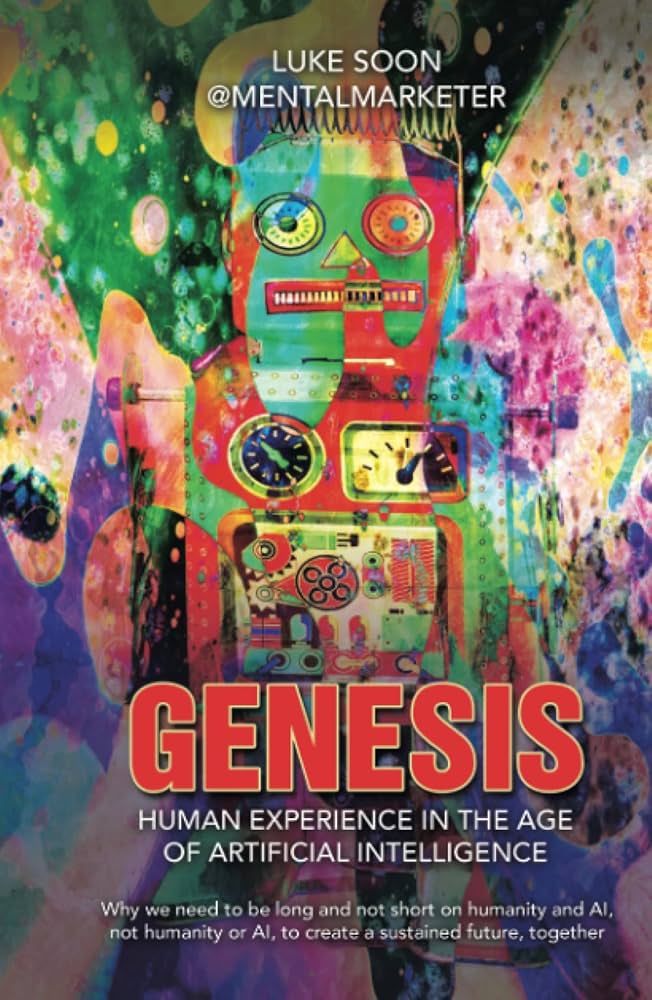
 Genesis: Human Experience in the Age of Artificial Intelligence | Synthesis: The Superintelligence Protocol
Leave a comment