

Today is the last day of 2024 – what a tumultuous, yet exciting year it’s been, especially for AI. Talk about double exponential!
I’d like to wish everyone Happy New Year 2025!

As we approach 2025, the relationship between technology, human behaviour, and organisational priorities is set to transform how businesses think about Customer Experience (CX) and Employee Experience (EX). Together, these two concepts form what I call the Human Experience (HX)—a holistic approach to crafting purposeful, impactful interactions.
Over the next five years, advancements in artificial intelligence will redefine HX in ways we’ve only begun to imagine, with disruption and enhancement occurring year on year. Here’s my perspective on how HX will evolve from 2025 to 2030 and what organisations should prioritise during this time of profound change.
2025: AI Delivers Deep Personalisation for CX – the year of AI Integration
2025: The Year of AI Integration
• AI-Driven Personalization: Businesses will leverage AI to deliver highly personalized customer experiences. AI empathy engines are expected to improve customer satisfaction scores by 40% .

Automation of Routine Tasks: AI will automate routine customer service tasks, allowing human agents to focus on more complex issues. This will streamline operations and improve efficiency.
• Multi-Channel Engagement: Customers will engage with AI agents across multiple channels, including text and voice, enhancing the overall customer experience.
By 2025, customer experiences will reach unprecedented levels of personalisation, driven by AI-powered predictive capabilities. Generative AI tools will take hyper-personalisation from digital environments to the physical world.
• Case Study: A luxury hotel could tailor each guest’s experience based on their preferences: room temperature set to perfection, a minibar stocked with their favourite beverages, and pre-saved playlists on the in-room sound system.
• Impact on CX: Customers will come to expect seamless, tailored experiences that feel intuitive. McKinsey has projected that personalisation could unlock $1 trillion in value across sectors by 2025.
• Challenge: Striking a balance between personalised offerings and protecting customer privacy. Trust will become a currency, and organisations must handle data responsibly.
As AI becomes more integrated into artistic and operational processes, its role will expand from tool to co-creator. Generative AI will empower employees and customers alike, enabling deeper personalisation and creative collaboration.
• Use Case: Retail brands could deploy AI to co-design personalised products based on customer inputs, fostering a sense of shared authorship.
• Case Study: The World Economic Forum’s “Spectral” installation by Sougwen Chung exemplifies this harmony. Chung merged traditional drawing techniques with AI to create ethereal compositions, blending the precision of algorithms with the spontaneity of human creativity .
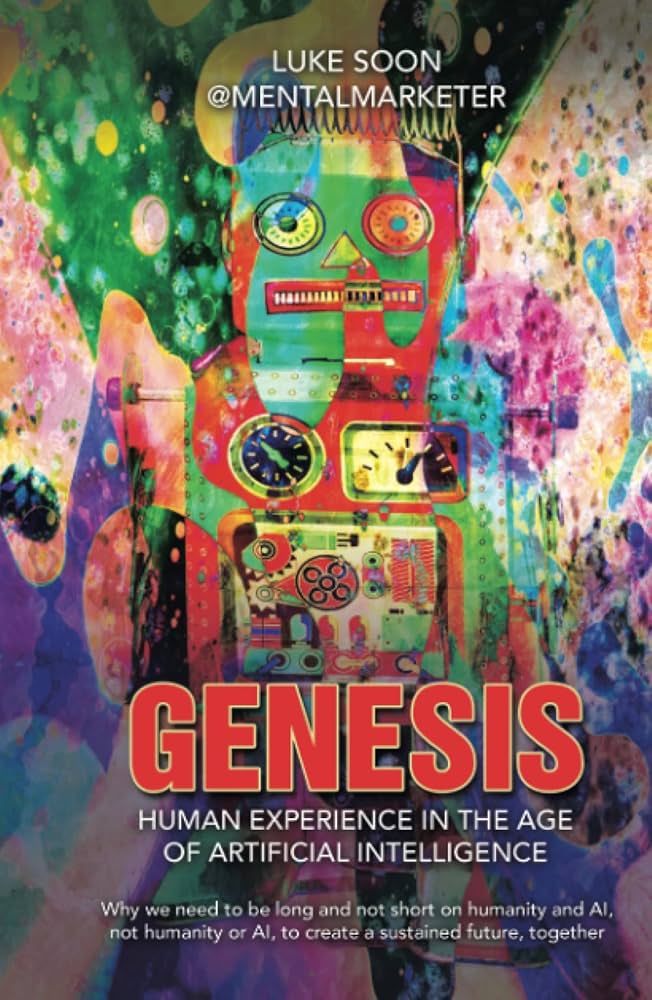
• From Genesis: I advocate that AI can liberate human potential by automating the mundane, freeing us to focus on innovation and intuition.
2026: EX Embraces AI-Augmented Workflows – Advanced AI Capabilities
In 2026, the workplace will see AI deeply embedded in day-to-day operations. Generative AI tools like GitHub Copilot, which have already revolutionised coding, will expand into creative and strategic roles. Employees will collaborate with AI systems to enhance productivity and innovation.
• Case Study: A financial analyst could use an AI assistant to collate market data, identify trends, and generate visual reports in minutes, allowing them to focus on strategic recommendations.
• Impact on EX: Job satisfaction will rise as repetitive, low-value tasks are eliminated, enabling employees to concentrate on meaningful work. According to Deloitte, 77% of employees feel more productive when AI reduces administrative burdens.
• Challenge: Upskilling will become critical. Organisations must invest in continuous learning to help employees adapt to AI-driven roles and workflows.
Predictive Analytics: AI will become more adept at predicting customer needs and behaviors, enabling businesses to proactively address issues and offer tailored solutions.
• Enhanced Employee Experience: AI will be integrated into employee experience (EX) to improve training, support, and overall job satisfaction. This will lead to higher employee retention and productivity.
• AI in Retail: Retailers will see significant savings and improved customer satisfaction through AI-driven inventory management and personalized shopping experiences.
Digital Twins: The concept of digital twins will become a cornerstone of customer experience strategy, allowing organizations to simulate, predict, and optimize customer experiences with remarkable precision.
Emotionally Intelligent Avatars: Emotionally intelligent avatars will redefine customer interactions, offering solutions and emotionally aware responses that create more human-like engagements.
By 2026, emotionally intelligent AI systems will redefine interactions by detecting and responding to human emotions with remarkable nuance.
• Use Case: In customer service, AI assistants will adjust their tone and responses based on customer sentiment, creating more empathetic engagements.
• Statistical Insight: Gartner predicts that organisations adopting emotional AI could see a 25% increase in customer satisfaction by 2026.
• Challenge: As the World Economic Forum posits, preserving the human touch in an AI-driven world will be critical to maintaining authenticity .
2027: CX Becomes Immersive with XR and Web3 – AI Maturity and Scalability
By 2027, Extended Reality (XR) and Web3 technologies will converge to create fully immersive customer experiences. AI will power these environments, blending the digital and physical worlds in ways that captivate users.
• Case Study: Imagine exploring a virtual shopping mall through a VR headset, where AI-driven assistants recommend products based on your preferences and offer real-time support.
• Impact on CX: Customer engagement will reach new heights as brands create dynamic, interactive experiences. A McKinsey report suggests that the metaverse could generate £4 trillion in economic value by 2030, with immersive CX playing a central role.
• Challenge: Ensuring accessibility and inclusivity in these digital spaces will be essential to avoid alienating less tech-savvy audiences.
Scalable AI Solutions: More businesses will successfully scale their AI projects, overcoming initial challenges related to complexity and integration. This will lead to widespread adoption across various industries.
• AI in Healthcare: AI will continue to transform healthcare by providing personalized patient care, improving diagnostic accuracy, and streamlining administrative tasks.
• AI in Finance: Financial institutions will leverage AI for fraud detection, risk management, and personalized financial advice, enhancing both customer and employee experiences.
Hyper-Personalization: AI will enable hyper-personalization at scale, crafting services to match each customer’s unique preferences. This will be driven by generative AI utilizing machine learning algorithms to delve into large datasets and spot trends in user behavior .
• Seamless Digital Experiences: Businesses will invest in digital experience platforms (DXPs) to create seamless digital interactions, ensuring that the experience customers have online is as important as the product itself .
The fusion of Extended Reality (XR) and AI will blur the boundaries between work, play, and commerce. XR environments, powered by AI, will enable immersive and seamless experiences.
• Use Case: Employees might collaborate in virtual spaces mirroring real-world environments, while customers explore digital twins of retail outlets tailored to their preferences.
• Case Study: Cristina Mittermeier’s immersive exhibition “HOPE” highlights the potential of technology to foster connection and global unity. By blending breathtaking visuals with AI-driven storytelling, such projects redefine how we engage with art and nature .
2028: Emotional AI Redefines HX – AI as a Core Business Strategy
By 2028, AI systems will be capable of understanding and responding to human emotions with remarkable accuracy. Emotional AI, combined with advanced Natural Language Processing (NLP), will create empathetic interactions for both customers and employees.
• Case Study: A customer service chatbot could detect frustration in a caller’s voice and escalate the issue to a human agent while adapting its tone to reassure the customer. Similarly, AI wellness tools could analyse employee emails for signs of stress and recommend resources for support.
• Impact on HX: This will strengthen trust and loyalty as customers and employees feel genuinely understood and supported.
• Challenge: Maintaining ethical standards and transparency will be crucial to prevent emotional AI from feeling invasive.
AI-Driven Decision Making: AI will become a core component of business strategy, influencing decision-making processes across all levels of the organization. This will lead to more data-driven and efficient operations.
• AI in Entertainment: The entertainment industry will see further personalization and engagement improvements through AI, with platforms like Netflix using AI to enhance user experiences and boost customer loyalty .
• AI in Customer Service: AI will resolve up to 80% of customer interactions, allowing human agents to focus on more complex and high-value tasks .
Voice Commerce: Voice commerce sales are expected to reach significant figures, driven by smart home devices. Retailers will integrate voice commerce features into smart home devices, making shopping more convenient and accessible .

As AI’s influence deepens, ethical considerations will take centre stage. Customers and employees will demand greater transparency in how decisions are made and data is used.
• Use Case: AI governance frameworks will incorporate explainability tools, helping users understand the logic behind AI-generated outcomes.
• Statistical Insight: Forrester estimates that by 2028, businesses with robust ethical AI practices will enjoy a 30% higher trust index among stakeholders.
• Challenge: As highlighted in Genesis, balancing innovation with accountability will determine whether AI enhances or erodes trust.
2029: The Rise of AI-Driven Gig Work in EX – AI as a Competitive Advantage
Workplace dynamics will shift dramatically in 2029 as AI-enabled platforms redefine how people approach employment. Flexible, project-based work will become the norm, facilitated by intelligent systems that match skills with tasks across multiple organisations.
• Case Study: A highly skilled graphic designer could simultaneously contribute to three different projects across industries, managed through an AI platform that optimises workloads and deadlines.
• Impact on EX: Employees will benefit from greater autonomy and variety in their careers, while organisations gain access to a global talent pool.
• Challenge: Traditional HR systems will struggle to adapt to this fluid talent ecosystem, necessitating innovative approaches to talent management and collaboration.
Competitive Edge: Businesses that effectively integrate AI into their CX and EX strategies will gain a significant competitive advantage. This will be reflected in higher customer satisfaction, loyalty, and employee engagement.
• AI in Travel and Tourism: The travel industry will benefit from AI through personalized travel recommendations, efficient booking processes, and enhanced customer service .
• AI in Education: Educational institutions will use AI to personalize learning experiences, improve student outcomes, and streamline administrative tasks. By 2029, the lines between CX and EX will blur completely, creating integrated HX ecosystems where roles and experiences flow seamlessly.
• Use Case: A gig worker might shift between customer and employee roles within the same platform, guided by AI systems ensuring coherence and fairness.
• From the World Economic Forum: Art installations like “Work in Progress,” which highlight diversity and inclusion, demonstrate how co-creation and storytelling can shape collective experiences .
2030: HX Becomes Co-Created in Real-Time – AI Surpasses Human Intelligence
By 2030, the Human Experience will evolve into a co-created ecosystem. AI, customers, and employees will collaborate dynamically to shape experiences in real-time.
• Case Study: Picture an airline that uses real-time data to adjust flight schedules, personalise in-flight services, and improve crew allocation—all based on live feedback from customers and employees.
• Impact on HX: Organisations that embrace co-creation will thrive, delivering experiences that feel uniquely tailored to each stakeholder. Forrester predicts that companies prioritising HX will see 1.8x higher revenue growth compared to those that don’t.
• Challenge: Managing the complexity of these systems while ensuring alignment between human and AI contributors will be a daunting but rewarding task.
Superior AI Capabilities: By 2030, AI is expected to surpass individual human intelligence in many areas, leading to even more advanced and autonomous systems .
• AI in Robotics: Robots equipped with advanced AI capabilities will function independently in complex environments, further enhancing both CX and EX .
• Global AI Adoption: The global commercial AI software market will see exceptional growth, with significant investments in off-the-shelf AI solutions
In a world where AI systems are ubiquitous, the human ability to dream, innovate, and empathise will stand out as our greatest strength.
• Reflection: The World Economic Forum suggests that while algorithms are excellent at pattern recognition, human creativity stems from identity, vulnerability, and lived experience. Preserving these qualities will be vital as we navigate the intelligent age .
Key Lessons for Business Leaders
1. Trust is Non-Negotiable: As AI takes centre stage, organisations must build transparent, ethical systems that prioritise trust.
2. Continuous Reskilling is Crucial: By 2030, 50% of all employees will require upskilling to stay competitive in the AI-enhanced workplace, according to the World Economic Forum.
3. AI Should Augment, Not Replace: Businesses must strike a balance between automation and human connection, ensuring the “human” in Human Experience remains central.
The next five years promise to be a whirlwind of transformation for CX and EX. AI’s role will grow from a supporting tool to a strategic partner, reshaping how we work, interact, and create value. For those willing to embrace this future with foresight and agility, the possibilities are endless. As I often say, the future isn’t something we wait for—it’s something we design.
So, how are you designing the HX of tomorrow?
 Genesis: Human Experience in the Age of Artificial Intelligence | Synthesis: The Superintelligence Protocol
Leave a comment