

Here’s an update – delta, increments from the World Economic Forum’s recently published The Future of Jobs Report 2025
The World Economic Forum’s Future of Jobs Report 2025 reveals a notable shift in perspective compared to previous editions. While technological advancements and global economic shifts continue to reshape the job market, the report highlights a more balanced and nuanced outlook. Here are the key changes and updates:
- Stabilisation of Skills Disruption: A significant update is the stabilisation of skill disruption. Although skills volatility remains high, the projected share of core skills expected to change by 2030 has decreased to 39%, compared to 44% in 2023. This suggests that companies are becoming more adept at managing skills shifts through continuous learning and workforce transformation initiatives.
- Shift from Job Displacement to Skill Evolution: The report marks a transition from a primary focus on job displacement to an emphasis on skill evolution. While job displacement concerns remain, the report acknowledges that jobs are not disappearing at the rate previously predicted. Instead, the focus is on the rapid evolution of skills required for existing and emerging roles.
- Emphasis on Upskilling and Reskilling: Upskilling the existing workforce emerges as the most prevalent workforce strategy for the period 2025-2030. 85% of surveyed employers plan to invest in upskilling initiatives. This underscores the importance of continuous learning and development programs to address skill gaps and equip employees for future roles.
- Focus on Adaptability and Resilience: The report highlights the increasing importance of adaptability and resilience as core skills for the future workforce. Skills such as resilience, flexibility, agility, analytical thinking, and creative thinking are projected to be in high demand as businesses navigate complex and dynamic environments.
- Automation and Augmentation: While automation remains a key driver of transformation, the report emphasises the importance of augmentation – using technology to complement and enhance human capabilities. Companies are increasingly looking to integrate technologies to support and empower their workforce, rather than solely replacing human roles.
In summary, the Future of Jobs Report 2025 presents a more measured outlook on the evolving job market. While acknowledging ongoing disruption, the report emphasises the importance of proactive measures, such as upskilling, reskilling, and fostering adaptability, to navigate the changing landscape of work successfully.
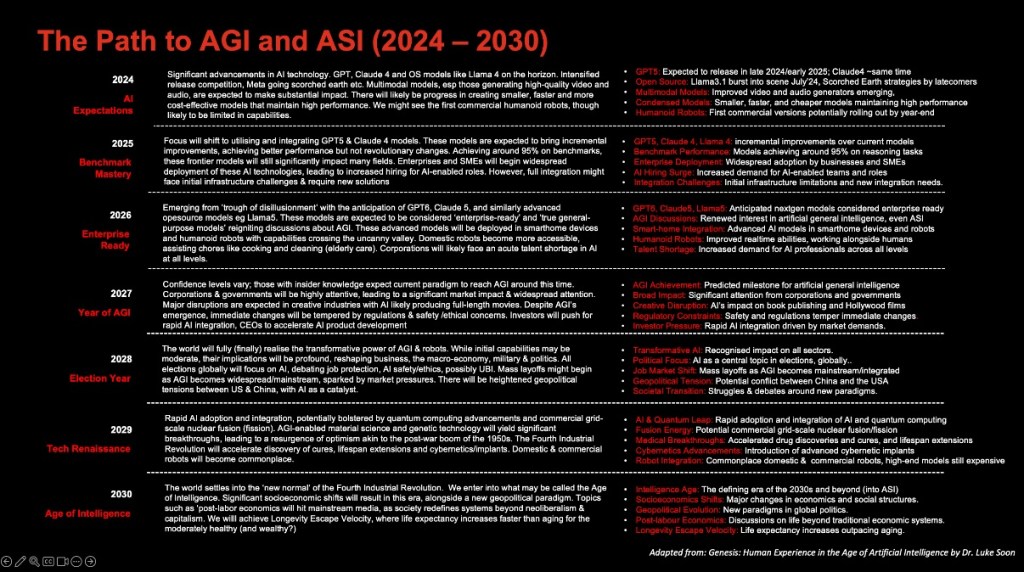
In the age of rapid technological advancement, artificial intelligence (AI) and humanoid robots are reshaping the future of work. Thinkers like Daniel Susskind, author of ‘A World Without Work,’ believe that machines will become increasingly capable. As a result, many jobs will be displaced. Jobs particularly rooted in repetitive or analytical tasks are especially at risk. While the long-term vision often evokes images of abundance, shorter-term realities are fraught with challenges. This raises critical questions: How do we transition smoothly to a world transformed by AI? And how can governments, policymakers, and humanity at large ensure that this transition is equitable?
The Promise and Peril of AI and Robots in the Workplace
AI’s capacity to automate complex tasks, coupled with humanoid robots’ ability to replicate physical labour, is ushering in unprecedented productivity. This technological evolution will lead to a utopian abundance, where basic needs are universally met, and humanity focuses on creative, social, and intellectual pursuits. However, the journey to this promised future is turbulent.
In the short term, millions of jobs are at risk. Research by McKinsey suggests that by 2030, nearly 375 million workers globally may need to change occupations due to automation. Entire sectors, from manufacturing to services, are vulnerable. Humanoid robots were once relegated to science fiction. Now, they are emerging as feasible replacements for human roles in eldercare, hospitality, and logistics. As these trends accelerate, society faces a paradox. AI and robotics promise long-term prosperity. However, they threaten to widen inequality and destabilise economies in the near term.
### Preparing for the Transition: The Role of Governments and Policymakers
To navigate these challenges, governments and policymakers must adopt proactive strategies:
1. Invest in Reskilling and Lifelong Learning
As AI and robotics redefine the skills required for work, traditional education systems must evolve. Policies that incentivise continuous learning and skill acquisition are essential. Public-private partnerships can play a critical role in equipping workers with competencies in AI, robotics, and other emerging fields. Examples include coding bootcamps, vocational training for AI-driven industries, and subsidised online courses for adults.
2. Establish Universal Basic Income (UBI)
A cornerstone of Daniel Susskind’s vision, UBI offers a safety net for those displaced by automation. By providing citizens with a guaranteed income, governments can mitigate the economic and social shocks of job loss. This empowers individuals to explore new opportunities or invest in entrepreneurial ventures.
3. Encourage AI Adoption for Public Good
Policymakers should guide AI development towards solving societal challenges, such as climate change, healthcare, and education. Regulations that ensure ethical AI deployment—focusing on fairness, transparency, and accountability—are critical.
4. Support Small Businesses and Local Economies
Large corporations benefit disproportionately from AI advancements. Governments should incentivise innovation in small and medium-sized enterprises (SMEs) through tax breaks. They should also offer grants and access to AI infrastructure. This strategy not only preserves local economies but also diversifies the AI landscape.
Embracing AI as Humanity’s Partner
For individuals, the imperative is clear: embrace AI as an enabler rather than a threat. Workers must cultivate skills that complement AI—emphasising creativity, empathy, and complex problem-solving. Machines excel at computation and routine tasks. However, uniquely human attributes are critical in areas such as healthcare, education, and leadership.
Moreover, organisations must foster a culture of adaptability. Companies that thrive in the AI era will view automation as an opportunity. They will aim to augment human potential rather than replace it.
The Role of Humanoids in Society
Humanoid robots will play a growing role in society, particularly in areas like eldercare, child education, and hazardous industries. To ensure smooth integration, it is vital to establish clear norms and guidelines:
– Labour Standards for Robots: Define ethical boundaries for robot usage to prevent exploitation.
– Social Acceptance:Address societal fears through education and transparent communication about the benefits of robotics.
– Human-Machine Collaboration: Develop systems where humans and robots work synergistically, leveraging their respective strengths.
A Call for Collective Action
The path to a world of abundance requires collaboration across governments, industries, and civil society. It demands visionary leadership that prioritises equity and sustainability. The road ahead is turbulent. However, the rewards are profound. We envision a society where humans are freed from drudgery. Individuals are empowered to pursue creativity, connection, and purpose.
In Daniel Susskind’s words, “Technology does not simply destroy jobs; it creates new opportunities.” It is our collective responsibility to seize these opportunities, ensuring that the future of work uplifts all of humanity.
A Shared Vision for the Future
As we embrace this era of transformation, we must hold onto the belief that AI and robotics can serve as tools for human flourishing. They need to be guided by ethical and inclusive frameworks. The short-term may test our resilience, but with foresight, collaboration, and compassion, the long-term promises a brighter, more abundant world.
In the age of rapid technological advancement, artificial intelligence (AI) and humanoid robots are reshaping the future of work. Thinkers like Daniel Susskind, author of “A World Without Work,” argue that as machines become increasingly capable, many jobs will inevitably be displaced. This is especially true for those rooted in repetitive or analytical tasks. While the long-term vision often evokes images of abundance, shorter-term realities are fraught with challenges. This raises critical questions: How do we transition smoothly to a world transformed by AI? And how can governments, policymakers, and humanity at large ensure that this transition is equitable?
Alternatives to UBI for the Future of Work
Universal Basic Income (UBI) is often discussed as a solution to the challenges posed by automation and AI. However, there are several other approaches to shaping the future of work. These alternatives focus on ensuring economic stability, fostering adaptability, and maintaining social equity.
1. Universal Basic Services (UBS):
Instead of providing cash payments like UBI, UBS proposes offering essential services such as healthcare, education, and housing for free or at subsidised rates. This approach reduces economic insecurity while promoting equitable access to critical resources.
2. Job Guarantee Programmes:
Governments could ensure employment opportunities for all through public works or community-building initiatives, such as infrastructure projects or social services. These programmes directly address unemployment and create meaningful societal contributions.
3. Reskilling and Lifelong Learning Initiatives:
Continuous education and skill development are crucial for adapting to AI-driven changes. Public-private partnerships can provide subsidised courses in emerging technologies, ensuring workers are prepared for future job markets.
4. Negative Income Tax (NIT):
NIT is a targeted alternative to UBI, providing financial support only to those earning below a certain threshold. This ensures efficient allocation of resources while maintaining incentives to work.
5. Reduced Working Hours:
Policies to shorten the workweek, such as four-day workweeks, distribute available work more evenly and improve work-life balance. Trials in Iceland and Microsoft Japan demonstrated increased productivity and employee satisfaction.
6. Community Wealth Building (CWB):
CWB empowers local economies through worker-owned businesses, cooperatives, and investments in community assets. This approach strengthens local resilience and reduces dependence on large corporations.
7. Conditional Cash Transfers (CCTs):
Linking financial support to specific actions, such as ensuring children attend school or completing training programmes, CCTs encourage long-term behavioural shifts that benefit society.
8. Robot Taxes:
A tax on companies replacing human workers with automation can redistribute revenue to fund retraining efforts and public services. Proposed by figures like Bill Gates, it creates a financial buffer for displaced workers while encouraging responsible automation.
By adopting these alternatives, governments and organisations can create a more adaptive and equitable society, ensuring a smoother transition into the future of work.

 Genesis: Human Experience in the Age of Artificial Intelligence | Synthesis: The Superintelligence Protocol
Leave a comment