
"Artificial Intelligence (AI) continues to shape the world in unprecedented ways. I wanted to pay homage to AI pioneers such as Geoff Hinton and Demis Hassabis, both winning Nobel Prizes for Physics and Chemistry in the last 2 days (Oct 9 & 10, 2024) – shows how AI is inexplicably, irrevocably shaping the future of humanity. Reminiscing being a software engineering and computer science student in the UK back in the early 90s, this ‘era’ truly marks a remarkable resurgence of Neural Networks!"
With 2024 marking a pivotal year in AI development, industry leaders, researchers, and policymakers are grappling with both its vast potential and complex challenges. I thought it useful – albeit increasingly harder – to track exponential advancements in this exciting field unfolding before our eyes.
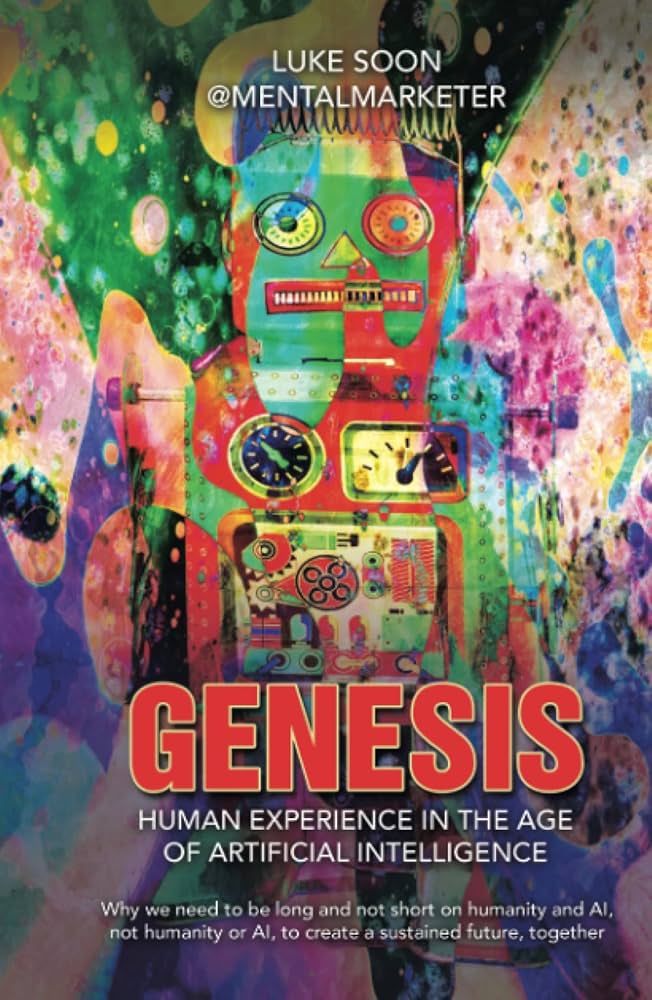
As described in my book Genesis: Human Experience in the Age of Artificial Intelligence – humanity is hardly prepared for the birth of a new ‘species’ (#AI) and we need to prepare for Short-term Turbulence to achieve Long-term Abundance,
1. AI Research: Frontier Labs and Global Competition
2024 has seen significant convergence in AI research. The dominance of OpenAI is now challenged by other frontier labs, including Claude 3.5 Sonnet, Gemini 1.5, and Grok 2. These models have closed performance gaps, particularly in complex reasoning, planning, and coding tasks. The competition among labs has also spurred breakthroughs in handling multimodal tasks, including language, biology, and even neuroscience.
Dr Fei-fei Li (author of “The Worlds I See”) and her now ubiquitous team at HAI produced the seminal Stanford AI Index Report ; further highlights the rise of large language models (LLMs) and multimodal systems driving breakthroughs in AI. The report also underscores the role of open-source platforms in democratising AI research.
Key Highlight: Llama 3, released by Meta, showcases how open models are now competitive with proprietary solutions, signaling a shift toward more open AI ecosystems.
2. The Industry: AI as a Business Force
In 2024, AI companies continue to attract massive investments, with NVIDIA remaining one of the most powerful companies globally. The valuation of AI companies has hit $9 trillion, underlining the economic significance of AI. Startups and established firms alike are finding new commercial applications, from generative AI to video and audio generation tools. Yet, questions about sustainability and pricing models linger.
The Stanford AI Index Report reinforces the industry’s growth, emphasising AI’s rapid adoption across healthcare, finance, and manufacturing. AI is increasingly used to optimize processes, enhance customer experiences, and drive new business models, especially in generative AI applications.
AI Chips and Infrastructure: The immense compute power required for AI development has catalysed innovation in chip design, with AI companies focusing on inference-focused chips to optimise costs and scale.
3. Politics and Regulation: The Governance Conundrum
AI regulation remains a hot topic globally. While attempts at global AI governance have stalled, regional efforts in the US and Europe are picking up pace. Controversial legislation is being passed that attempts to regulate AI’s economic impact, address concerns over AI monopolies, and enforce emission targets related to compute infrastructure. However, many of the feared societal effects, such as AI’s impact on elections or employment, have yet to be fully realised.
According to the Stanford AI Index Report, AI governance and regulation are gaining momentum, particularly in the European Union and United States, as governments grapple with privacy, bias, and ethical concerns in AI systems.
See my other piece on AI Ethics here– covering the latest on UK, EU, US and Singapore AI regulatory frameworks.
4. AI Safety: From Fear to Acceleration
A vibe shift has occurred in the AI safety debate. Companies that once warned about AI’s existential risks are now racing to capitalise on its commercial potential. Despite this acceleration, many risks persist, including the inability to fully secure AI systems from long-term attacks. Governments worldwide are enhancing AI safety capacity by launching dedicated institutes and assessing critical infrastructure vulnerabilities.
Executive Summary: The balance between AI acceleration and safety is delicate, as researchers and policymakers grapple with both technical risks and societal implications. The Stanford AI Index Report also stresses growing efforts to mitigate AI risks, from bias in algorithms to ensuring AI alignment with human values.
5. Generative AI and its Commercial Implications
Generative AI has exploded in commercial use cases, ranging from content creation to customer support and product development. However, the biggest challenges remain around cost and accuracy. Organisations are also grappling with how to scale AI ethically while balancing consumer demand with corporate innovation.
The Stanford AI Index Report emphasises the environmental impact of large-scale AI models and stresses the importance of finding solutions that balance AI innovation with sustainability.
Innovations in AI Models: Techniques like hybrid models (e.g., Mamba-Transformer) and parameter-efficient fine-tuning are becoming popular. Researchers are also focusing on distillation—creating smaller models that rival larger ones in performance but with reduced computational requirements.
6. Education and Workforce Impacts
AI’s role in transforming the workforce is a major focus -while AI creates new opportunities, it also raises concerns about job displacement in industries affected by automation. The need for AI literacy and education is paramount, with training programs and universities adapting to prepare the future workforce for an AI-driven economy.
AI in the Workplace: Companies must consider reskilling initiatives and new educational programs to address the gap in AI skills, ensuring workers are prepared for the AI-enabled future.
7. Predictions for the Future
The next 12 months are poised to see continued AI growth and transformation. Generative AI, autonomous systems, and AI-human collaboration are expected to be major areas of development. Both the State of AI Report and the Stanford AI Index Report predict continued AI advancements but also emphasise the importance of responsible innovation, particularly as AI becomes increasingly integrated into everyday life.
There are 3 (big) things for #AI in 2025 that has high probabilities of transpiring:
- Infinite, at least much x much larger context windows
- Agents and agency (#AIAtlantis); heightened planning and reasoning capabilities
- Text to Action – as Picasso said.. “Everything you can imagine is true”.
For more details, check out the full Stanford AI Index Report 2024 here: https://aiindex.stanford.edu/wp-content/uploads/2024/05/HAI_AI-Index-Report-2024.pdf.

 Genesis: Human Experience in the Age of Artificial Intelligence | Synthesis: The Superintelligence Protocol
Leave a comment